
 English
 русский
 中文简体
中文简体
RILSON GASKET
Ningbo Rilson Sealing Material Co., Ltd is dedicated to ensuring the secure and dependable operation of fluid sealing systems, offering clients the appropriate sealing technology solutions.
Content
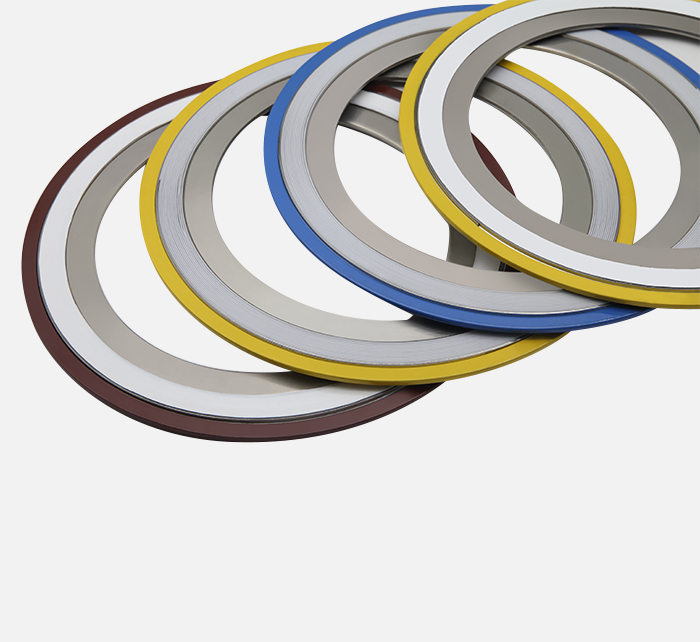
A spiral wound gasket is a semi-metallic sealing gasket made by winding a preformed metal strip and a soft filler material together in alternating layers, forming a resilient ring that seals the gap between two flanges. The combination of a springy metal winding and a soft filler gives the gasket the ability to recover slightly under pressure changes, which keeps it sealing tightly even as bolt loads and temperatures shift during operation.
This construction is what separates a spiral wound gasket from a solid metal or purely soft gasket. A soft gasket alone can compress permanently and lose its seal, while a rigid metal gasket alone often cannot conform to small surface irregularities on the flange face. A spiral wound gasket sits between the two, which is why it remains one of the most widely specified gasket types across piping, pressure vessels, and heat exchangers.
Reputable spiral wound gasket manufacturers build these gaskets around three main parts, the metal winding strip, the filler material, and one or more supporting rings, each covered in the next section.
| 3Core Construction Components | Up to 1000CCeramic Filled Rating | Class 150-2500Flange Ratings Covered |
Every spiral wound gasket is built from a small set of standard parts, though the exact material combination changes based on the service conditions it needs to handle.
A thin, preformed metal strip, most often stainless steel, is wound into a spiral shape. This strip provides the spring back that lets the gasket respond to small changes in bolt load and flange movement without losing contact with the sealing surface.
A soft filler, commonly graphite or PTFE, is wound in alternating layers with the metal strip. The filler fills microscopic surface irregularities on the flange face and provides the initial sealability before the metal winding takes over the long term sealing load.
An outer centering ring keeps the gasket positioned correctly inside the bolt circle and protects the winding from over compression, while an optional inner ring adds radial support and helps prevent buckling in higher pressure applications.
Sealing performance comes from a straightforward mechanical relationship between bolt load and gasket compression. As the flange bolts are tightened, the winding and filler compress together, building seating stress across the gasket face until it is high enough to block the fluid path.
This is a general reference pattern rather than a single measured test, and the actual curve shape depends on filler type, winding density, and flange surface finish. The overall relationship holds across most installations: seating stress rises steadily as bolt load increases, until the gasket reaches the point where it can fully block the sealing gap.
Filler choice is one of the first decisions in selecting a spiral wound gasket, since it directly affects temperature range and chemical compatibility.
| Filler Material | Typical Temperature Range | Common Use |
|---|---|---|
| Graphite Filled | Up to around 450C | General steam, hydrocarbon, and process piping |
| PTFE Filled | Up to around 260C | Corrosive chemicals and oxidizing media |
| Mica Filled | Up to around 900C | High temperature service where graphite is unsuitable |
| Ceramic Filled | Up to around 1000C | Extreme high temperature process equipment |
Because filler material sets the practical temperature ceiling for a spiral wound gasket, this is usually the first specification to confirm before choosing between a graphite filled spiral wound gasket and a PTFE filled spiral wound gasket.
Graphite remains the most commonly specified filler for general industrial service, offering a practical balance between temperature tolerance and chemical resistance, while ceramic and mica fillers are reserved for higher temperature process equipment.
Spiral wound gaskets are manufactured to match standard flange pressure classes, so dimensions and winding density scale with the class rating of the flange they are installed on.
These figures are approximate room temperature reference values for common flange classes, and bar height in the chart is scaled for readability rather than drawn strictly to scale. Actual allowable pressure always depends on the specific flange material, temperature, and applicable design code.
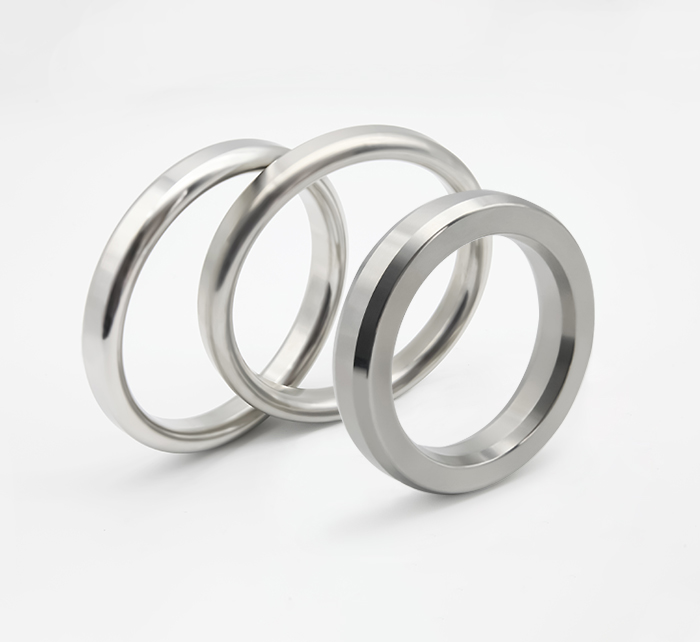
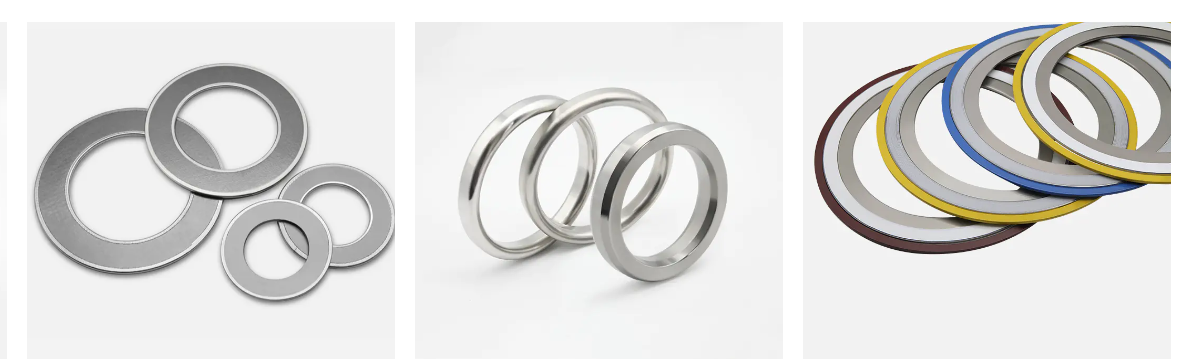
Spiral wound gaskets and ring type joint, or RTJ, gaskets are both common in higher pressure piping, but they seal in different ways and suit different situations.
A spiral wound gasket generally offers better compression recovery and more tolerance for minor flange surface imperfections, while an RTJ gasket, being fully metallic, typically handles higher pressure and temperature extremes but requires a precisely machined grooved flange and is not intended to be reused after removal.
The combination of pressure tolerance, temperature range, and compression recovery makes spiral wound gaskets a common choice across several types of process equipment.
A spiral wound gasket for steam pipeline service needs to handle repeated thermal cycling as the line heats and cools, which is where the springy metal winding helps maintain a tight seal through temperature swings.
A spiral wound gasket for heat exchanger applications is often sized to a specific flange pattern and must tolerate both internal pressure and the thermal expansion of the exchanger shell during startup and shutdown cycles.
A spiral wound gasket for pressure vessel closures is selected based on the vessel design pressure and the process media inside, with filler material chosen to match the chemical environment.
Across refineries and chemical plants, spiral wound gaskets are used at flanged connections throughout the piping network, where consistent manufacturing quality from a spiral wound gasket supplier supports predictable performance across large installations.
Most spiral wound gasket manufacturers follow a shared color coding convention on the outer ring and filler stripe, which makes it possible to identify the winding and filler material without disassembling the gasket.
| Material | Common Stripe Color | Location on Gasket |
|---|---|---|
| 304 Stainless Steel Winding | Yellow | Outer ring edge |
| 316 Stainless Steel Winding | Green | Outer ring edge |
| Graphite Filler | Grey | Inner stripe |
| PTFE Filler | White | Inner stripe |
When selecting a gasket, matching the outer ring material to the flange environment and confirming the correct inner and outer diameters against the flange pressure class are the two checks worth doing before installation, alongside a custom spiral wound gasket request for any non-standard flange pattern.
Ningbo Rilson Sealing Material Co., Ltd was founded in 2007 and is based in Ningbo, Zhejiang Province, with a manufacturing facility spanning 20,000 square meters. The company focuses on the secure and dependable operation of fluid sealing systems, helping clients identify the sealing technology that fits their process conditions.
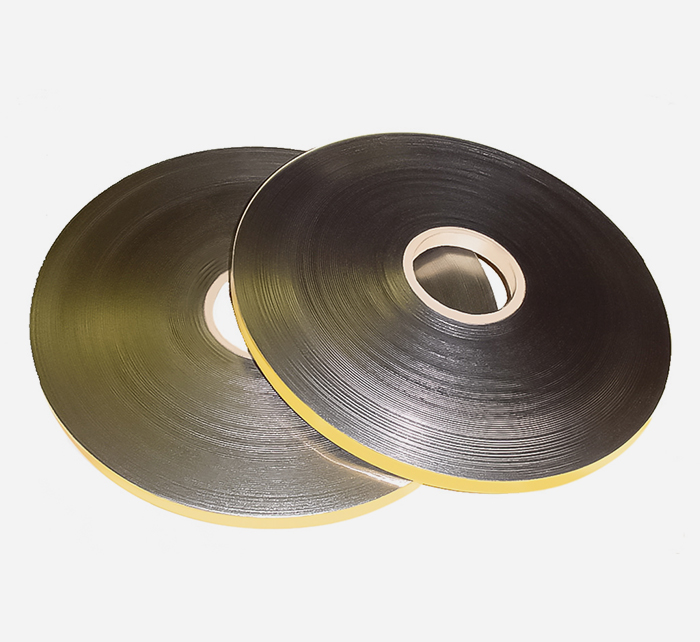
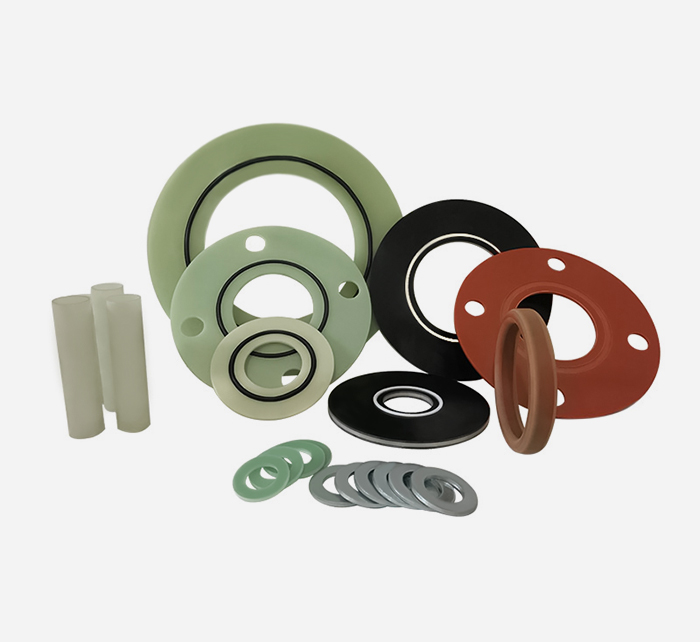
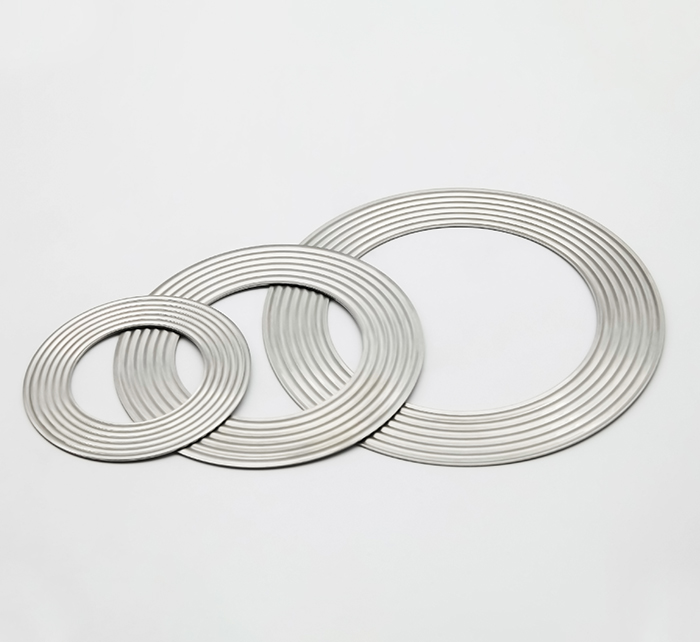
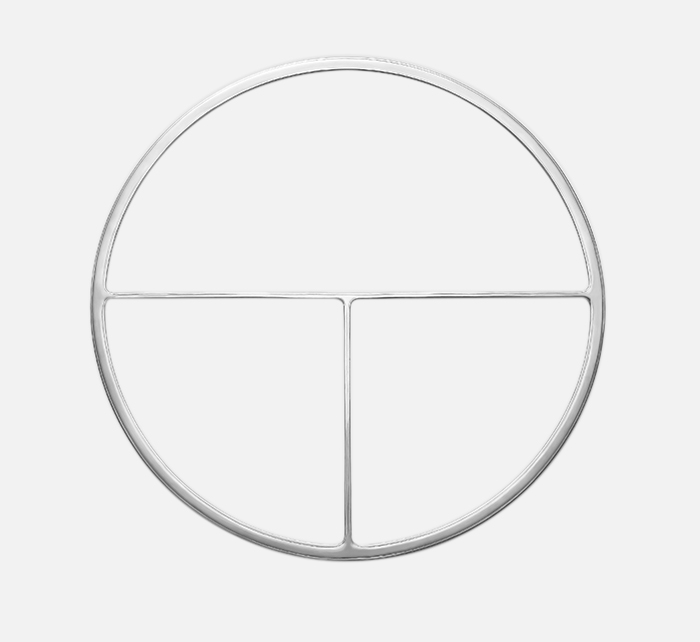
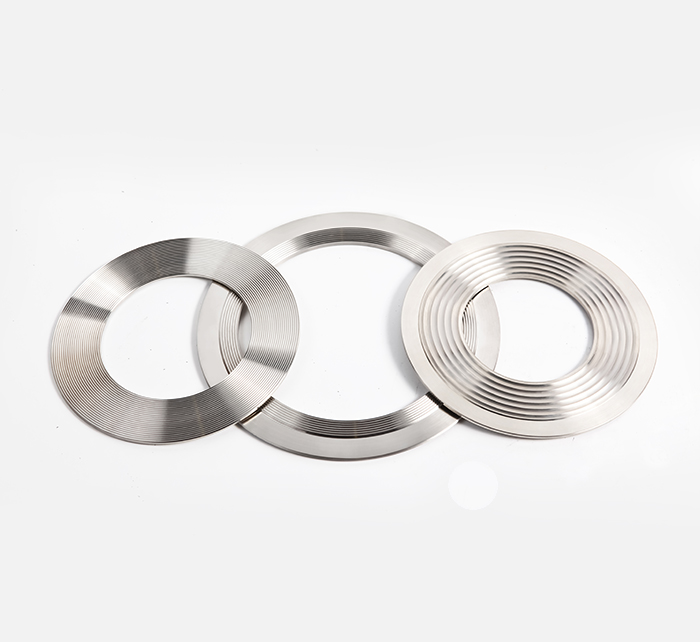
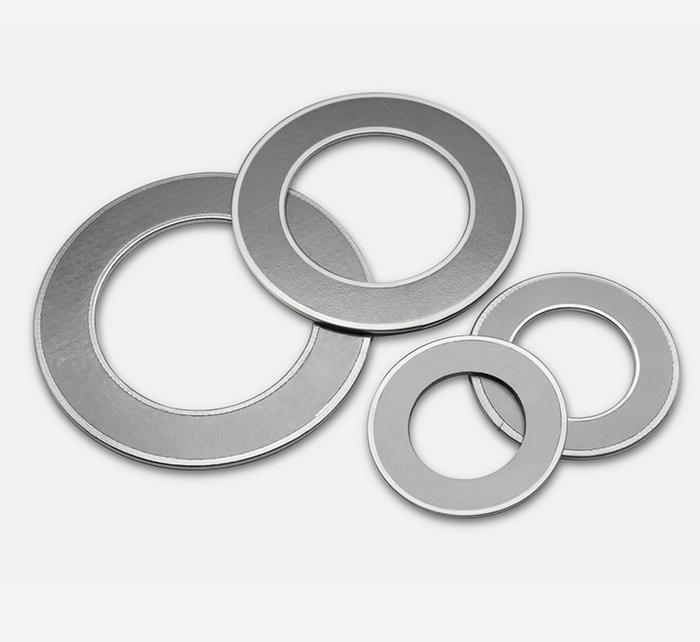
Multiple production lines support the design and manufacture of sealing gaskets and related sealing materials for the petroleum, chemical, power, shipbuilding, and machinery manufacturing sectors. As an industrial gasket manufacturer, the primary product range includes spiral wound gaskets, ring joint gaskets, kammprofile gaskets, corrugated metal gaskets, insulation kit gaskets, and non-asbestos gaskets, covering both metallic gasket and semi-metallic formats.
Working as a spiral wound gasket supplier to customers across many regions, the company supports OEM spiral wound gasket programs and custom spiral wound gasket requests alongside its standard catalog, drawing on years of manufacturing experience across the sealing product range.
The company operates around core principles of integrity, precision, innovation, and mutual success, with the aim of building long term value for customers, employees, and the wider fluid sealing industry.
Q1. What is a spiral wound gasket?It is a semi-metallic gasket made from an alternating wound metal strip and soft filler material, used to seal flanged connections in piping and vessels. |
Q2. What is the purpose of a spiral wound gasket?Its purpose is to create a resilient seal that can recover slightly under changing bolt load and temperature, keeping the connection tight over time. |
Q3. What is the difference between RTJ and spiral wound gasket?An RTJ gasket is fully metallic and needs a machined grooved flange, while a spiral wound gasket combines metal and filler and works with standard flat or raised face flanges. |
Q4. Can spiral wound gaskets be reused?Spiral wound gaskets are generally intended for single use, since the winding and filler compress permanently once installed and removed. |
Q5. Which filler material is best for spiral wound gaskets?Graphite filled gaskets suit general service, PTFE filled gaskets suit corrosive chemicals, and mica or ceramic fillers suit higher temperature applications. |
Q6. What pressure can a spiral wound gasket withstand?Rated pressure depends on the flange class it is built for, with common designs covering everything from Class 150 up through Class 2500 service. |
Q7. How do you identify a spiral wound gasket?Outer ring and filler stripe colors, along with markings on the outer ring, generally indicate the winding metal and filler material used. |
Q8. Are spiral wound gaskets suitable for steam?Yes, graphite filled spiral wound gaskets are commonly used in steam pipeline service due to their temperature tolerance and compression recovery. |

RILSON GASKET
Ningbo Rilson Sealing Material Co., Ltd is dedicated to ensuring the secure and dependable operation of fluid sealing systems, offering clients the appropriate sealing technology solutions.
Copyright © Ningbo Rilson Sealing Material Co., Ltd. All Rights Reserved.
