
 English
 русский
 中文简体
中文简体
RILSON GASKET
Ningbo Rilson Sealing Material Co., Ltd is dedicated to ensuring the secure and dependable operation of fluid sealing systems, offering clients the appropriate sealing technology solutions.
Content
For applications where installed thickness control, low bolt load loss, and stable performance through repeated thermal cycling matter most, such as heat exchangers, coolers, and high integrity vessel flanges, kammprofile gasket construction is generally the stronger technical choice. For general purpose pipeline, valve, and pump flanges spanning a wide range of pressure classes, spiral wound gasket remains the more commonly specified and widely available option. Neither gasket family is universally superior. The right selection depends on flange surface finish, operating temperature range, bolt load stability requirements, and the specific equipment the gasket is sealing.
This kammprofile gasket vs spiral wound gasket comparison walks through structural differences, sealing performance tendencies, temperature handling by facing material, typical industry usage patterns, and a practical selection framework so engineers, procurement teams, and maintenance planners can match the right gasket type to the application in front of them.
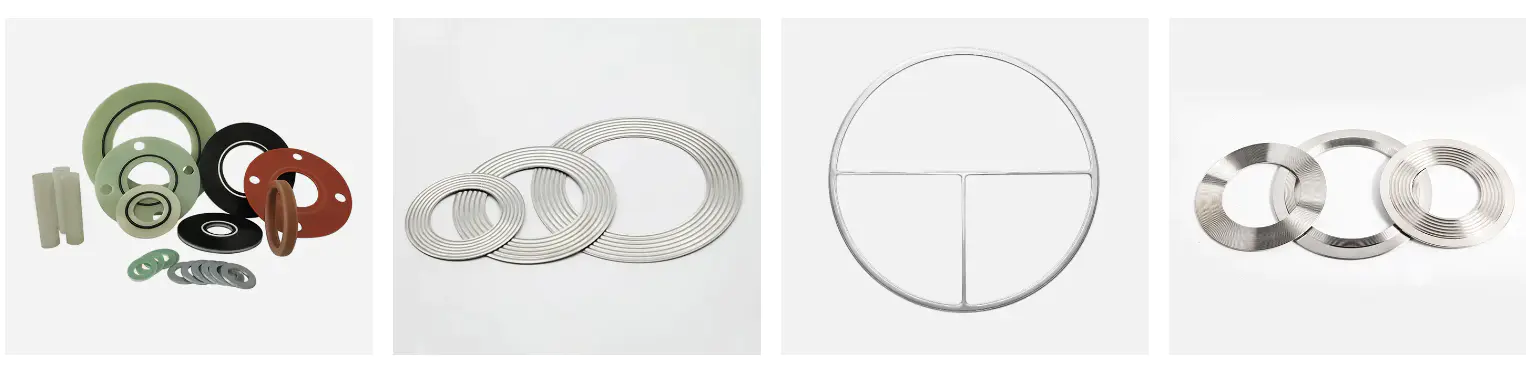
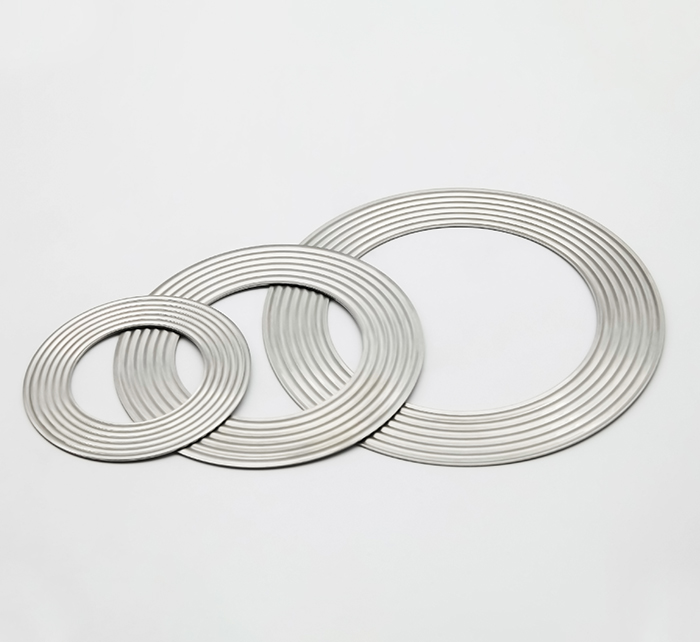
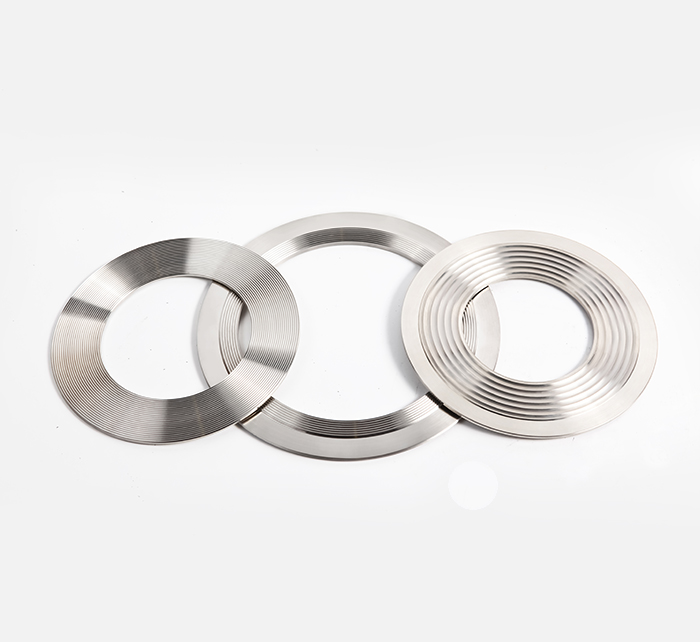
A kammprofile gasket, sometimes referred to in the industry using the alternate spelling camprofile gasket, is a semi metallic gasket built around a solid metal core that is machined with a series of fine concentric grooves on both sealing faces. This grooved core is then covered with a thin soft sealing layer, most often graphite, PTFE, or mica, which is either glued, mechanically fixed, or laminated onto the machined surface.
The grooves on a kammprofile core concentrate the available bolt load along a series of narrow contact peaks rather than spreading it evenly across the whole face. This concentrated stress pattern allows the soft facing layer to flow into microscopic surface irregularities on the flange while the solid core underneath resists over compression and maintains dimensional stability. Because the core carries the structural load, an industrial kammprofile gasket generally shows lower compression set and less relaxation over time compared with softer, purely non metallic gasket sheet.
The thin facing layer on top of the grooved core is what actually contacts the flange surface and closes off leak paths at the micro level. Facing choice is largely driven by the process fluid and the operating temperature range, with graphite covering the broadest general purpose window, PTFE suited to chemically aggressive or corrosive service, and mica reserved for higher temperature applications where graphite oxidation becomes a concern.
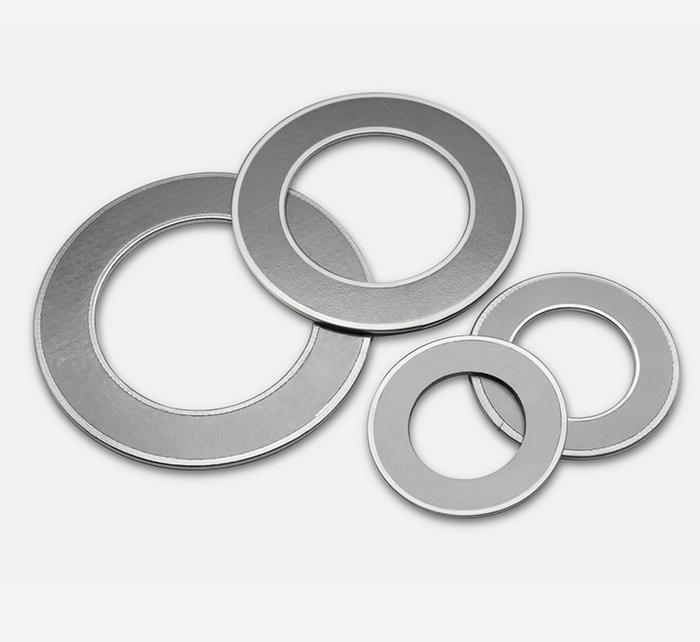
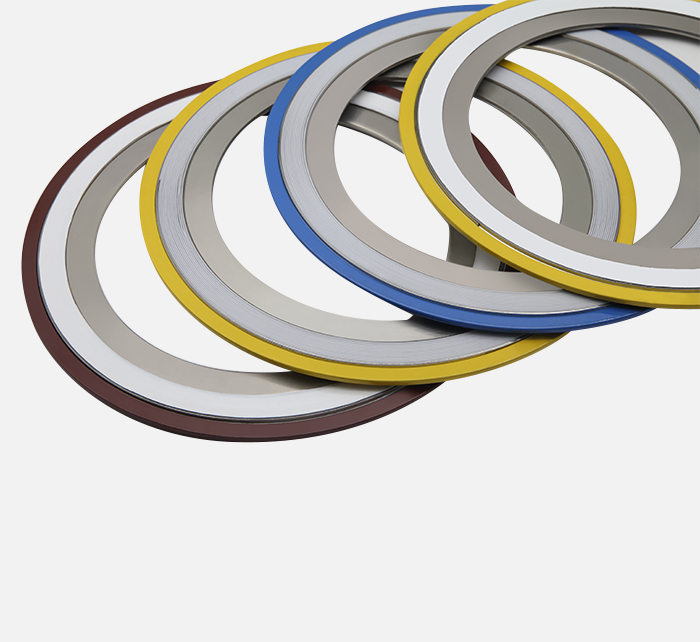
A spiral wound gasket is built by winding a preformed V shaped or W shaped metal strip together with a soft filler ribbon, typically flexible graphite or PTFE, around a mandrel in alternating layers. The result is a spring like, layered ring that is then fitted with an inner ring, an outer ring, or both, depending on the flange type and pressure class it will serve.
The alternating metal and filler layers give a spiral wound gasket a degree of built in resilience, allowing it to accommodate small amounts of flange movement or minor surface irregularity without immediately losing sealing contact. The metal winding provides mechanical strength and recovery, while the filler ribbon fills the microscopic gap between the winding and the flange face at each layer.
An inner ring, when fitted, prevents the winding from buckling inward under pressure and protects the filler material from erosion by the process flow at the bore. An outer centering ring keeps the gasket correctly positioned on the flange and acts as a compression stop, helping to prevent over tightening during installation. This ring based support system is one of the reasons spiral wound gaskets are so widely used across a broad range of standard flange types.
The table below summarizes the general structural distinctions that come up most often in a kammprofile gasket vs spiral wound gasket discussion, based on how each gasket family is typically built and installed.
| Feature | Kammprofile Gasket | Spiral Wound Gasket |
|---|---|---|
| Core Structure | Solid grooved metal core | Wound metal strip and filler plies |
| Typical Installed Thickness | Thinner, more compact profile | Comparatively thicker profile |
| Compression Set Over Time | Generally lower | Moderate |
| Flange Surface Finish Needed | Prefers a smoother machined finish | Tolerates a broader finish range |
| Structural Rigidity | Higher, solid core | Moderate, more flexible |
| Common Usage Pattern | Heat exchangers, reactors, high integrity flanges | General piping, valves, pumps |
The facing or filler material used on a gasket generally has more influence over maximum operating temperature than the base gasket architecture itself. The line chart below illustrates typical temperature handling trends across PTFE, flexible graphite, and mica facing options for both gasket families.
Mica faced gaskets generally support the highest temperature range of the three common facing options, and a mica faced kammprofile gasket tends to hold that advantage a little further than a mica faced spiral wound gasket because the solid grooved core helps anchor the facing layer against flaking during repeated thermal cycling. This makes mica faced kammprofile designs a common recommendation for industrial kammprofile gasket applications in higher temperature process equipment.
The column chart below shows a general, illustrative distribution of where kammprofile gaskets are typically specified across industrial equipment categories, based on common usage patterns observed across the fluid sealing industry.
Heat exchangers represent the largest general share of kammprofile gasket demand, which lines up with the requirement for a thin, dimensionally stable gasket that can be repeated across many tube bundle flanges on a single unit. Pressure vessels, petrochemical piping, power generation equipment, and marine or shipbuilding applications round out the remaining common usage categories.
The radar chart below summarizes six general performance dimensions side by side, giving a quick visual read on where each gasket family tends to hold an advantage.
The overall shape shows kammprofile gaskets pulling ahead on sealing performance, temperature resistance, and structural rigidity, largely a result of the solid grooved core. Spiral wound gaskets pull ahead on installation ease and application versatility, reflecting their long history as a widely stocked, broadly compatible option across general industrial piping.
Both gasket families are typically built from a similar pool of core and facing materials, selected to match the process fluid, temperature, and pressure conditions of the flange being sealed. A capable metal graphite gasket supplier will generally offer combinations across both product lines so that engineering teams can standardize material choices where practical.
| Component | Common Options | Typical Notes |
|---|---|---|
| Kammprofile Core Metal | Stainless steel, carbon steel, alloy steel | Selected based on corrosion exposure and pressure class |
| Kammprofile Facing Layer | Graphite, PTFE, mica | Determines chemical resistance and temperature ceiling |
| Spiral Wound Winding Metal | Stainless steel, alloy steel | Provides the spring like mechanical recovery |
| Spiral Wound Filler Material | Graphite, PTFE | Fills micro gaps between windings and flange face |
Looking at a broader camprofile gasket comparison across common industrial equipment categories helps clarify why one gasket family tends to be specified more often than the other in a given setting.
A heat exchanger kammprofile gasket is generally favored for tube bundle and channel cover flanges because the thin grooved profile fits tighter installed gaps and holds bolt load more consistently through repeated startup and shutdown thermal cycles.
Larger diameter vessel manways and access flanges frequently call for a custom kammprofile gasket sized to match specific bolt circles and groove profiles, supporting consistent sealing across sizeable flange diameters.
Standard pipeline runs, valve bonnets, and pump casing flanges continue to rely heavily on spiral wound gasket designs thanks to their broad compatibility with a wide range of flange surface finishes and their ready availability in common sizes.
Working through the following considerations in order generally helps narrow the decision between the two gasket families for a specific flange or piece of equipment.
Correct installation practice has a direct effect on how well either gasket family performs in service, regardless of which type is selected.
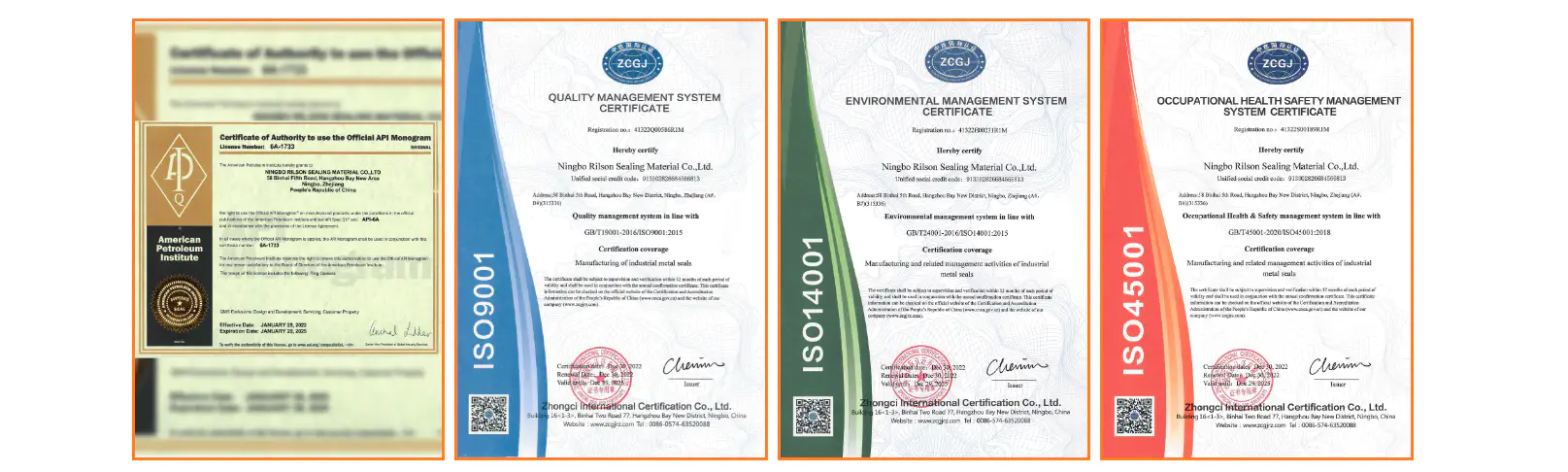
Ningbo Rilson Sealing Material Co., Ltd was founded in 2007 and is based in Ningbo, Zhejiang Province, operating a manufacturing facility spanning 20,000 square meters that is dedicated to the secure and dependable operation of fluid sealing systems. The company runs multiple production lines and specializes in the design and manufacture of sealing gaskets and related sealing materials for the petroleum, chemical, power, shipbuilding, and machinery manufacturing sectors, with clients located across many regions of the world.
As an experienced kammprofile gasket manufacturer and kammprofile gasket supplier, Rilson also produces spiral wound gaskets, ring joint gaskets, corrugated metal gaskets, insulation kit gaskets, and non-asbestos gaskets on the same site, which supports consistent quality control when customers are comparing the two product families side by side. The company can also work as a camprofile gasket manufacturer for projects that require a custom kammprofile gasket matched to a specific flange drawing, including core metal, facing material, groove profile, and outer dimension. As a metal graphite gasket supplier, Rilson also supplies graphite faced and graphite filled products used across both kammprofile and spiral wound lines for heat exchanger and general piping service.
The company centers its operations around the principles of integrity, precision, innovation, and mutual success, aiming to support customers across the fluid sealing industry with consistent engineering communication and manufacturing capability throughout the sourcing process.
A kammprofile gasket is a semi metallic gasket built from a solid grooved metal core covered with a thin soft sealing layer such as graphite, PTFE, or mica.
A spiral wound gasket is formed by winding a preformed metal strip together with a soft filler ribbon in alternating layers, typically supported by inner and outer rings.
A kammprofile gasket relies on a solid grooved core for rigidity and low compression set, while a spiral wound gasket relies on layered metal windings and filler for spring like recovery.
A heat exchanger kammprofile gasket is commonly favored because its thinner profile and stable bolt load performance suit repeated thermal cycling well.
Yes, kammprofile gaskets are widely used in high temperature and high pressure environments, particularly with mica or graphite facing selected for the process conditions.
Common facing options include flexible graphite for general purpose service, PTFE for chemically aggressive fluids, and mica for higher temperature applications.
Yes, spiral wound gaskets are commonly used across a wide range of standard pipeline, valve, and pump flange types due to their broad compatibility.
Consider operating temperature, flange surface finish, available installed thickness, and bolt load stability requirements before selecting between the two types.
Kammprofile gaskets generally perform best on a smoother machined flange face, since the grooved core concentrates sealing stress along narrow contact peaks.
Yes, a custom kammprofile gasket can be manufactured to match specific inner and outer diameters, groove profiles, thickness, and facing material for a given flange drawing.

RILSON GASKET
Ningbo Rilson Sealing Material Co., Ltd is dedicated to ensuring the secure and dependable operation of fluid sealing systems, offering clients the appropriate sealing technology solutions.
Copyright © Ningbo Rilson Sealing Material Co., Ltd. All Rights Reserved.
