
 English
 русский
 中文简体
中文简体
RILSON GASKET
Ningbo Rilson Sealing Material Co., Ltd is dedicated to ensuring the secure and dependable operation of fluid sealing systems, offering clients the appropriate sealing technology solutions.
Content
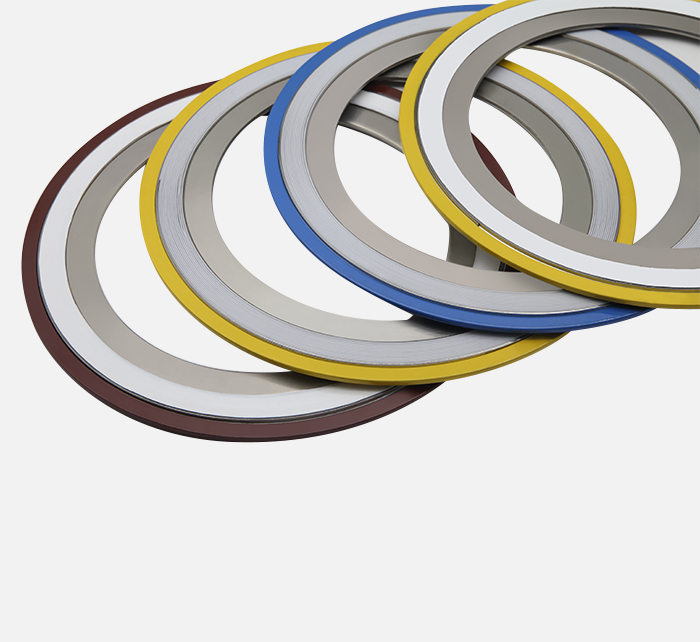
Spiral wound gaskets are generally classified in two main ways: by ring configuration and by the winding and filler material combination used inside the sealing element. Ring configuration options include a spiral wound gasket with inner ring, a spiral wound gasket with outer ring only, a spiral wound gasket without inner ring, and a basic style produced without any supporting ring at all. Material combinations are typically grouped by filler type, such as graphite, PTFE, or mica, paired with a metal winding strip chosen to match the process media and the flange material.
Because flange size, operating temperature, and the media being sealed all vary from one application to another, matching the correct type of spiral wound gasket to the service condition plays a central role in achieving a stable, long lasting seal at the flange connection.
A spiral wound gasket is made with an alternating combination of formed metal wire and soft filler material, wound together into a dense ring. When compressed between two flanges, the alternating layers form an effective seal while still allowing a degree of flexibility that plain metal gaskets do not offer.
The metal winding gives the gasket its structural strength, while the filler layer fills microscopic surface irregularities on the flange face. Filler and winding metal can both be changed independently to accommodate different chemical compatibility requirements, which is part of why spiral wound gaskets are available in so many type combinations.
A V shaped crown centered in the metal strip acts as a small spring, giving the gasket added resiliency under changing temperature and pressure conditions. If the available bolt load to compress a gasket is limited, the winding density and gasket dimensions can be adjusted to still provide an effective seal.
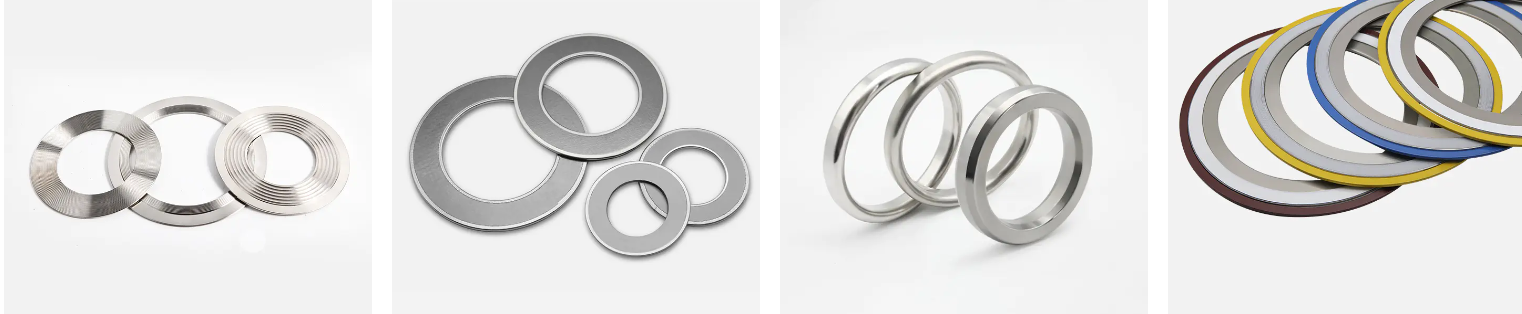
Ring configuration is usually the first classification a buyer needs to confirm, since it depends directly on the flange design being sealed. An outer centering ring positions the gasket accurately within the flange bolt circle and acts as a compression limiter, while an inner ring adds radial strength, reduces flange erosion, and protects the winding from the process media.
| Ring Configuration | Typical Description |
|---|---|
| With inner ring | Outer centering ring plus inner ring for added radial support and flange protection |
| With outer ring only | Outer centering ring only, commonly used on standard raised face flanges |
| Without inner ring | Sealing element with outer ring, no separate inner support ring included |
| Without any ring | Sealing element only, often used where the gasket seats inside a confined groove |
Figures represent general distribution patterns seen across common industrial flange applications and are shown for illustrative comparison only.
Filler material choice mainly depends on operating temperature and chemical exposure. Graphite filler is one of the most widely used options because it performs well across a broad temperature range and resists a wide variety of process media, though it is generally kept away from strongly oxidizing environments at very high temperature. PTFE filler is often selected for oxidizing or aggressive chemical service where graphite is not suitable. Mica based filler is used for higher temperature applications, and flexible non-metallic alternatives are available for lighter duty or lower temperature service.
Approximate reference ranges only; actual limits vary by exact formulation, winding metal, and process conditions.
Choosing between a graphite filled, PTFE filled, or mica filled spiral wound gasket usually comes down to weighing temperature resistance, oxidation resistance, chemical compatibility range, compression recovery, and overall sealing reliability against the specific process conditions involved.
Ratings are relative and intended for general comparison; actual performance depends on exact formulation and service conditions.
As bolt load increases toward the rated value, a spiral wound gasket gradually develops its full spring back and recovery capacity. This gradual recovery pattern is one of the reasons spiral wound gaskets tend to accommodate minor flange movement and thermal cycling better than flat, non-metallic gaskets.
Curve illustrates a general recovery pattern; exact values vary by gasket construction, filler type, and installation conditions.
Selecting between the available types of spiral wound gaskets generally comes down to reviewing a short list of service conditions before placing an order with a spiral wound gasket supplier.
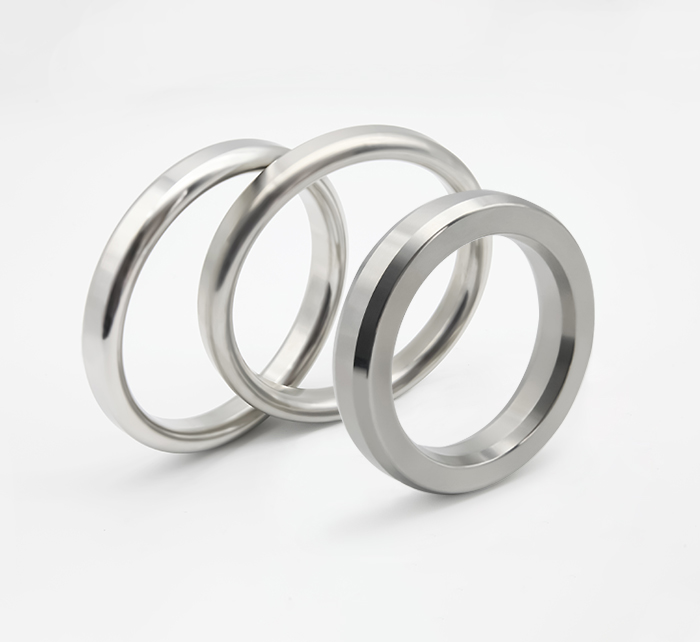
For flanges built around a ring type joint groove, a ring type joint gasket or solid metal RTJ gasket is generally used instead of a standard spiral wound gasket, so confirming flange facing type early avoids ordering the wrong product family.
Ningbo Rilson Sealing Material Co., Ltd. was founded in 2007 and is located in Ningbo, Zhejiang Province, operating as a spiral wound gasket manufacturer and spiral wound gasket supplier. The manufacturing facility spans about 20,000 square meters and runs multiple production lines dedicated to sealing products for the petroleum, chemical, power, shipbuilding, and machinery manufacturing sectors.
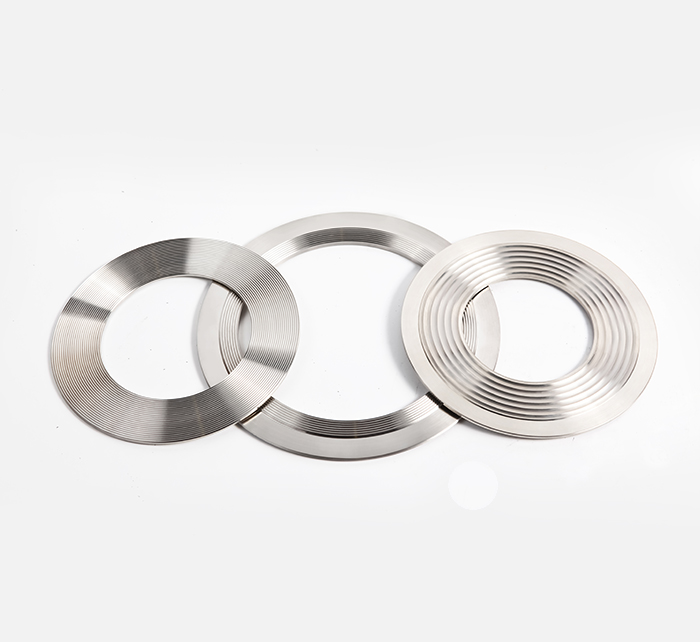
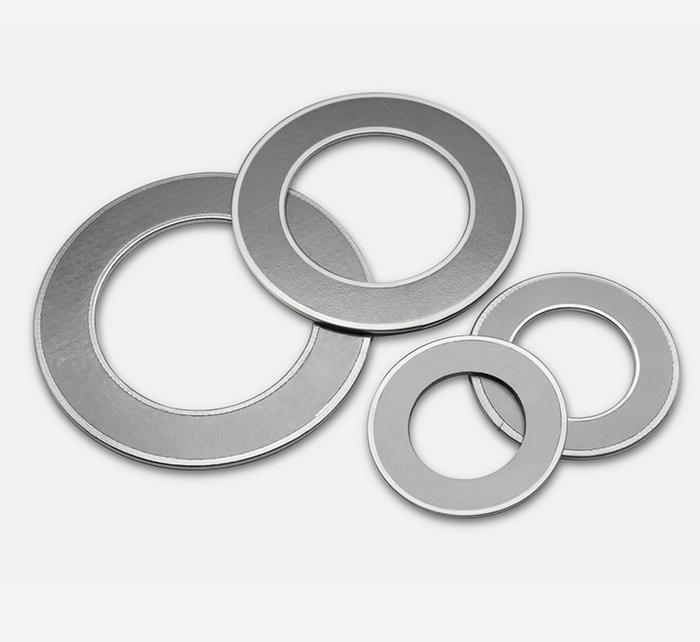
As a spiral wound gasket factory, the company produces spiral wound gaskets, ring joint gaskets, kammprofile gaskets, corrugated metal gaskets, insulation kit gaskets, and non-asbestos gaskets, maintaining structured internal quality control procedures throughout production. With clients across multiple regions, the company focuses on delivering practical sealing technology solutions built around integrity, precision, innovation, and long term customer relationships.
Spiral wound gaskets are used to seal flange connections and are widely applied in chemical processing, oil and gas pipelines, power plants, heat exchangers, and pressure vessels.
When compressed between two flanges, the alternating metal winding and filler layers conform to minor surface irregularities on the flange face while the metal winding provides spring back to help maintain contact pressure.
A spiral wound gasket is made from a formed metal winding strip combined with a soft filler material, often paired with an outer ring, an inner ring, or both, depending on the configuration.
The outer ring centers the gasket in the flange and limits compression, while the inner ring adds radial support, helps reduce flange erosion, and protects the winding from the process media.
Graphite filler is widely used because it performs across a broad temperature range and resists many process media, making it a common general purpose choice for spiral wound gaskets.
Gasket size is generally matched to the flange nominal pipe size and pressure class, so confirming the exact flange dimensions and facing type is the first step before ordering.
Spiral wound gaskets are used across a wide range of flange pressure classes, with winding density and ring configuration adjusted to suit the specific pressure rating involved.
Service life depends on operating temperature, pressure, the process media involved, and storage conditions before installation, so periodic inspection during scheduled shutdowns is generally recommended.
Spiral wound gaskets are generally intended for single use, since the winding and filler lose their spring back capacity once compressed and removed from service.
Correct installation involves inspecting the flange faces, centering the gasket within the bolt circle, and tightening bolts gradually in a cross pattern to apply even compression.

RILSON GASKET
Ningbo Rilson Sealing Material Co., Ltd is dedicated to ensuring the secure and dependable operation of fluid sealing systems, offering clients the appropriate sealing technology solutions.
Copyright © Ningbo Rilson Sealing Material Co., Ltd. All Rights Reserved.
