
 English
 русский
 中文简体
中文简体
RILSON GASKET
Ningbo Rilson Sealing Material Co., Ltd is dedicated to ensuring the secure and dependable operation of fluid sealing systems, offering clients the appropriate sealing technology solutions.
Content
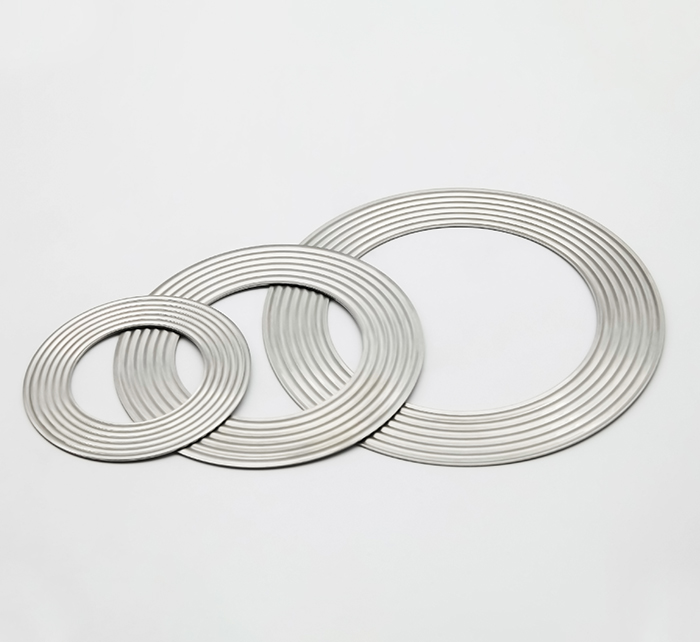
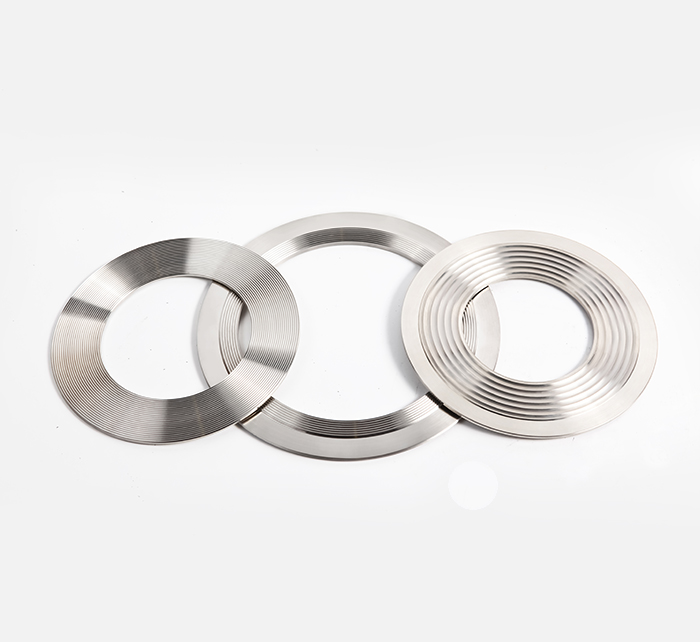
A Kammprofile gasket is a metal cored sealing element with a series of fine concentric grooves machined into both flat faces of the core, over which a soft, conformable facing layer, typically flexible graphite or PTFE, is bonded or mechanically attached along the outer and inner edges. When the gasket is compressed between two flange faces, the ridges of the serrated metal core press gently into the soft facing material and create many parallel, closely spaced sealing lines rather than a single flat contact surface. This combination gives the gasket the mechanical support of a metal ring together with the conformability of a soft filler, which allows it to compensate for flange surface irregularities, minor flange distortion, and a certain amount of thermal movement while helping to maintain a stable seal under demanding pressure and temperature conditions.
The word Kammprofile comes from the German term Kamm, meaning comb, which refers to the fine comb like grooves cut into the metal core. In English language technical writing the same product family is sometimes described as a grooved metal gasket or camprofile gasket, and these names are generally used to describe the same underlying construction. Kammprofile gaskets are widely referenced in flange sealing literature as a semi metallic gasket style positioned between fully soft gaskets and solid metal gaskets in terms of stiffness and conformability.
The remainder of this guide walks through how the gasket is built, the common configurations available, the core metals and facing materials typically used, how the design compares with other common gasket families, where it is most often applied, how it performs under repeated thermal cycling, and what to consider when selecting or customizing a gasket for a specific flange joint.
The core of a Kammprofile gasket is a solid metal ring machined with a repeating pattern of shallow concentric grooves on each face. The groove pitch and depth are kept small and uniform so that, once the facing layer is applied, the resulting surface behaves as a large number of narrow sealing lands acting together rather than as one continuous flat surface. This is the central idea behind the design: instead of relying on a single wide contact band to stop leakage, the gasket relies on many thin lines of contact, so that even a slightly uneven or lightly damaged flange face still meets several sealing points across the gasket width.
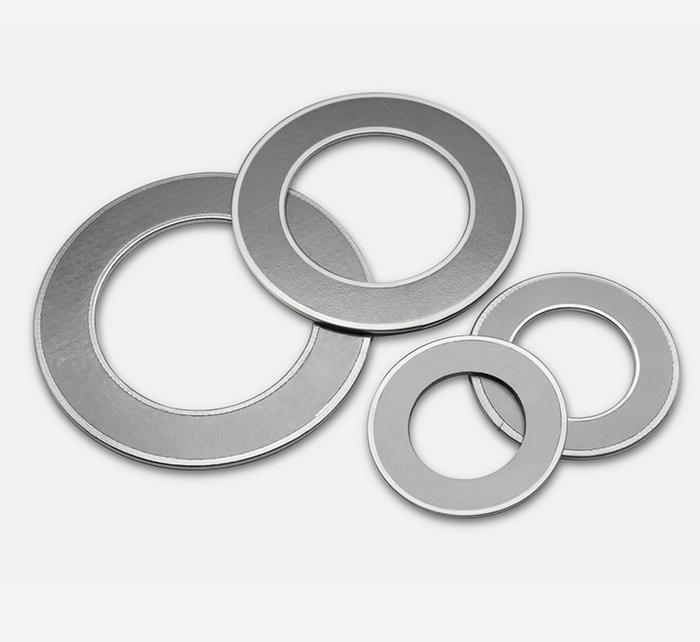
The soft facing layer, most commonly flexible graphite or PTFE, is fitted to both sides of the grooved core. During compression, the metal ridges bite lightly into this soft layer, which flows into the microscopic irregularities of the flange surface. The metal core itself resists excessive compression, which helps to protect the facing material from being crushed out of the joint and gives the assembly good resistance to blow out under pressure surges, a characteristic frequently associated with this gasket family in general flange sealing references.
Depending on flange size and application, an outer centering ring, an inner ring, or both may be added around the grooved core. These rings do not usually take part in the primary sealing action; instead they help position the gasket accurately during installation and offer a degree of physical protection to the facing edge, which is particularly useful on larger diameter joints or where the gasket must be handled repeatedly during maintenance.
Although the grooved core and soft facing concept stays the same across the range, Kammprofile gaskets are generally produced in a handful of recognizable configurations to suit different flange designs and installation conditions. The table below summarizes the configurations most often encountered in general flange sealing and heat exchanger service.
| Configuration | Typical Description | Common Use Context |
|---|---|---|
| Basic Kammprofile | Grooved core with facing on both sides, no additional ring | General flange joints with a suitable gasket seating area |
| Kammprofile with Outer Ring | Metal centering ring fitted around the outer diameter | Larger flanges where installation alignment and edge protection matter |
| Kammprofile with Outer and Inner Ring | Centering rings fitted on both the outer and inner diameters | Heat exchanger channel covers and floating head joints |
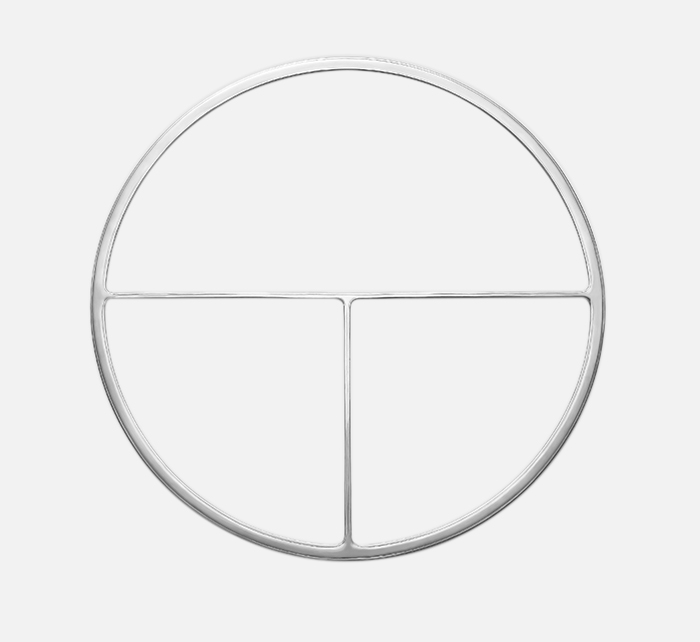
| Kammprofile for Pass Partition Joints | Custom shaped profile that includes pass partition bars | Multi pass shell and tube heat exchangers requiring internal partition sealing lines |
Selecting the right combination of core metal and facing material is one of the more important decisions when specifying a Kammprofile gasket, since the two elements handle different jobs. The core provides mechanical strength, resistance to bolt load, and dimensional stability, while the facing layer provides conformability against the flange surface and compatibility with the process media.
Stainless steel grades such as 304 and 316L are among the most commonly used core materials for general service, with 316L generally preferred where the process stream contains chlorides or is otherwise moderately corrosive. For higher strength or more aggressive media, duplex stainless steel is often considered, while titanium and nickel based alloys such as Monel and Inconel are typically reserved for specialized chemical processing, oxidizing environments, or particularly demanding temperature conditions.
| Core Metal | General Corrosion Orientation | Typical Consideration |
|---|---|---|
| Stainless Steel 304 | General resistance for a wide range of non aggressive media | Widely used general purpose option across many industrial systems |
| Stainless Steel 316L or 321 | Improved resistance in chloride containing or moderately corrosive streams | Common in petrochemical and general process piping systems |
| Duplex Stainless Steel | Higher strength together with strong resistance to pitting and stress corrosion | Considered for more aggressive media and higher pressure duties |
| Titanium and Nickel Alloys | Strong resistance in oxidizing and highly corrosive environments | Reserved for specialized chemical processing and severe service points |
Flexible graphite is one of the most frequently selected facing materials because it combines good conformability with a wide operating temperature range, which makes it a common choice for a kammprofile gasket for high temperature service. PTFE facing layers are generally chosen when the process stream is chemically aggressive but the operating temperature stays within the material limits of PTFE, which is the reasoning behind a PTFE kammprofile gasket for chemical service being a common specification in chemical processing plants handling acids, solvents, or other reactive fluids. Mica based composites and ceramic fiber facings are typically reserved for the highest temperature applications, where graphite or PTFE would no longer be suitable.
Illustrative relative comparison of upper continuous service temperature capability among common facing materials. Actual limits vary by process media, pressure, and application conditions, and should be confirmed against the specific facing material specification.
Engineers frequently weigh a Kammprofile gasket against spiral wound and corrugated metal gaskets when selecting a sealing solution for a demanding joint. Each style has a different balance of sealing reliability, recovery behavior, and ease of installation, and the right choice generally depends on the specific flange design, operating conditions, and maintenance expectations of the plant.
A Kammprofile gasket is often considered instead of a spiral wound gasket on larger diameter joints, on flanges with a wider surface finish tolerance, or where a more consistent and generally lower gasket seating stress is preferred, since the metal core distributes load differently than the windings of a spiral wound design. Spiral wound gaskets remain a common and well understood option for many general purpose flange joints, so the decision is typically driven by flange geometry, diameter, and the specific performance priorities of the joint rather than by one style being universally better than the other.
General comparative positioning based on typical engineering characteristics of each gasket family. Actual performance depends on the specific design, dimensions, and operating conditions of each joint.
Because of its blend of mechanical strength and sealing conformability, this gasket style is used across a wide range of process industries wherever a bolted flange joint experiences meaningful pressure, temperature, or thermal cycling. Some of the most frequently cited application areas include the following.
Illustrative relative emphasis across sectors that commonly reference Kammprofile gaskets in flange sealing practice, not a formal market survey.
One of the reasons this gasket style is frequently selected for cyclic service is the way the metal core supports the facing layer through repeated heating and cooling. In a joint that goes through frequent startup, shutdown, or temperature swings, a purely soft gasket can gradually lose sealing stress as the facing material relaxes, while a gasket with a supportive metal core tends to retain more of its sealing stress across many cycles. This behavior is part of why a kammprofile gasket for thermal cycling service is a common specification on equipment such as heat exchangers and reactors that regularly go through temperature changes during normal operation.
Illustrative trend describing the general behavior of a metal reinforced gasket under repeated thermal cycling. Actual retention depends on facing material, bolt load maintenance, and process conditions.
Alongside thermal cycling resistance, the metal core also helps the gasket resist blow out under sudden pressure surges, since the ring maintains the compressed thickness of the joint even if the facing material locally relaxes. This is a meaningful consideration for equipment operators evaluating a kammprofile gasket for high temperature service where both pressure and temperature fluctuate during process upsets.
Choosing an appropriate gasket for a specific flange starts with the operating conditions of the joint: process temperature range, internal pressure, and the chemical nature of the media all influence which core metal and facing material combination makes sense. Flange type and surface finish also matter, since the groove pattern and facing thickness need to suit the specific sealing surface, whether that is a raised face, a ring type joint groove, or a proprietary heat exchanger flange design.
Many Kammprofile gaskets are produced to commonly referenced flange dimension standards, but a considerable share of real world orders involve non standard shapes, particularly for heat exchangers, pressure vessels, and specialized process equipment with pass partitions or irregular flange outlines. A custom kammprofile gasket can be produced from the customer's flange drawing, matching the exact outer profile, bolt hole layout, and pass partition bar arrangement required by the equipment, rather than relying on a generic round shape that may not fit the actual joint.
Working with an experienced kammprofile gasket manufacturer is generally helpful when the flange geometry is unusual or when the process media calls for a less common core metal or facing combination, since production tooling, groove machining accuracy, and facing attachment method all affect how consistently the finished gasket seals in service. A capable kammprofile gasket supplier will typically ask for the flange drawing, the operating temperature and pressure range, and details of the process media before recommending a specific construction.
Even a well designed gasket can underperform if it is installed incorrectly, so a consistent installation routine matters as much as the gasket specification itself. The general sequence below reflects common practice referenced across flange joint assembly guidance.
Following a consistent tightening sequence is particularly important for larger diameter gaskets, since uneven bolt load can distort the metal core slightly and create localized leak paths even when the gasket itself is correctly specified for the application.
Ningbo Rilson Sealing Material Co., Ltd. was founded in 2007 and operates as a dedicated kammprofile gasket manufacturer and kammprofile gasket supplier based in Ningbo, Zhejiang Province. The manufacturing facility spans approximately 20,000 square meters and is organized around multiple dedicated production lines for sealing products, with an operational focus on keeping fluid sealing systems secure and dependable across the petroleum, chemical, power, shipbuilding, and machinery manufacturing sectors.
The product range produced at the facility includes spiral wound gaskets, ring joint gaskets, kammprofile gaskets, corrugated metal gaskets, insulation kit gaskets, and non asbestos gaskets, giving the company practical experience across most common semi metallic and soft gasket families used in flange sealing. This breadth of production experience supports the ability to advise on gasket selection across different flange types, core metals, and facing materials, including recommending an appropriate construction for a kammprofile gasket for pressure vessel or heat exchanger project with unusual flange dimensions.
As a company operating in the fluid sealing industry, Ningbo Rilson Sealing Material Co., Ltd. works with clients across many regions and places emphasis on integrity, precision, innovation, and building durable working relationships with customers over time. The company continues to invest in its production capability with the aim of becoming a consistently reliable partner for industrial gasket needs, including custom sealing projects that fall outside standard catalog dimensions.

RILSON GASKET
Ningbo Rilson Sealing Material Co., Ltd is dedicated to ensuring the secure and dependable operation of fluid sealing systems, offering clients the appropriate sealing technology solutions.
Copyright © Ningbo Rilson Sealing Material Co., Ltd. All Rights Reserved.
