
 English
 русский
 中文简体
中文简体
RILSON GASKET
Ningbo Rilson Sealing Material Co., Ltd is dedicated to ensuring the secure and dependable operation of fluid sealing systems, offering clients the appropriate sealing technology solutions.
A flange on a crude-oil preheater starts weeping two weeks after a maintenance shutdown. The drawing calls for a spiral wound gasket with 304 stainless steel winding and graphite filler, rated for the 250 bar design pressure. The replacement part was a compressed non-asbestos sheet gasket: cheaper and easier to cut, but rated for roughly one-fifth of that pressure. The weep becomes a leak within a month.
Gasket material selection is that specific. The right gasket depends on pressure, temperature, media, flange class and surface finish. This guide covers the main gasket material types used in industrial flanges and how to shortlist them for your service.
Content
Three variables do most of the work: operating temperature, operating pressure, and the medium that touches the gasket. Temperature decides whether an elastomer, PTFE, or a metal-based construction can survive. Pressure decides whether a soft sheet can hold the joint load. Media compatibility decides chemical resistance: an NBR gasket that works in oil is attacked by steam, while EPDM is at home in steam and water but not in hydrocarbons.
Flange class and finish also matter. A raised-face flange with rough machining needs a conformable material, while a ring-joint flange needs a solid metal gasket. The chart below summarizes typical maximum continuous temperatures for the most common gasket material types. Exact limits depend on grade, thickness and filler, so always verify against the manufacturer's datasheet.
Typical maximum continuous service temperature of common gasket materials, degrees Celsius, oxidizing service.
Soft gaskets are cut from sheet or molded from polymer compounds. They are inexpensive, easy to install, and conform to imperfect flanges. Their limits are lower than metal gaskets, which keeps them in general-purpose duties.
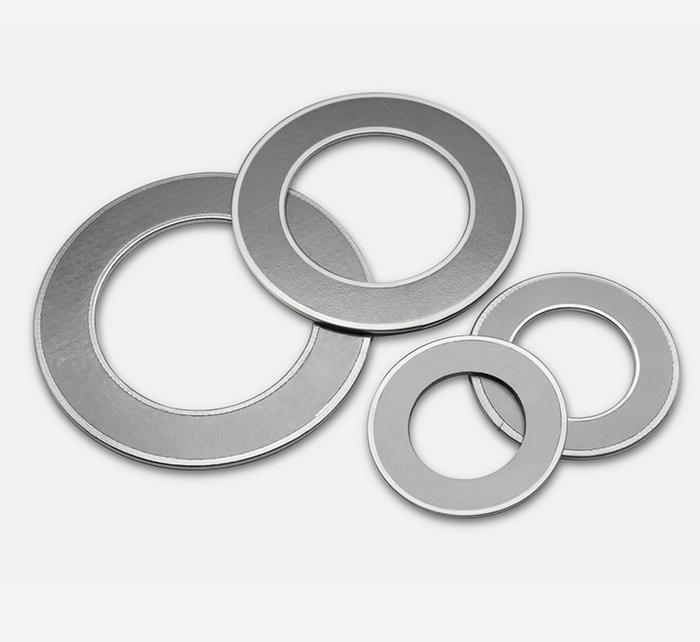
Made from aramid or mineral fibers bound with a synthetic rubber binder, non-asbestos sheet is the workhorse of flanged joints on water, oil and steam at moderate conditions. Typical limits are around 400 degrees Celsius at class 150-300 pressures. It is cheap, cuts cleanly, and seals well on reasonably smooth flanges.
Exfoliated graphite sheet holds a seal from cryogenic temperatures to roughly 450-500 degrees Celsius in oxidizing service, and higher in inert atmospheres. Graphite conforms well and survives thermal cycling, but it has low tensile strength, so it is often bonded to a metal insert or used inside a spiral wound gasket.
PTFE is the default for aggressive chemicals because it resists almost every medium, including strong acids and solvents. Its weakness is creep: under sustained bolt load it cold-flows and the gasket thins, causing torque loss. Modified PTFE grades improve this, but PTFE remains a low-to-medium pressure material in most applications.
Natural rubber, NBR, EPDM, neoprene, silicone and FKM are used where flexibility and a low-pressure seal matter more than temperature. NBR resists oil and fuel; EPDM resists water, steam and weather; FKM handles oils above 200 degrees Celsius. Elastomers are common in pumps, valves and piping at class 150 and below.
For a more complete look at soft gasket grades and their limits, see which materials are commonly used for non-metallic gaskets.
When pressure rises above class 300, or temperature beyond what polymers tolerate, the gasket needs metal. Semi-metallic designs combine a metal structure with a soft sealing layer for blowout resistance without sacrificing conformity; solid metal gaskets deform to seal at the highest pressures.
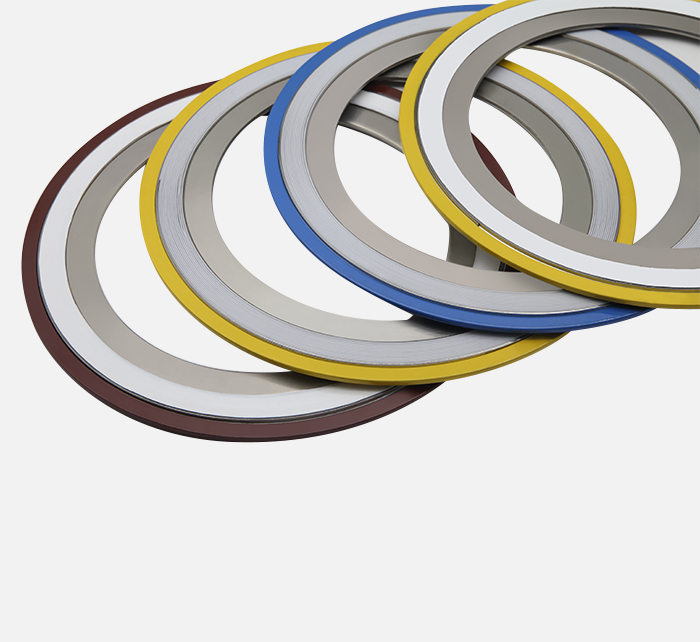
A spiral wound gasket is formed by winding a V-shaped metal strip together with a soft filler, then adding an inner ring and an outer centering ring. Stainless steel or high-nickel strips provide strength, while graphite, PTFE or non-asbestos filler provides the seal. Spiral wound gaskets are a proven answer for oil and gas, petrochemical and steam service up to class 1500 and beyond. Our spiral wound gasket range is built to API and ASME dimensional requirements. Outer ring width and filler choice are the main variables when specifying one.
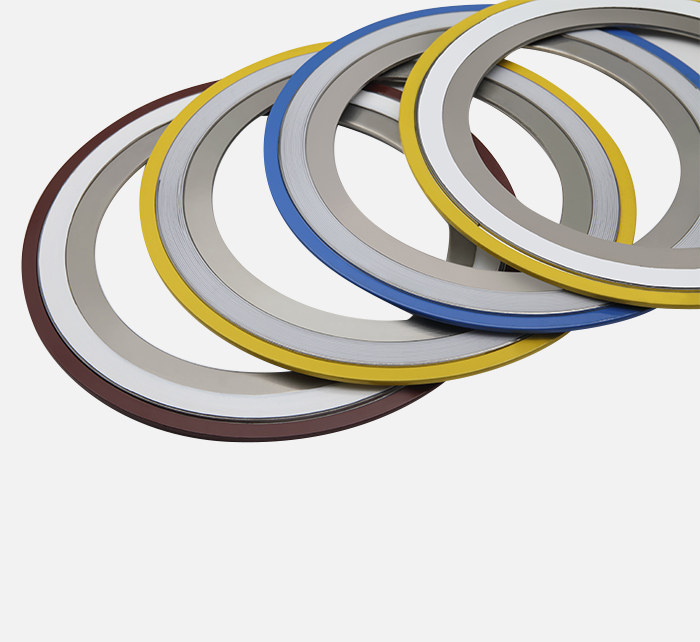 Custom Spiral Wound Gaskets Manufacturers, OEM/ODM Suppliers - Ningbo Rilson SeaNingbo Rilson Sealing Material Co., Ltd is a China Spiral Wound Gaskets manufacturers and Spiral Wound Gaskets OEM/ODM suppliers, Our com...View Product →
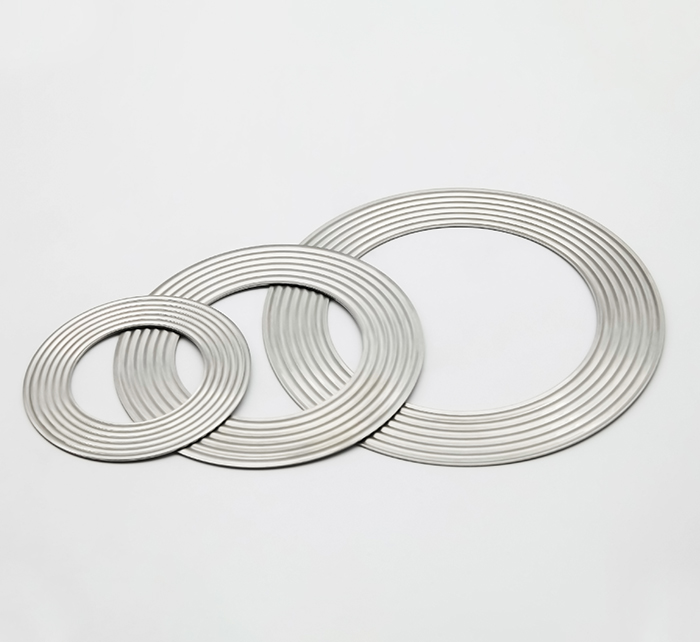
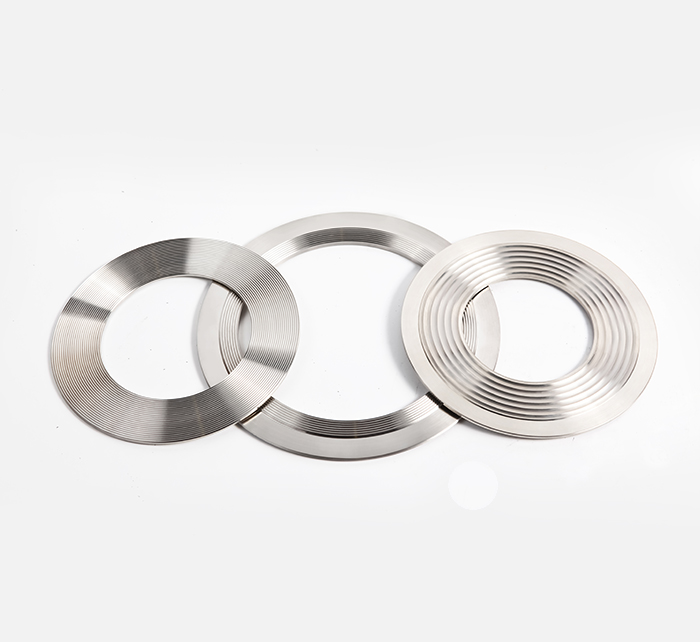
A kammprofile gasket has a solid metal core with concentric serrations machined on both faces, covered by a soft facing such as graphite or PTFE. The serrations create many sealing lines at low bolt load, which makes kammprofile gaskets popular for heat exchangers, pressure vessels and large-diameter joints. They can be reused more often than spiral wound types and perform well under thermal cycling. The kammprofile gasket is a strong choice when the flange is large, the gasket load is limited, or maintenance rotation is frequent.
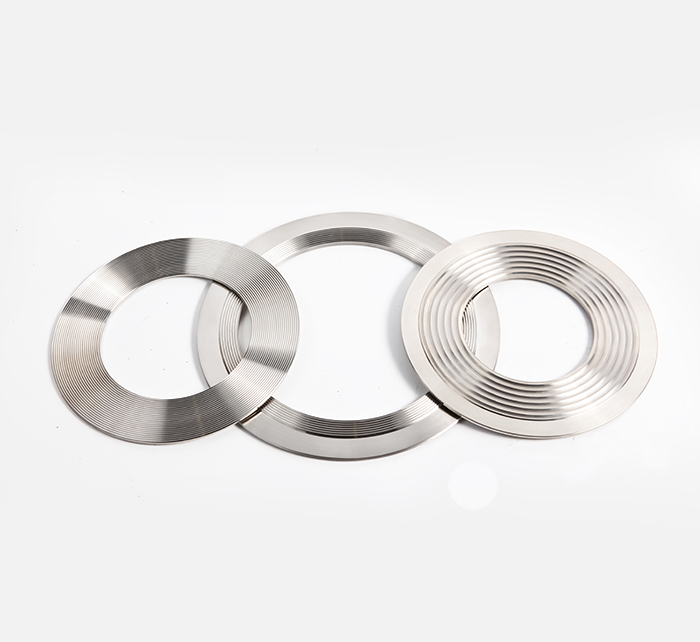 Custom Kammprofile gaskets Manufacturers, OEM/ODM Suppliers - Ningbo Rilson SealNingbo Rilson Sealing Material Co., Ltd is a China Kammprofile gaskets manufacturers and Kammprofile gaskets OEM/ODM suppliers, Our compa...View Product →
Kammprofile construction: flexible graphite facings are pressed onto a serrated stainless steel core. The concentric serrations create multiple sealing lines and hold the facing in place.
Corrugated metal gaskets are crimped from a thin metal sheet, with optional graphite or ceramic filler in the grooves. The corrugations give spring recovery on lighter flanges, while the metal resists temperatures beyond 800 degrees Celsius. They are found in furnace ducts, exhaust systems and high-temperature heat exchangers.
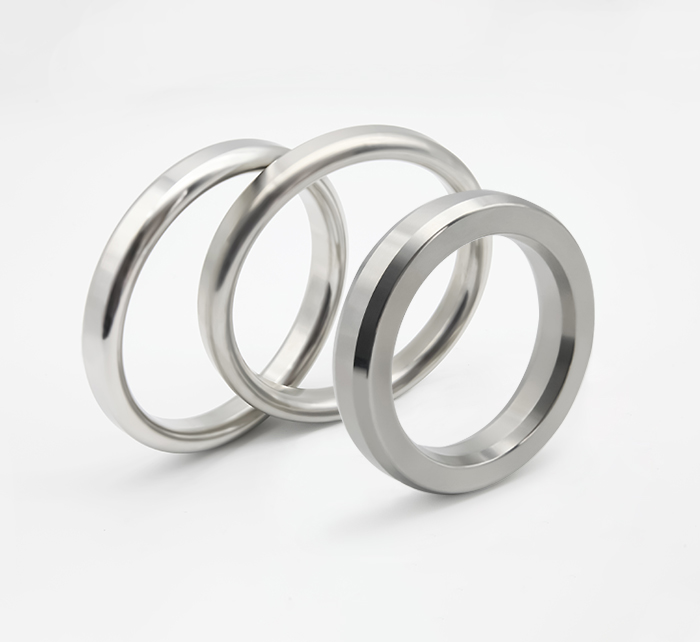
Ring joint gaskets are solid metal rings with an octagonal or oval cross-section, used with RTJ flange grooves. When the bolts are tightened, the gasket yields and the corners press into the groove to form a metal-to-metal seal. This design handles the most extreme pressure and temperature combinations, including wellhead and pipeline service under API 6A rules. The ring joint gasket must be softer than the flange: typically soft iron, carbon steel, stainless steel or a high-nickel alloy. RTJ is single-use; once the ring has yielded, it is not meant to be reused.
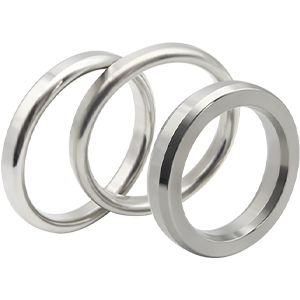 Custom Ring Joint Gaskets Manufacturers, OEM/ODM Suppliers - Ningbo Rilson SealiNingbo Rilson Sealing Material Co., Ltd is a China Ring Joint Gaskets manufacturers and Ring Joint Gaskets OEM/ODM suppliers, Our company...View Product →
The table below groups the main gasket material types by construction, practical limits and relative cost. Use it as a shortlist, then check the exact rating with the gasket manufacturer.
| Gasket type | Typical materials | Max temp | Max pressure | Relative cost |
|---|---|---|---|---|
| Non-asbestos sheet | Aramid / fiber + NBR | 400 °C | 50 bar | Low |
| PTFE sheet / envelope | Virgin or modified PTFE | 260 °C | 40 bar | Medium |
| Flexible graphite sheet | Exfoliated graphite | 500 °C | 100 bar | Medium |
| Corrugated metal | SS / high-nickel alloy | 800 °C | 150 bar | Medium |
| Spiral wound | SS + graphite / PTFE wound | 650 °C | 250 bar | Medium |
| Kammprofile | SS core + graphite facing | 650 °C | 420 bar | High |
| Ring joint (RTJ) | Soft iron, CS, SS, duplex | 540 °C | 700 bar+ | High |
Practical pressure capability of common gasket material types in flange service, bar. Actual ratings depend on flange class, grade and thickness.
Follow this sequence to narrow the field, and involve the gasket manufacturer before signing off on a high-cost material.
A large share of the gasket failures our engineers see are mismatches between the gasket type and the flange condition, not material breakdowns. An extra hour on the selection checklist is cheaper than an unplanned shutdown.
Q1. What is the best gasket material for high temperature and high pressure?
For combined high temperature and pressure, semi-metallic and metallic types are standard: spiral wound gaskets with graphite filler for general flange service, ring joint gaskets for RTJ flanges at extreme conditions, and kammprofile gaskets for heat exchanger or large-diameter joints.
Q2. How do I choose the right gasket material?
Define the maximum temperature, maximum pressure and the list of process media, then check the flange class and surface finish. These factors separate non-metallic from metal-based constructions, then narrow the choice to a specific grade.
Q3. Which gasket material is chemical resistant?
PTFE offers the broadest chemical resistance and is used with aggressive acids and solvents. Flexible graphite is good for steam and hydrocarbons but is attacked by strong oxidizers. For chemical service, match the elastomer or filler to the specific medium.
Q4. Spiral wound vs kammprofile gasket - what is the difference?
A spiral wound gasket is V-shaped metal strip wound with soft filler, giving high stiffness and blowout resistance. A kammprofile gasket has a solid serrated core with a soft facing, sealing with lower bolt load and surviving thermal cycling better; it is also easier to handle and often reusable.
Q5. Is PTFE a good gasket material?
PTFE is excellent for chemical resistance at low-to-medium pressure up to about 260 degrees Celsius, but it creeps under sustained load. For higher-pressure flanges, use a reinforcing design such as an envelope or a filled PTFE grade.
Q6. What is the difference between non-asbestos and asbestos gasket material?
Asbestos gaskets are banned in most countries because of health risks. Non-asbestos sheet uses aramid or mineral fibers with a synthetic rubber binder and offers similar or better performance at the same temperatures, making it the modern replacement in water, oil and steam service.

RILSON GASKET
Ningbo Rilson Sealing Material Co., Ltd is dedicated to ensuring the secure and dependable operation of fluid sealing systems, offering clients the appropriate sealing technology solutions.
Copyright © Ningbo Rilson Sealing Material Co., Ltd. All Rights Reserved.
