 English
 русский
 中文简体
中文简体
Content
- 1 The Short Answer: Ask About Material Construction, Ring Options, And Application Fit First
- 2 What A Spiral Wound Gasket Is And How It Achieves A Seal
- 3 Filler And Winding Material Options To Ask About
- 4 Why Recovery And Resiliency Matter Under Compression
- 5 Common Applications Across Industrial Systems
- 6 Comparing Spiral Wound Gasket Performance Dimensions At A Glance
- 7 Installation Best Practices For A Reliable Seal
- 8 Bolt Torque Considerations During Installation
- 9 Common Causes Of Spiral Wound Gasket Failure
- 10 What To Ask When Comparing A Spiral Wound Gasket Manufacturer
- 11 About Ningbo Rilson Sealing Material As A Spiral Wound Gasket Supplier
- 12 Frequently Asked Questions About Spiral Wound Gaskets
- 12.1 Q1. What is a Spiral Wound Gasket
- 12.2 Q2. What is the purpose of a Spiral Wound Gasket
- 12.3 Q3. What materials are available
- 12.4 Q4. Are Spiral Wound Gaskets suitable for oil and gas pipelines
- 12.5 Q5. Are Spiral Wound Gaskets suitable for heat exchangers
- 12.6 Q6. What standards are Spiral Wound Gaskets typically manufactured to
- 12.7 Q7. What are some installation best practices
- 12.8 Q8. What are common causes of Spiral Wound Gasket failure
The Short Answer: Ask About Material Construction, Ring Options, And Application Fit First
The most useful questions to ask a Spiral Wound Gaskets supplier center on three things, the winding and filler material combination, whether a centering ring or inner ring is included, and whether the gasket dimensions match the exact flange class and pipe size in your system. A supplier who can walk through material compatibility, ring configuration, and dimensional tolerance in detail is usually the one worth building a long term sourcing relationship with. Spiral wound gaskets are used precisely because they combine resiliency with chemical flexibility, so the conversation with a supplier should reflect that same combination.
The sections below cover construction, filler material options, recovery behavior under compression, common applications, installation practices, bolt torque considerations, common failure causes, and what to check when comparing a spiral wound gasket manufacturer for an ongoing order.
- Confirm the winding metal and filler material combination for your process fluid and temperature
- Ask whether a centering ring, inner ring, or both are included for your flange class
- Check dimensional tolerance and whether custom sizes can be produced
- Request installation and torque guidance specific to the gasket construction supplied
What A Spiral Wound Gasket Is And How It Achieves A Seal
Alternating Metal And Filler Construction
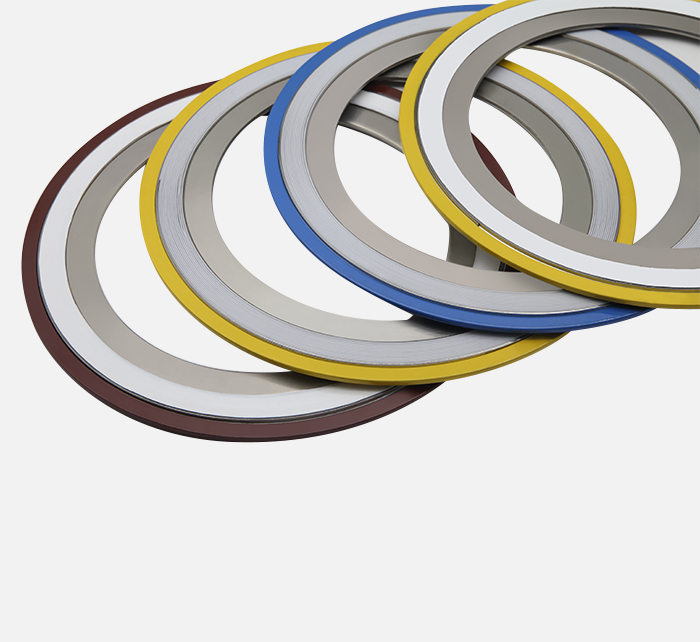
A spiral wound gasket is formed by winding a formed metal strip and a soft filler material together in alternating layers, creating a flexible ring that compresses between two flanges. A V shaped crown centered in the metal strip acts as a spring, which is the main reason spiral wound gaskets keep sealing effectively even as bolt load, pressure, or temperature shift slightly during operation. This spring like behavior is what separates spiral wound gaskets from flat solid gaskets, which do not recover in the same way once compressed.
Centering Rings And Inner Rings
Many spiral wound gasket designs include an outer centering ring that positions the gasket accurately within the flange and limits how far it can be compressed, preventing over compression during bolt tightening. A spiral wound gasket with inner ring adds further radial strength, reduces flange erosion from turbulent flow, and protects the sealing element itself, which is why inner rings are common in higher pressure or higher velocity service.
Filler And Winding Material Options To Ask About
Filler material selection is usually the first technical question in any supplier conversation, since it determines both chemical compatibility and the general temperature range the gasket can handle. A graphite spiral wound gasket is a common choice across refineries and chemical processing plants because graphite filler is widely used for its flexibility and general resistance to a broad range of process fluids.
Bars represent a general relative reference for commonly cited filler temperature ranges and are not a substitute for the specific material data sheet.
| Filler Material | General Reference Trait | Common Use Case |
|---|---|---|
| PTFE | Broad chemical inertness | Aggressive chemical service |
| Graphite | Flexible and widely compatible | Refineries and chemical processing |
| Mica | High temperature reference material | Elevated temperature process lines |
| Ceramic | Very high temperature reference material | Specialty high heat applications |
Why Recovery And Resiliency Matter Under Compression
The spring like V shaped crown inside a spiral wound gasket allows it to recover slightly after initial compression, which helps the gasket stay seated against the flange face as the system goes through pressure changes and thermal cycling. This recovery behavior is one of the main reasons spiral wound gaskets remain a preferred option compared with gaskets that compress once and do not spring back.
Trend line is a conceptual illustration of gradual change in recovered spring behavior and is not measured performance data.
In practical terms, this is why a gasket that has already been compressed and removed should not be reused, since the spring behavior that allowed it to recover has already been consumed during the first installation.
Common Applications Across Industrial Systems
Spiral wound gaskets show up across a wide range of industrial systems, with usage patterns generally shaped by temperature, pressure, and how often a system goes through startup and shutdown cycles.
Bars represent a general usage index based on common industry application patterns rather than a measured market statistic.
| Application | Common Consideration | Typical Gasket Feature |
|---|---|---|
| Oil and Gas Pipelines | Fluctuating pressure and temperature | Outer centering ring |
| Heat Exchangers | Frequent thermal cycling | Inner and outer ring combination |
| Chemical Processing | Varied chemical exposure | Chemically compatible filler |
| Power Generation | High temperature service | High temperature filler material |
| Valves and Specialty | Compact flange dimensions | Custom sized construction |
Comparing Spiral Wound Gasket Performance Dimensions At A Glance
Beyond a single material choice, buyers generally weigh several performance dimensions together when comparing a spiral wound gasket supplier. The radar chart below gives a general illustrative profile of how a well constructed spiral wound gasket tends to score across six commonly referenced dimensions.
Scores illustrate a general performance shape for reference only and can shift depending on the specific material combination being compared.
Installation Best Practices For A Reliable Seal
A spiral wound gasket installation guide is worth requesting from any supplier, since even a well made gasket can under perform if bolt tightening is uneven or flange surfaces are not properly prepared.
- Inspect flange faces for damage, debris, or old gasket material before placing the new gasket.
- Center the gasket accurately using the outer centering ring as a positioning guide.
- Tighten bolts in a cross pattern rather than working sequentially around the flange.
- Apply torque gradually in stages rather than fully tightening bolts in one pass.
- Recheck bolt torque after initial pressurization and after the system reaches operating temperature.
- Avoid reusing a gasket that has already been compressed and removed from service.
Bolt Torque Considerations During Installation
A spiral wound gasket torque chart is a common request during technical discussions, since bolt load needs to be sufficient for sealing without over compressing the gasket. Torque generally scales with flange size, since larger flanges use larger bolts across a wider bolt circle.
Bars illustrate a general relative concept only. Actual bolt torque should always follow the specific flange standard and manufacturer torque table for the exact size and material involved.
Because torque requirements shift with bolt material, lubrication, and flange rating, a spiral wound gasket manufacturer that provides application specific torque guidance is generally more useful than a single generic number applied across every project.
Common Causes Of Spiral Wound Gasket Failure
Most gasket failures trace back to a small number of recurring issues rather than a defect in the gasket itself.
- Selecting a filler material that is not compatible with the process fluid or operating temperature
- Uneven bolt torque that leaves a gap on one side of the flange
- Damaged, scratched, or misaligned flange faces
- Reusing a gasket that has already been compressed once in a previous installation
- Excessive initial torque that over compresses the gasket and reduces its recovery ability
- Vibration or thermal cycling beyond what the selected gasket construction was designed for
What To Ask When Comparing A Spiral Wound Gasket Manufacturer
Sourcing decisions matter as much as material selection, since inconsistent quality across a production run can create sealing problems across an entire facility. When comparing a spiral wound gasket supplier, buyers commonly ask about the following points.
- Production consistency across a China spiral wound gasket manufacturer supplying multiple regions
- Availability of a spiral wound gasket with inner ring for higher pressure or erosive service
- Custom spiral wound gasket supplier capability for nonstandard flange sizes and dimensions
- Material traceability for winding metal and filler combinations used in production
- Technical support for material selection across oil and gas, spiral wound gasket for heat exchanger, and chemical processing applications
- Consistent supply and communication for repeat bulk orders over time
About Ningbo Rilson Sealing Material As A Spiral Wound Gasket Supplier
Ningbo Rilson Sealing Material Co., Ltd. was founded in 2007 and is based in Ningbo, Zhejiang Province, operating a manufacturing facility that spans around 20,000 square meters. The company focuses on fluid sealing systems and runs multiple production lines covering spiral wound gaskets, ring joint gaskets, kammprofile gaskets, corrugated metal gaskets, insulation kit gaskets, and non asbestos gaskets for the petroleum, chemical, power, shipbuilding, and machinery manufacturing sectors.
As a spiral wound gasket manufacturer and spiral wound gasket supplier working with customers across multiple regions, the company maintains dedicated production lines to support both standard catalog sizes and custom spiral wound gasket supplier requests for nonstandard flanges. The company treats consistent raw material sourcing and internal quality control as central to how its spiral wound gaskets, including options with an inner ring, are produced for oil and gas, heat exchanger, and chemical processing applications. Buyers comparing a China spiral wound gasket manufacturer for ongoing supply can request technical data sheets to confirm material compatibility before placing a production order.
Frequently Asked Questions About Spiral Wound Gaskets
-
Q1. What is a Spiral Wound Gasket
A spiral wound gasket is a sealing component made by winding formed metal strip and soft filler material together in alternating layers, which compresses between two flanges to create a seal.
-
Q2. What is the purpose of a Spiral Wound Gasket
Its purpose is to fill small irregularities on flange faces while the V shaped metal crown acts like a spring, helping the seal stay effective as pressure, temperature, or bolt load shift slightly.
-
Q3. What materials are available
Winding metal is commonly stainless steel or another alloy, while filler options include graphite, PTFE, mica, or ceramic, chosen based on chemical compatibility and temperature.
-
Q4. Are Spiral Wound Gaskets suitable for oil and gas pipelines
Yes, spiral wound gaskets are widely used across oil and gas pipeline connections because their resiliency helps maintain a seal under fluctuating pressure and temperature conditions.
-
Q5. Are Spiral Wound Gaskets suitable for heat exchangers
Yes, a spiral wound gasket for heat exchanger use is a common choice because the design accommodates the thermal cycling and flange movement typical of startup and shutdown.
-
Q6. What standards are Spiral Wound Gaskets typically manufactured to
Dimensions are commonly based on established industrial flange references, which allow gaskets from different production runs to fit consistently within the same flange class and size.
-
Q7. What are some installation best practices
Good practice includes inspecting flange faces first, centering the gasket accurately, tightening bolts in a cross pattern, and applying torque gradually in stages.
-
Q8. What are common causes of Spiral Wound Gasket failure
Common causes include incorrect material selection for the process fluid, uneven bolt torque, damaged flange faces, and reusing a gasket that has already been compressed once.