
 English
 русский
 中文简体
中文简体
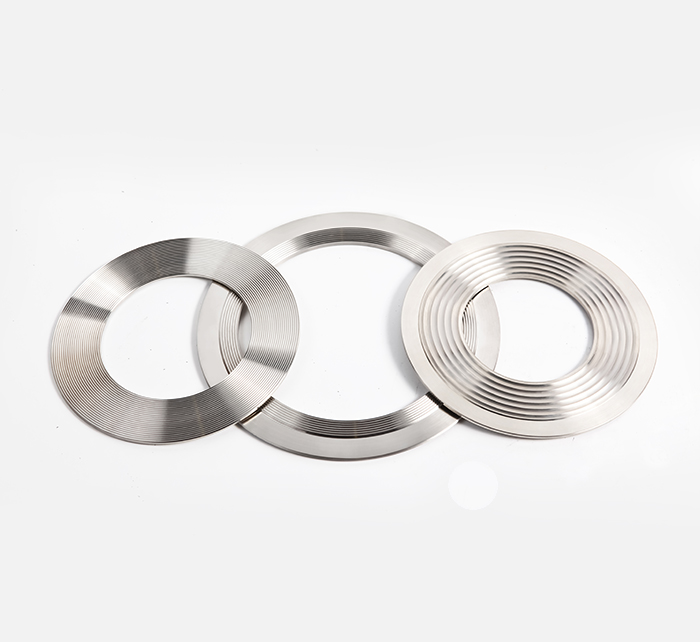
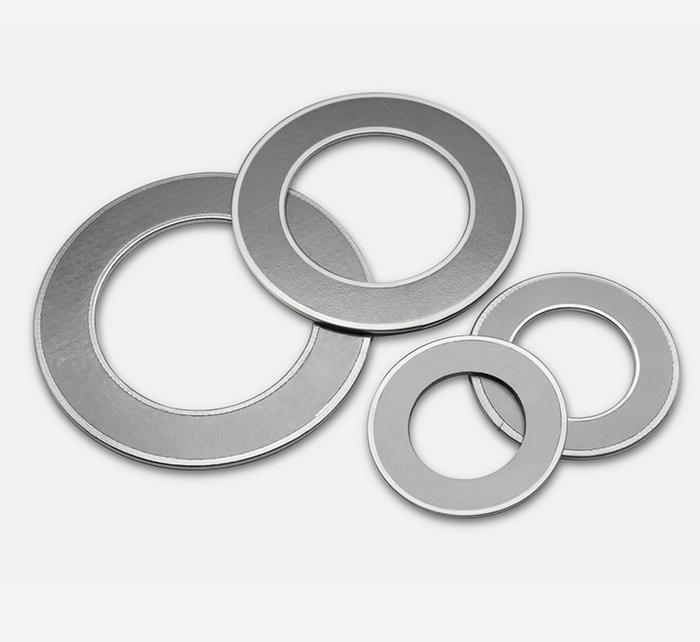
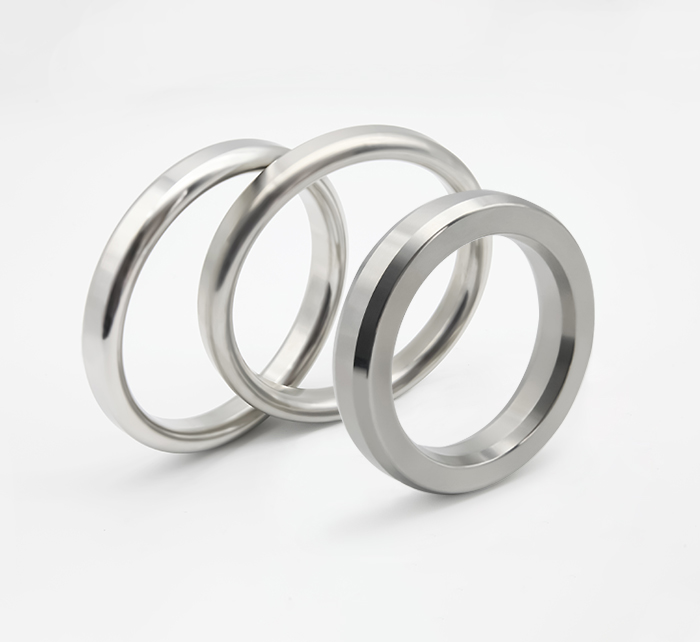
RILSON GASKET
Ningbo Rilson Sealing Material Co., Ltd is dedicated to ensuring the secure and dependable operation of fluid sealing systems, offering clients the appropriate sealing technology solutions.
Installing a spiral wound gasket correctly is the single most critical factor in achieving a leak-free flange joint. Even the highest-quality metallic gasket will fail prematurely if the seating surface is contaminated, bolt torque is applied unevenly, or the wrong gasket type is selected for the operating conditions. This guide delivers a step-by-step installation procedure, torquing sequence, and pre- and post-installation inspection checklist — grounded in ASME B16.20 gasket standards and real-world refinery and petrochemical field practice.
A spiral wound gasket consists of a V-shaped metal strip — typically 304/316 stainless steel — wound alternately with a soft filler such as flexible graphite gasket material or PTFE gasket filler. The spring-like crown in the metal strip provides exceptional resilience under fluctuating pressures and temperatures, making spiral wound gaskets the preferred sealing solution for high pressure gasket and high temperature gasket applications in oil and gas, refining, power generation, and chemical processing.
Whether you are a maintenance engineer preparing a scheduled turnaround or a procurement manager sourcing from a qualified spiral wound gasket manufacturer, understanding the full installation process protects your assets, ensures regulatory compliance, and extends the service interval of every flanged joint in your facility.
Content
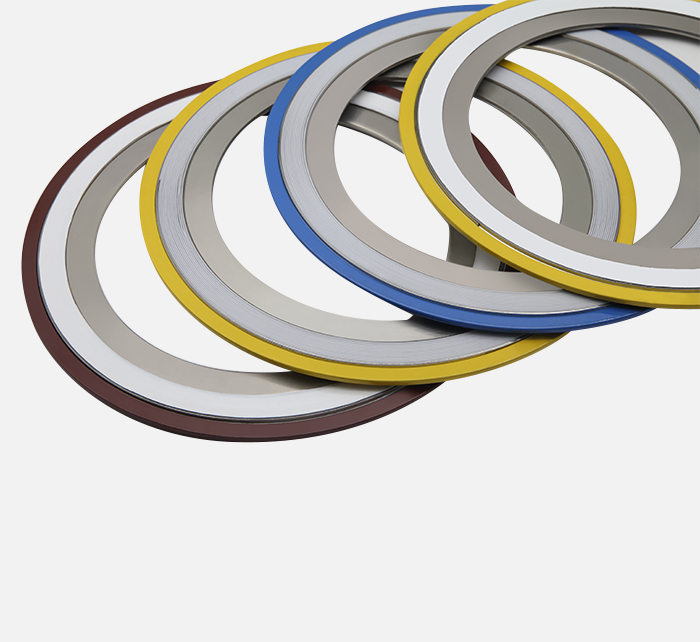
Before installation, technicians must understand what they are working with. A standard spiral wound gasket has up to four distinct zones, each performing a specific sealing or structural function.
The color coding system standardized in ASME B16.20 helps field technicians quickly identify industrial gasket materials on site. For example, a yellow outer ring typically indicates a carbon steel centering ring, while red commonly denotes stainless steel. Always verify with your gasket supplier's documentation rather than relying on color alone, as non-ASME manufacturers may use different conventions.
Spiral Wound Gasket Filler Material — Maximum Service Temperature (°C)
Figure 1: Maximum continuous service temperatures for common spiral wound gasket filler materials. Flexible graphite is the most widely used filler for refinery and oil and gas service due to its balance of temperature resistance and chemical compatibility. Ceramic fiber fillers are reserved for extreme-temperature applications such as flue gas ducting and furnace flanges where no other filler material can maintain sealing integrity.
Improper surface preparation is responsible for an estimated 40–60% of all flange joint leaks in process plants. Taking 15 to 30 minutes for thorough pre-installation inspection eliminates the most common root causes of gasket failure before they occur.
Before opening the joint, verify the gasket against the purchase order and flange specification. Check the following:
Clean flange seating surfaces thoroughly using an appropriate solvent — acetone or isopropyl alcohol for most carbon steel and stainless steel flanges. Remove all traces of the old gasket material, rust, scale, and process residue. Use a wire brush, flange scraper, or abrasive pad only if pitting or heavy oxidation is present; always finish with a lint-free cloth and solvent wipe.
Measure the surface roughness (Ra) of raised-face flanges. For spiral wound gaskets, the recommended surface finish is 125–250 µin Ra (3.2–6.3 µm Ra) — a serrated phonographic finish produced by a 45°/90° tool cutting at a controlled depth. A finish smoother than 125 µin may cause the winding to slip rather than embed; a finish rougher than 500 µin can puncture the filler and create leak paths.
Inspect for radial scratches, pitting, and warping using a straight edge across the flange face diameter. Any radial defect deeper than 0.3 mm that runs continuously from bore to outer diameter is grounds for flange re-machining before re-gasketing.
Stud bolts and heavy hex nuts must be cleaned, inspected for thread damage, and lubricated. Bolt lubrication is critical: unlubricated threads can absorb up to 50% of the applied torque as friction, leaving only 50% available to generate gasket seating stress. Use a molybdenum disulfide (MoS₂) paste or anti-seize compound rated for the operating temperature range. Apply lubricant to the full thread length of the stud and to both nut bearing faces.
| Gasket Type | Finish (µin Ra) | Finish (µm Ra) | Finish Type |
|---|---|---|---|
| Spiral Wound Gasket | 125–250 | 3.2–6.3 | Serrated Phonographic |
| Ring Joint Gasket | 63 max | 1.6 max | Smooth Ground |
| Kammprofile Gasket | 125–250 | 3.2–6.3 | Serrated or Smooth |
| Non-Asbestos Flat Gasket | 250–500 | 6.3–12.5 | Serrated or Stock |
| Corrugated Metal Gasket | 125–250 | 3.2–6.3 | Serrated Phonographic |
Follow this procedure for every flanged joint. Skipping steps — even seemingly minor ones — can compromise the integrity of a high pressure gasket joint operating at elevated temperature or with hazardous media.
Place the spiral wound gasket centrally on the lower flange face. The outer centering ring should contact the flange bolt holes or the pipe bore, depending on the flange type (raised face, flat face, or ring type joint). Never use gasket cement, sealant, or adhesive on spiral wound gaskets — these substances compress unevenly, prevent the winding from seating correctly, and can cause premature failure. Do not re-use a previously installed spiral wound gasket under any circumstances.
Bring the mating flange into position without dragging it across the gasket face. Flange misalignment is a leading cause of uneven gasket loading. The gap between flange faces should be parallel within 1.5 mm across any diameter before bolt insertion. Use flange alignment pins in two opposing bolt holes to hold position while remaining bolts are inserted. Never use bolts to pull misaligned flanges together — this can fracture connecting pipework and cause catastrophic joint failure.
Insert all studs and nuts and hand-tighten uniformly. At this stage, every nut should be snug but not torqued. Confirm that the gasket has not shifted — visually verify centering from both sides of the joint. Remove alignment pins once all bolts are in place and hand-tight.
Torque is applied in multiple passes using a cross (star) pattern — not a sequential clockwise pattern. A sequential pattern applies full load to one side before the opposite side, tilting the gasket and creating leak paths. The recommended procedure is:
For large-bore flanges (NPS 12 and above), consider using hydraulic bolt tensioners rather than torque wrenches. Tensioners apply load axially rather than through torsion, achieving more uniform bolt elongation and reducing scatter in achieved clamp load. Typical scatter with a calibrated torque wrench is ±25–30%; hydraulic tensioners reduce scatter to ±5–10%.
Cross-Pattern Bolt Torquing Sequence (8-Bolt Flange Example)
Figure 2: Cross-pattern bolt torquing sequence for an 8-bolt flange. Numbers indicate the order in which bolts should be torqued in each pass. The cross pattern ensures that gasket seating stress builds evenly across the full seating face, preventing the winding from tilting and maintaining uniform contact between the metal strip and the flange serrations. Applying bolts in a sequential clockwise pattern — a common mistake — can result in gasket blowout or leakage from the first-torqued side as the opposite side is tightened.
Correct torque is not a single value — it depends on the gasket dimensions, flange class, bolt diameter and grade, lubricant used, and the required minimum gasket seating stress (m and y values per ASME Section VIII). Using too little torque results in insufficient seating stress and leakage; too much torque crushes the winding and destroys the spring-back resilience that makes spiral wound gaskets effective under thermal cycling.
A spiral wound gasket for a flange gasket application typically requires a minimum seating stress (y) of 10,000–15,000 psi (69–103 MPa) and a maintenance factor (m) of 3.0–6.5 depending on filler material and pressure class. These values should be obtained from the gasket manufacturer's technical data sheet rather than generic published tables, since dimensions and winding density vary by manufacturer.
The general torque formula incorporating friction factor (K), bolt diameter (d), and bolt load (F) is: T = K × d × F. For MoS₂-lubricated studs, K is typically 0.14–0.16. For dry, unlubricated studs, K can reach 0.20–0.22, meaning the same torque produces significantly less bolt load — a critical reason for mandating bolt lubrication in all gasket sealing procedures.
Typical Stud Bolt Torque by Flange Class — NPS 4, ASTM A193 B7 (Nm)
Figure 3: Representative stud bolt torque values for NPS 4 flanges across ASME pressure classes using ASTM A193 B7 studs and MoS₂ lubricant. Torque requirements scale steeply with pressure class — Class 1500 joints require approximately 6.5 times the bolt torque of Class 150 joints for the same pipe size. Always verify actual target torque values from the gasket manufacturer's engineering data sheet, as winding density and gasket ID/OD dimensions directly affect required seating load calculations.
Installation does not end when the final bolt pass is completed. Two post-installation activities are critical to long-term joint integrity: the initial leak test and the hot bolt retorque.
New gasket joints should be hydrostatically or pneumatically tested before returning to service with process fluid. Hydrostatic testing at 1.5x design pressure is standard for most piping systems per ASME B31.3. During testing, inspect the joint visually for seepage or weeping. Do not re-torque bolts while the joint is under test pressure — this is a safety hazard and may cause sudden bolt fracture.
When a flanged system reaches operating temperature for the first time, thermal expansion causes bolt elongation and filler material relaxation (particularly with graphite fillers), reducing effective bolt load by 10–25%. A hot retorque — performed at operating temperature within 2–4 hours of initial heat-up — restores target bolt load and compensates for these effects. Hot retorque should be performed in the same cross-pattern sequence as the initial torque procedure.
Safety protocols for hot retorque must address the risk of personnel exposure to hot surfaces (above 60°C) and pressurized systems. Use calibrated torque wrenches with extended handles to keep the operator away from the hot joint. For systems containing hazardous fluids, hot retorque requires a formal permit-to-work. Some operators omit hot retorque on PTFE-filled gaskets due to PTFE's higher creep sensitivity at elevated temperatures — consult your gasket supplier's technical guidance for specific filler materials.
Gasket Bolt Load Relaxation vs Operating Temperature (Graphite Filler)
Figure 4: Bolt load retention as a percentage of initial assembly load versus operating temperature for a graphite-filled spiral wound gasket. The data illustrates why hot retorque is critical: by the time a joint reaches 200°C, it has typically lost 15% of its initial bolt load due to thermal expansion, filler relaxation, and embedment. At 450°C — within the service range of graphite filler — cumulative relaxation can approach 32%, making periodic retorque and inspection intervals essential for maintaining safe sealing performance in high temperature gasket applications.
Correct material selection is inseparable from correct installation. A perfectly installed gasket made from the wrong material will fail as surely as a correct material installed improperly. The selection matrix below covers the most critical variables.
The winding metal must resist corrosion from both the process fluid and the external environment. For most petroleum and chemical applications, 316 stainless steel is the standard choice. For chloride-bearing services above 60°C, Alloy 825 or Hastelloy C-276 windings provide superior resistance to stress corrosion cracking. For high-sulfur crude oil and refinery gas streams, 317L stainless steel or duplex grades are common selections.
Filler Material Property Radar: Graphite vs PTFE vs Mica
Figure 5: Property radar comparison of three common spiral wound gasket filler materials. Graphite offers the most balanced performance profile — excellent temperature range, good chemical resistance, and high pressure capability — making it the default choice for refinery and oil and gas service. PTFE excels in chemical resistance but suffers from poor creep resistance and limited pressure ratings. Mica provides unmatched high-temperature performance but lower conformability, meaning it requires near-perfect flange face finish and higher bolt loads to achieve an effective seal.
| Process Service | Winding Metal | Filler Material | Notes |
|---|---|---|---|
| Steam (saturated/superheated) | 316 SS | Flexible Graphite | Hot retorque essential |
| Crude Oil / Refinery | 316 SS or 317L | Flexible Graphite | Inner ring required ≥ Class 900 |
| Concentrated Acid (HCl, HF) | Hastelloy C-276 | PTFE | Limit bolt load — PTFE creep |
| Flue Gas / Furnace | 310 SS or Inconel | Mica or Ceramic | Above 450°C graphite oxidizes |
| Pharmaceutical / Food | 316L SS (polished) | Virgin PTFE | FDA-compliant filler required |
| Seawater / Offshore | Alloy 825 or 625 | Flexible Graphite | Cathodic protection may be needed |
Field experience from petrochemical plant maintenance programs consistently identifies the same installation errors across different sites and operators. Understanding these failure modes is as important as knowing correct procedure.
Once a spiral wound gasket has been compressed between flanges and unloaded, the spring-back in the metal winding is permanently reduced. Filler material — particularly PTFE — has already flowed into surface irregularities and cannot re-conform to a new joint. Never re-use a spiral wound gasket. The cost of a replacement gasket is negligible compared to the cost of a second flange opening or a process leak.
Sealant compounds applied to the winding surface create a non-uniform contact layer that causes the gasket to seat eccentrically. Bolt load is then concentrated on the high spots, leading to local over-compression of the winding and potential blow-through at low-stress zones. The only acceptable lubricant in a gasket assembly is on the bolt threads and nut bearing faces — never on the gasket seating surface.
A Class 300 gasket installed in a Class 600 flange will be over-compressed and destroyed — its outer ring will not adequately limit compression. Conversely, a Class 600 gasket in a Class 300 joint will be under-compressed, resulting in insufficient seating stress and leakage. Always verify the pressure class marking on the gasket outer ring against the flange rating before installation.
Pipe strain — stress imposed on a flange joint by misaligned or inadequately supported pipework — creates bending moments that unevenly load one side of the gasket. Even a perfectly torqued joint will develop a leak if the pipe experiences significant thermal movement without proper expansion loops or supports. Pipe stress analysis should confirm that flange loads remain within ASME B16.5 allowable limits before a joint is closed.
Root Causes of Spiral Wound Gasket Leaks in Industrial Plants (%)
Figure 6: Distribution of root causes for spiral wound gasket leaks based on maintenance data from petrochemical and refinery facilities. Poor flange surface preparation is the leading cause, accounting for approximately 35% of all leaks — underscoring the importance of thorough inspection before every joint opening. Incorrect torquing procedures and bolt pattern errors collectively account for over one-quarter of failures, which can be nearly eliminated through proper technician training and the use of calibrated torque tools.
For applications where standard catalog gaskets are not suitable — non-standard flange dimensions, extreme media, or special regulatory requirements — working directly with a qualified spiral wound gasket manufacturer offering OEM and ODM services provides significant advantages.
Ningbo Rilson Sealing Material Co., Ltd., founded in 2007 and located in Ningbo, Zhejiang Province, operates a 20,000 m² manufacturing facility dedicated to the design and production of sealing gaskets for the petroleum, chemical, power, shipbuilding, and machinery manufacturing sectors. As a professional gasket supplier and manufacturer, Rilson's product range includes spiral wound gaskets, ring joint gaskets, kammprofile gaskets, corrugated metal gaskets, insulation kit gaskets, and non-asbestos gaskets — covering virtually the complete spectrum of industrial flange sealing requirements.
When engaging a spiral wound gasket manufacturer for custom or OEM development, procurement engineers should request:
Q1. Can a spiral wound gasket be reused after a flange is opened for inspection?
No. A spiral wound gasket should never be reused. Once the winding is compressed under bolt load and subsequently relieved, the metal strip loses a portion of its spring-back capacity and the filler material has already conformed to the original flange surface. Attempting to reseat a used gasket will produce unpredictable seating stress and significantly increases the risk of leakage. Always install a new gasket every time a flange is opened, regardless of how brief the opening was.
Q2. What is the difference between a spiral wound gasket with and without an inner ring?
The inner ring (also called a compression limiter or bore ring) is a solid metal ring located at the bore side of the winding. Its primary function is to prevent the winding from being over-compressed inward under high bolt loads, which would push the filler into the pipe bore and restrict flow — or cause the winding to collapse. Per ASME B16.20, inner rings are mandatory for Class 900 and above, for all pressure classes in tongue-and-groove and ring type joint faces, and are recommended for Class 300 and 600 in most high-pressure or high-temperature applications.
Q3. How do I verify the correct bolt torque value for my spiral wound gasket?
Correct torque should always be calculated based on the specific gasket dimensions, bolt grade and diameter, lubricant friction factor (K-factor), and the minimum gasket seating stress (y-value) provided in the gasket manufacturer's technical data sheet. Generic torque tables are a starting point only and do not account for variations in winding density between manufacturers. For critical joints — high pressure, high temperature, or hazardous media — engage a flange management engineer to calculate and document the target torque for each joint class in your facility.
Q4. What flange face finish is required for spiral wound gaskets?
Spiral wound gaskets require a serrated phonographic finish with a surface roughness of 125 to 250 µin Ra (3.2 to 6.3 µm Ra). This finish provides the controlled surface texture that the metal winding can bite into during compression, creating micro-seals along each winding contact line. A finish that is too smooth may cause the gasket to slip under pressure; a finish that is too rough may puncture the filler. If a flange face shows radial scratches deeper than approximately 0.3 mm, the flange should be re-machined before a new gasket is installed.
Q5. How do I choose between graphite and PTFE filler for a chemical service application?
The primary selection criteria are chemical compatibility and operating temperature. PTFE filler is preferred for strong inorganic acids (hydrochloric, hydrofluoric, phosphoric), organic solvents, and services where FDA compliance is required — but PTFE is limited to 260°C and has higher creep, meaning maximum bolt load must be reduced. Graphite filler is suitable for most hydrocarbons, steam, and many acids and alkalis up to 450°C, but must be avoided with strong oxidizing acids (nitric acid above 10%, concentrated sulfuric acid) and liquid oxygen. When in doubt, consult the gasket manufacturer's chemical compatibility chart and confirm with a process engineer.
Q6. What standards govern spiral wound gasket dimensions and materials?
The primary standard for spiral wound gaskets used with ASME B16.5 and B16.47 flanges is ASME B16.20, which specifies dimensions, tolerances, material identification (color coding), and construction requirements for gaskets in Class 150 through 2500. For European markets, EN 1514-2 covers the equivalent requirements. Material grades for the winding strip and filler must comply with applicable ASTM, ASME, or EN material standards. For sour service in the oil and gas industry, NACE MR0175/ISO 15156 imposes additional requirements on metallic winding materials to prevent sulfide stress cracking.

RILSON GASKET
Ningbo Rilson Sealing Material Co., Ltd is dedicated to ensuring the secure and dependable operation of fluid sealing systems, offering clients the appropriate sealing technology solutions.
Copyright © Ningbo Rilson Sealing Material Co., Ltd. All Rights Reserved.
