
 English
 русский
 中文简体
中文简体
RILSON GASKET
Ningbo Rilson Sealing Material Co., Ltd is dedicated to ensuring the secure and dependable operation of fluid sealing systems, offering clients the appropriate sealing technology solutions.
The direct answer: corrugated metal gaskets (CMG) outperform spiral wound gaskets in low bolt-load applications, joint relaxation environments, and anywhere inward buckling is a documented failure mode. Spiral wound gaskets remain the default for high-pressure, high-temperature service with sufficient bolt loading. Choosing between them is not a matter of one being universally superior — it is a matter of matching sealing technology to flange class, operating conditions, and maintenance requirements. This article delivers a comprehensive, data-driven comparison to help engineers and procurement professionals make the right call for every application.
Both gasket types are widely used in petroleum, chemical, power generation, shipbuilding, and machinery manufacturing. However, their performance diverges significantly when bolt load is marginal, when thermal cycling is frequent, or when pipeline geometry introduces specific stress patterns. Understanding these distinctions is the foundation of a reliable flange gasket selection strategy.
Content
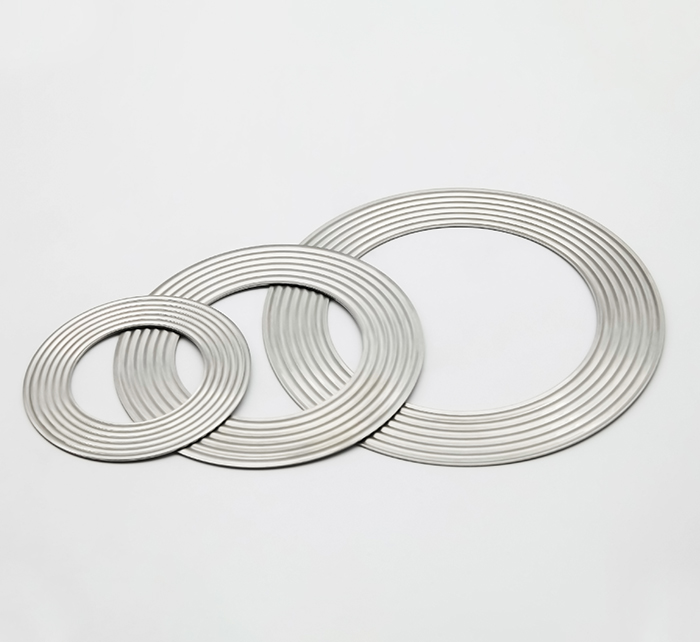
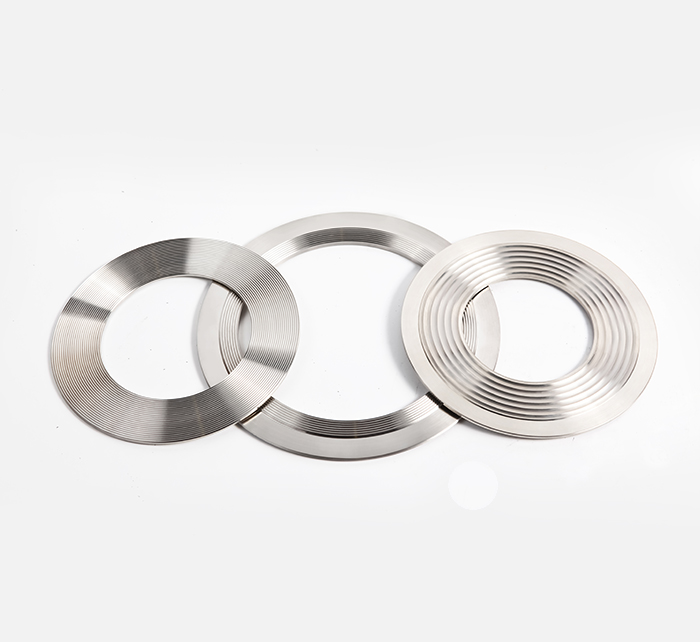
A corrugated metal gasket is a precision-engineered sealing element manufactured from a flat metal substrate — most commonly stainless steel corrugated gasket grades 304, 316, or 321 — that has been formed into a series of concentric or parallel corrugations across its sealing face. These corrugations function as individual sealing lines: when compressed by flange bolts, each ridge deforms slightly and conforms to flange surface irregularities, creating multiple independent metal-to-metal sealing contacts rather than a single sealing band.
The substrate geometry is the critical engineering variable. A specific combination of pitch (the distance between corrugation crests), core thickness (the base metal gauge), and wall angle (the angle of each corrugation flank) is engineered to maximize elastic recovery — the gasket's ability to re-establish sealing contact after the flange has experienced bolt relaxation, pressure cycling, or thermal movement. This geometry is what allows a corrugated metal gasket for flange applications to maintain an effective seal even when initial bolt load drops over time.
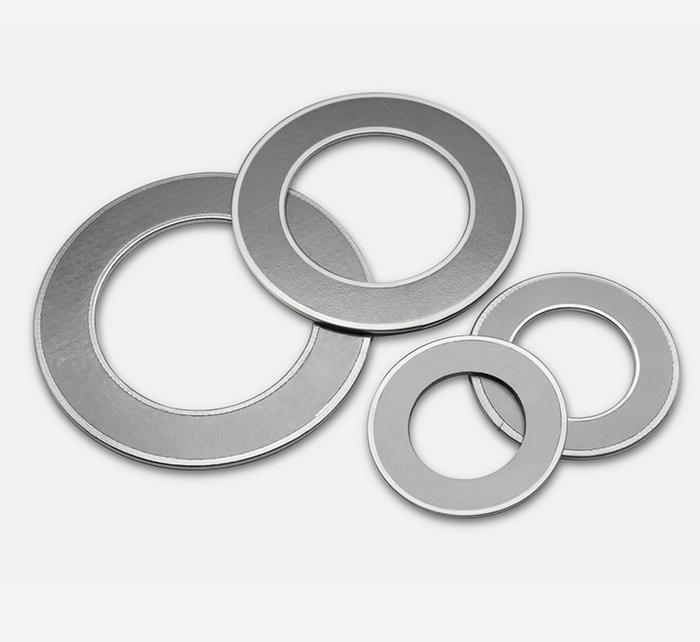
Most CMG gaskets are also available with soft sealing layers — PTFE, graphite, or non-asbestos fiber — applied to each corrugated face. These soft layers fill microscopic surface imperfections on the flange face, reducing the seating stress required to achieve an initial seal and improving performance on flanges with surface finishes that fall short of ideal. This combination of metal substrate resilience and soft-material conformability makes CMG one of the most adaptable industrial metal sealing gaskets available.
This grouped column chart compares corrugated metal gaskets and spiral wound gaskets across five performance dimensions critical to flange sealing decisions. Corrugated metal gaskets demonstrate a clear advantage in low bolt-load performance, elastic recovery, and resistance to inward buckling — three attributes that are especially relevant in ASME 150 and 300 class flange applications. Spiral wound gaskets score higher in raw high-pressure capability, reflecting their thicker winding structure. For thermal cycling, both types perform comparably, though CMG's continuous metal substrate provides more predictable recovery behavior across repeated temperature swings in demanding industrial service.
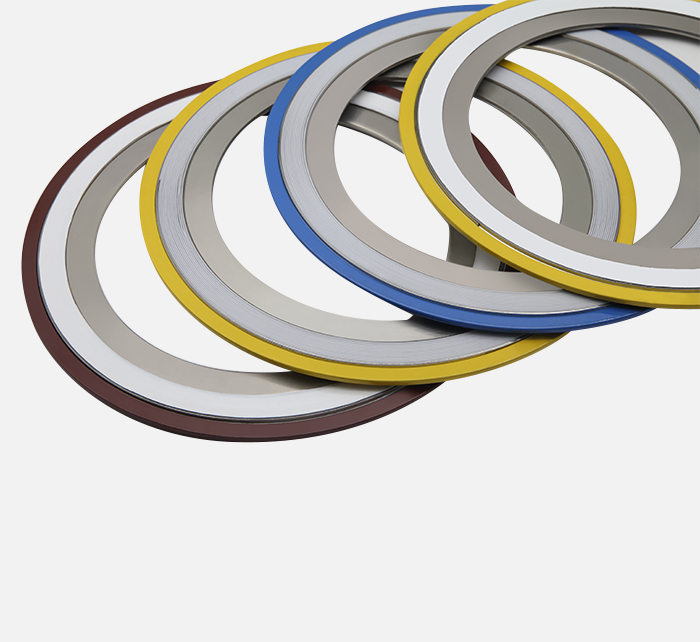
A spiral wound gasket is constructed by alternating layers of a v-shaped metal strip (typically stainless steel 304 or 316) and a soft filler material (graphite or PTFE) wound in a spiral pattern and contained by inner and outer rings. The resulting structure is thick, robust, and capable of developing very high seating loads — making it suitable for demanding high pressure corrugated gasket alternatives in ASME Class 600 and above service.
However, spiral wound gaskets have documented limitations that engineers must account for. The most significant is inward buckling: when over-compressed or used on smaller pipe sizes without a correctly specified inner ring, the inner windings can collapse inward into the bore, creating a flow obstruction and destroying the gasket's structural integrity. This failure mode is particularly prevalent in Class 150 and 300 applications where bolt load control is imprecise.
Spiral wound gaskets also have limited recovery after initial compression. Because the metal windings permanently deform during seating, they have less ability to re-establish contact if bolt load relaxes — a common occurrence in high-temperature systems where bolt material creep reduces initial preload over time. In applications with significant thermal cycling or frequent pressure fluctuations, this reduced recovery can result in gradual leak development.
| Attribute | Corrugated Metal Gasket | Spiral Wound Gasket |
|---|---|---|
| Optimal ASME Flange Class | 150 / 300 (minimal bolt load) | 300 / 600 / 900+ |
| Elastic Recovery | High (engineered geometry) | Low–Moderate |
| Inward Buckling Risk | None | Moderate–High (without inner ring) |
| Required Seating Stress | Moderate (lower than SWG) | Higher (dependent on winding density) |
| Temperature Range | Up to 900°C (substrate dependent) | Up to 1000°C (graphite fill) |
| Surface Finish Requirement | 125–250 AARH (flexible) | 125–250 AARH (similar) |
| Blow-Out Resistance | High (solid metal substrate) | Moderate (depends on outer ring) |
| Direct Drop-In Replacement | Yes (replaces SWG directly) | Not always (inner/outer ring sizing) |
| Custom Configurations | High (geometry engineered per spec) | Moderate (winding variations) |
The corrugated metal gasket's engineering advantages over spiral wound designs are most pronounced in four specific scenarios that are common throughout industrial pipeline systems. Understanding each scenario helps maintenance engineers and pipeline designers identify where CMG technology delivers the greatest return.
Joint relaxation — the gradual loss of bolt preload after initial tightening — is one of the most pervasive causes of flange leakage in operational plant. Bolt relaxation occurs due to gasket creep (the soft sealing material slowly flowing under sustained load), thermal cycling that alternately expands and contracts bolts and flange bodies at different rates, and embedment relaxation as bolt threads and flange face asperities settle. Studies indicate that a typical bolted flange joint can lose 10–30% of initial bolt preload within the first 24 hours of operation, with further losses occurring over the first weeks of service.
The corrugated metal substrate's engineered spring-back characteristic directly counteracts this problem. As bolt load decreases, the corrugation geometry partially recovers — the ridges push outward against the flange faces, maintaining contact stress sufficient to sustain a seal. Spiral wound gaskets, which rely on plastic deformation of the metal winding for seating, cannot replicate this recovery behavior once initial compression is complete.
ASME Class 150 and 300 flanges are the most common flange ratings across utility, process, and infrastructure piping. Unfortunately, they are also the most vulnerable to spiral wound gasket failure through inward buckling — particularly in smaller bore sizes (NPS 1 to 4) where the bore-to-OD ratio of the gasket creates an inherently unstable winding geometry under high bolt load.
A high pressure corrugated gasket of the CMG type has no windings to buckle. The solid corrugated metal disc remains dimensionally stable across its entire compression range, and the corrugation geometry provides inherent radial stability. This is why CMG gaskets are explicitly described as capable of eliminating inward buckling issues — they remove the structural mechanism that causes the problem entirely rather than attempting to manage it through inner ring specifications.
A high temperature metal gasket must maintain sealing contact through repeated thermal expansion and contraction cycles without developing permanent set — the condition where the gasket compresses beyond its elastic recovery limit and cannot re-establish contact as the flange cools and bolt load decreases. CMG gaskets in stainless steel 316 or Inconel substrates are engineered to operate continuously at temperatures up to 900°C while maintaining meaningful elastic recovery throughout the thermal cycle.
Applications such as steam header flanges, exhaust system joints, reactor inlet/outlet connections, and heat exchanger flanges that experience daily or even hourly thermal cycles are prime candidates for CMG replacement of existing spiral wound gaskets where leak frequency has been an issue.
The radar chart maps both gasket types across six application suitability dimensions. Corrugated metal gaskets occupy a consistently larger coverage area, most dramatically in elastic recovery, anti-buckling performance, and low bolt-load applications — the three dimensions most relevant to Class 150 and 300 ASME flanges that make up the majority of industrial pipeline infrastructure. Spiral wound gaskets show their greatest advantage in the high-pressure dimension, reflecting the structural mass of their multi-layer winding construction. For procurement engineers designing systems that span multiple flange classes, this chart reinforces why a dual-specification approach — CMG for lower-class flanges, SWG for Class 600 and above — is often the most technically sound procurement strategy.
The substrate material of a corrugated metal gasket determines its upper temperature limit, corrosion resistance, and mechanical spring-back capacity. Selecting the correct material for the process fluid and operating environment is as important as the corrugation geometry itself. The following materials account for the majority of industrial metal sealing gasket specifications across global industrial sectors.
The most widely specified substrate for metal gasket for pipeline sealing applications. SS316 provides superior chloride corrosion resistance compared to SS304 and is the standard choice for marine, chemical processing, and offshore applications. SS321 (titanium-stabilized) is preferred for temperatures above 400°C where sensitization of standard 316 becomes a concern. The stainless steel corrugated gasket offers a reliable balance of mechanical properties, corrosion resistance, and cost-effectiveness across the widest range of industrial services.
Nickel-chromium alloy substrates are specified for extreme high-temperature service above 700°C, particularly in fired heater flanges, turbine exhaust connections, and reactor nozzles. Inconel 625 additionally provides outstanding resistance to pitting, crevice corrosion, and stress corrosion cracking in aggressive chemical environments. These materials command a cost premium but are the correct specification when stainless steel would degrade unacceptably in service.
For lower-temperature, non-corrosive services such as water treatment, compressed air systems, and low-pressure steam, carbon steel corrugated substrates with PTFE or graphite soft overlays provide a cost-effective sealing solution. The soft overlay reduces seating stress requirements substantially, making these gaskets suitable for equipment with limited bolt capacity or plastic-lined flanges where over-compression is a risk.
This horizontal bar chart illustrates the maximum continuous operating temperature capability of common corrugated metal gasket substrate materials. The progression from carbon steel at 400°C to Inconel 625 at 1000°C represents a hierarchy of material investment aligned with increasingly demanding service conditions. Standard stainless steel grades cover the majority of industrial applications up to 700°C — encompassing most steam, petrochemical, and power generation flange services — while Inconel substrates are reserved for the most extreme high-temperature sealing challenges. Correct material selection is the single most important specification decision when sourcing a high temperature metal gasket for critical service.
The versatility of corrugated metal gasket technology means it appears across a remarkably wide range of industrial sectors. Each application presents unique temperature, pressure, fluid compatibility, and maintenance access challenges that the CMG's engineered geometry is well-suited to address.
Crude oil processing involves flanges exposed to hydrogen sulfide, crude fractions, high-pressure steam, and temperatures ranging from cryogenic to above 500°C. A corrugated metal gasket for flange connections in crude distillation columns, vacuum towers, and heat exchanger bundles provides superior joint reliability compared to soft-material gaskets that degrade rapidly in hydrocarbon service. The CMG's resistance to sour gas permeation — when used with appropriate metallic overlays — is a significant safety advantage in H2S environments.
Aggressive chemical media require sealing materials that resist both chemical attack and the mechanical stresses of process cycling. PTFE-overlay CMG gaskets are widely used in chlorine, sulfuric acid, and nitric acid service where PTFE's chemical inertness is combined with the mechanical recovery of the metal substrate. For high-purity chemical applications, the absence of organic binders or filler materials that could contaminate process streams is another advantage of metal-only CMG designs.
Main steam systems, feedwater heaters, boiler flanges, and turbine exhaust connections in coal, gas, and nuclear power plants routinely experience the thermal cycling, high pressure, and steam purity requirements that make corrugated metal gaskets the preferred sealing solution over soft or composite alternatives. The CMG's ability to maintain seal integrity across thousands of startup/shutdown cycles in a generating plant's operational lifetime directly impacts plant availability and maintenance cost per megawatt-hour generated.
Marine environments combine mechanical vibration from propulsion systems, saltwater corrosion, and temperature cycling in engine room and deck piping. The combination of SS316 substrate corrosion resistance and CMG's inherent resilience to vibration-induced bolt relaxation makes corrugated metal gaskets a natural specification for classification society-approved marine flange joints in main engine cooling, fuel oil, and steam systems.
This line chart models leak incident rates per 100 joints over a six-year service cycle for corrugated metal gaskets versus spiral wound gaskets in a Class 150 and 300 mixed flange system experiencing regular thermal cycling. The SWG line rises more steeply from Year 2 onward as cumulative bolt relaxation and partial buckling failures compound — a well-documented field observation in process plants that perform scheduled integrity audits. The CMG line remains substantially flatter throughout the service cycle, reflecting the elastic recovery mechanism that compensates for progressive bolt load reduction. By Year 5, the difference in incident rate translates directly to reduced maintenance interventions, shorter planned shutdowns, and lower lifetime cost of ownership for the sealing system as a whole.
Specifying a corrugated metal gasket correctly requires gathering and evaluating several parameters before contacting a corrugated metal gasket manufacturer or corrugated metal gasket supplier. The following checklist covers the essential data points that any reputable supplier will need to provide an accurate recommendation.
When sourcing custom metal gasket solutions for non-standard flange geometries — heat exchanger shell flanges, pressure vessel nozzles, compressor bodies, or custom equipment — provide dimensional drawings rather than attempting to extrapolate from standard tables. An experienced corrugated metal gasket manufacturer with in-house engineering capability can design corrugation geometry specific to the available bolt load and required sealing performance for non-standard applications.
| Condition | Recommended Gasket | Primary Reason |
|---|---|---|
| ASME Class 150 or 300, any size | Corrugated Metal Gasket | Low bolt load; recovery advantage |
| Existing SWG with buckling history | Corrugated Metal Gasket | Eliminates buckling mechanism |
| Frequent thermal cycling (>2 cycles/day) | Corrugated Metal Gasket | Superior elastic recovery |
| Class 600 and above, stable temperature | Spiral Wound Gasket | Higher bolt load available; SWG optimized |
| Aggressive corrosive media (H2S, Cl-) | CMG with SS316 or Inconel substrate | Alloy corrosion resistance |
| Non-standard / custom flange geometry | Custom CMG (OEM supply) | Engineered geometry per load analysis |
Founded in 2007 and headquartered in Ningbo, Zhejiang Province, China, Ningbo Rilson Sealing Material Co., Ltd. is a professional corrugated metal gasket manufacturer and corrugated metal gasket supplier operating from a 20,000 square meter manufacturing facility dedicated to fluid sealing systems. The company serves the petroleum, chemical, power, shipbuilding, and machinery manufacturing sectors with a comprehensive product range that includes spiral wound gaskets, ring joint gaskets, kammprofile gaskets, corrugated metal gaskets, insulation kit gaskets, and non-asbestos gaskets.
Rilson holds ISO 9001:2015 quality management system certification and the API 6A certificate, reflecting a commitment to quality management standards recognized by clients worldwide. As a corrugated metal gasket manufacturer with engineering capability for custom metal gasket solutions, Rilson's technical team can evaluate bolt load capacity, operating conditions, and flange geometry to recommend the optimal CMG specification — including substrate material, corrugation pitch, and soft overlay selection — for each specific application.
The company's CMG product line is based on substrate geometries specifically engineered for recovery and resilience. The designed combination of pitch, core thickness, and wall angle maximizes the seal's ability to overcome joint relaxation, pressure fluctuation, and thermal cycling — making these gaskets a reliable direct replacement for spiral wound gaskets in Class 150 and 300 ASME B16.5 flanges where available bolt load is minimal. Rilson's clientele spans multiple countries and industries, and the company's growth reflects the increasing global recognition of corrugated metal gasket technology as a preferred industrial metal sealing gasket solution for challenging service conditions.
The following questions represent the most common inquiries from engineers, procurement managers, and maintenance professionals evaluating corrugated metal gasket technology for the first time or considering a switch from existing sealing solutions.
Q1: What is a corrugated metal gasket?
A corrugated metal gasket is a sealing element machined from a flat metal disc and formed with concentric or parallel corrugations across its sealing face. When compressed between flanges, the corrugation ridges create multiple individual sealing lines that conform to flange surface irregularities and provide elastic recovery when bolt load decreases over time.
Q2: How does a corrugated metal gasket work?
The corrugation geometry — defined by pitch, core thickness, and wall angle — compresses elastically under bolt load, with each ridge deforming slightly to conform to the flange surface. The engineered spring-back characteristic allows the gasket to partially recover as bolt preload relaxes, maintaining sealing contact stress above the minimum required to prevent leakage throughout the service cycle.
Q3: What materials are used in corrugated metal gaskets?
Common substrate materials include carbon steel, stainless steel grades 304, 316, and 321, and nickel alloys such as Inconel 600 and 625 for high-temperature service above 700°C. Soft overlay layers of PTFE, graphite, or non-asbestos fiber are often applied to improve conformability on standard flange surface finishes and reduce required seating stress.
Q4: What are the advantages of corrugated metal gaskets?
Key advantages include engineered elastic recovery that compensates for bolt relaxation, elimination of inward buckling risk present in spiral wound gaskets, suitability for low bolt-load applications such as ASME Class 150 and 300 flanges, direct drop-in replacement capability for spiral wound gaskets, and high resistance to blow-out due to the solid metal substrate construction.
Q5: Where are corrugated metal gaskets used?
Corrugated metal gaskets are used in petroleum refining, chemical processing, power generation (steam turbines, boiler flanges), shipbuilding, and industrial machinery. Any application involving flanged pipe connections subject to thermal cycling, joint relaxation, or aggressive process media is a candidate — including heat exchangers, reactor nozzles, pressure vessels, and fired heater connections.
Q6: Are corrugated metal gaskets suitable for high pressure?
Yes, high pressure corrugated gaskets are available and suitable for a range of pressure classes. CMG gaskets are particularly effective in Class 150 and 300 where available bolt load is limited, but engineered designs also serve Class 600 and higher applications. For very high-pressure service above Class 900, the specific corrugation geometry and substrate material must be calculated against available bolt load to confirm adequate seating stress.

RILSON GASKET
Ningbo Rilson Sealing Material Co., Ltd is dedicated to ensuring the secure and dependable operation of fluid sealing systems, offering clients the appropriate sealing technology solutions.
Copyright © Ningbo Rilson Sealing Material Co., Ltd. All Rights Reserved.
