
 English
 русский
 中文简体

RILSON GASKET
Ningbo Rilson Sealing Material Co., Ltd is dedicated to ensuring the secure and dependable operation of fluid sealing systems, offering clients the appropriate sealing technology solutions.
Picture a 425 °C steam header on a chemical site that has been running for two decades. The maintenance team has three boxes of gaskets on the bench, a calibrated torque wrench, and a shutdown window that closes in 36 hours. The question on the table is not "which gasket is best" — it is "which gasket will still be tight after the line has been cycled for another four years."
The short answer: no single industrial high temperature gasket material covers the whole range. Selection is fixed by four variables that interlock — continuous temperature plus excursion peaks, the medium (air, steam, hydrogen, hydrocarbon), the flange type and its surface finish, and the bolt load the joint can actually deliver. Get any one of them wrong, and a sheet rated at 450 °C will still leak at 300 °C.
Content
The number printed on a datasheet usually comes from an air-oxidation test on a small sample. It tells you where the material begins to degrade, not where a bolted joint stops sealing. Flexible graphite is a good example: most grades are quoted to roughly 450 °C in air, yet the same material performs far beyond that in steam, nitrogen or reducing service, because oxidation — not heat — was the limiting mechanism.
Composite construction adds another layer of complexity. A spiral wound gasket is only as strong as its weakest component: stainless steel windings may tolerate 600 °C, but a PTFE filler or an elastomer binder will fail long before that. When you evaluate a supplier's claim, ask three follow-up questions — was the rating measured in air or in the process medium, was it continuous or short-term, and was it tested in a real flange or on a coupon?
The chart and table below summarise typical published continuous limits. They are a starting filter, not a specification — a 40 bar steam flange and a low-pressure furnace door are not the same problem even when they share a temperature.
| Family | Continuous limit | Behaviour under heat | Usual duty |
|---|---|---|---|
| Flexible graphite sheet | ~450 °C in air | Low creep, keeps seating stress; oxidises in air | Steam, hot oil, exhaust ducting |
| Mica / vermiculite | 800–1000 °C | Fire-safe and electrically insulating; brittle | Furnace flanges, burner inlets |
| Ceramic fibre | ~1000–1260 °C | Highest heat resistance, low mechanical strength | Boiler doors, hot gas ducts |
| PTFE, virgin or filled | 260 °C (filled grades slightly higher) | Chemically inert but creeps badly above 200 °C | Chemical lines within limit |
| Silicone rubber | 230–250 °C | Good compressibility, hardens and cracks beyond limit | Cladding, low-pressure ductwork |
| Metal-bodied (spiral wound, kammprofile, ring joint) | Set by filler and metal grade | Highest pressure capability; depends on bolt load | Refinery, power plant, wellhead |
Above roughly 25 bar and 400 °C, sheet materials stop being the economical answer and metal-bodied constructions take over. Four types cover most of that ground.
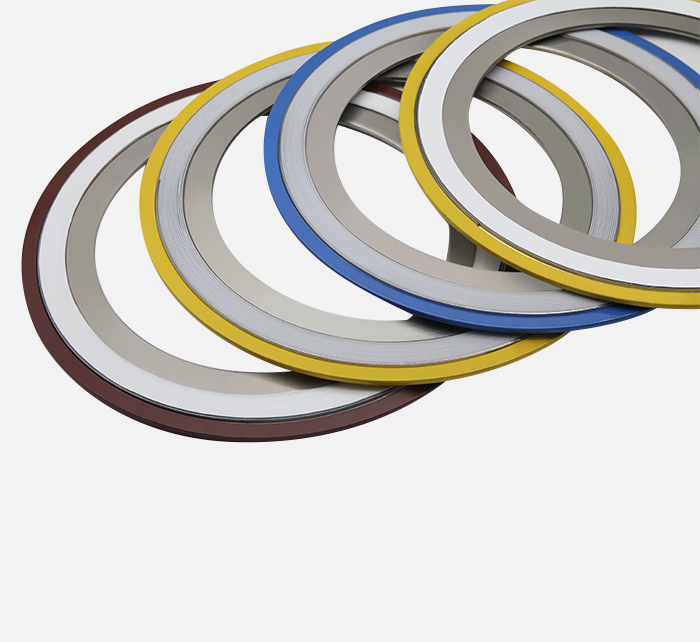
Spiral wound gaskets combine a V-shaped stainless strip with a graphite or ceramic filler. The windings act as a spring: they store bolt load and give it back as the joint breathes through thermal cycles, which is why they dominate refinery and steam service. Their weak point is the filler — a PTFE-filled variant is not a high temperature gasket, whatever the outer ring says.
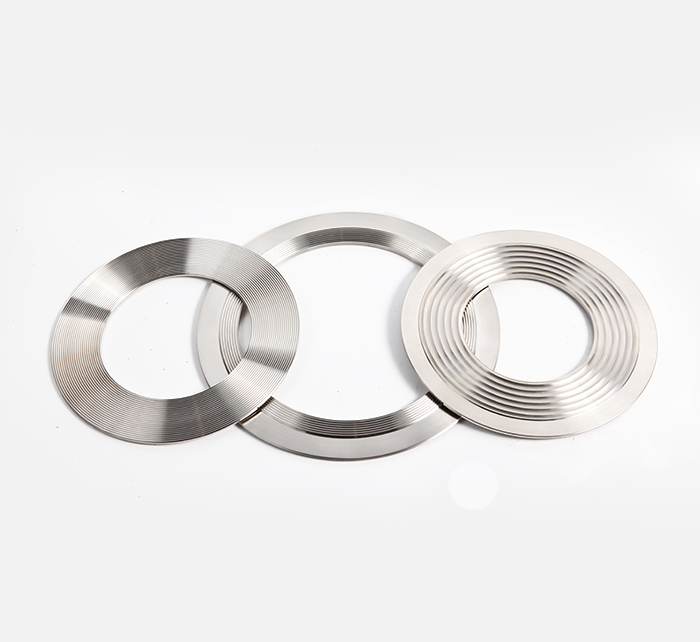
Kammprofile gaskets use a solid metal core with concentric serrations and a thin graphite facing. Because the core is solid, they seat at noticeably lower bolt stress than spiral wound types, which matters on older flanges or when bolt capacity is the real constraint.
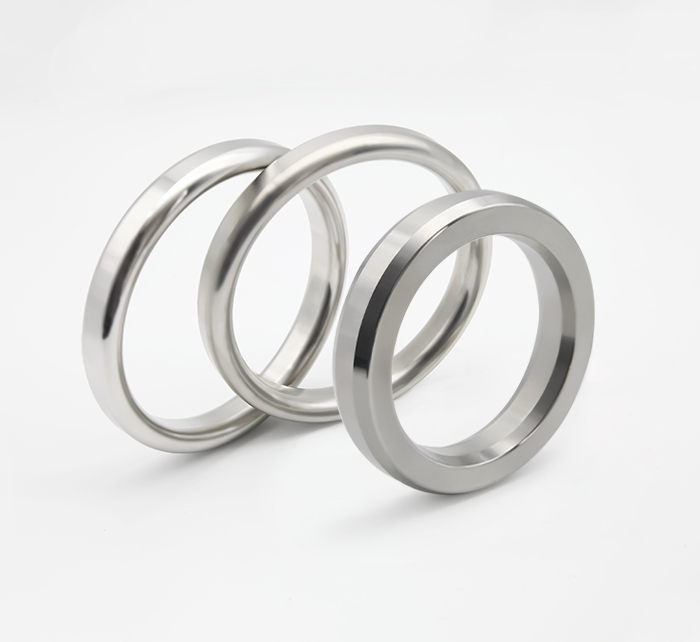
Ring joint gaskets seal by metal-to-metal wedging inside a grooved flange, following the dimensional requirements of ASME B16.20 and, in wellhead duty, API 6A. They handle extreme pressure and temperature but tolerate almost no misalignment and cannot be reused after compression.
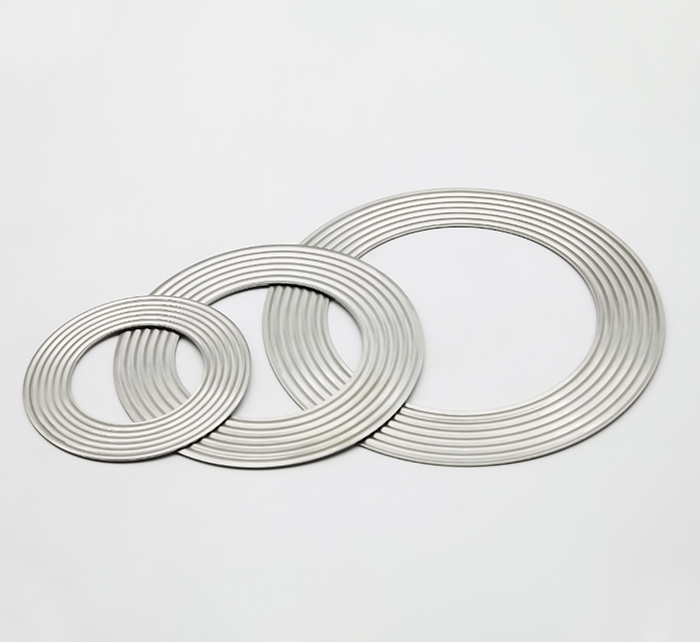
Corrugated metal gaskets sit between the two worlds — a formed metal sheet with a soft facing, useful on large, low-bolt-load joints such as heat exchanger covers.
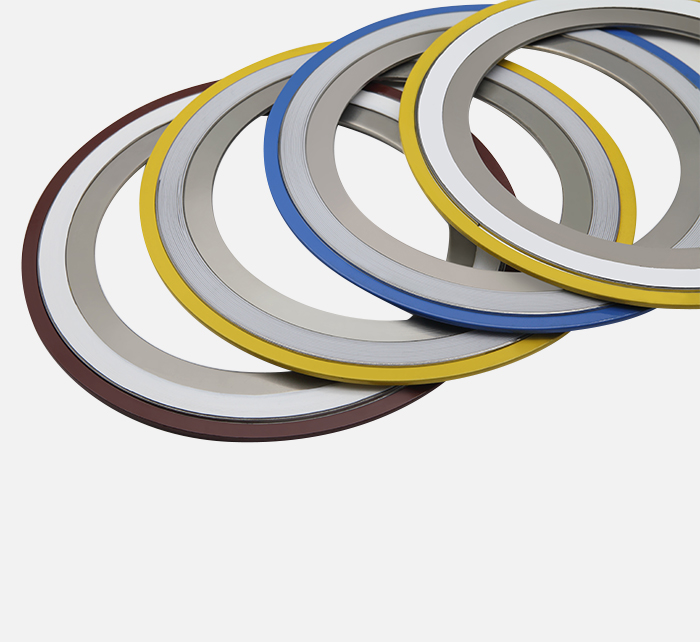 Spiral Wound Gaskets and Ring Style VariantsExplore semi-metallic spiral wound gaskets with selectable metal and filler materials, ring styles, and ASME, EN, DIN and JIS dimensions for demanding flange joints.View Product →
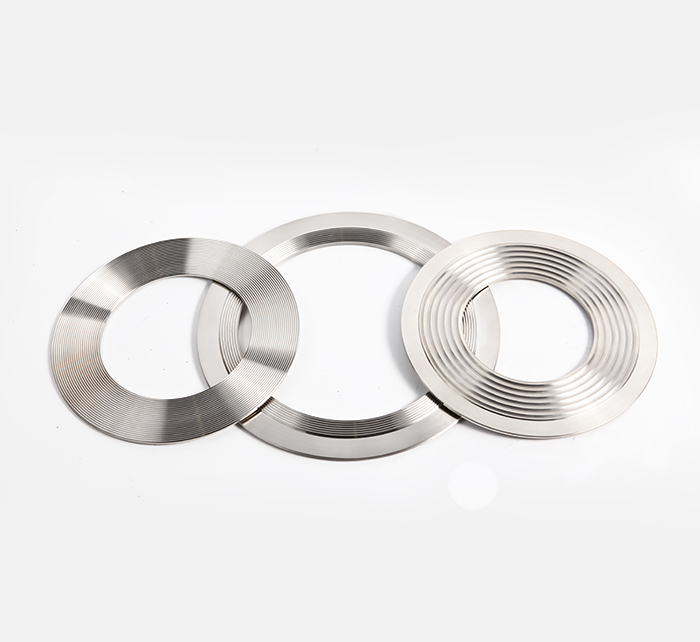 Kammprofile Gaskets for High-Pressure, High-Temperature SealingSerrated metal core with soft graphite or PTFE facing, available in RK1, RK2 and RK3 styles for heat exchanger and raised-face flange sealing.View Product →
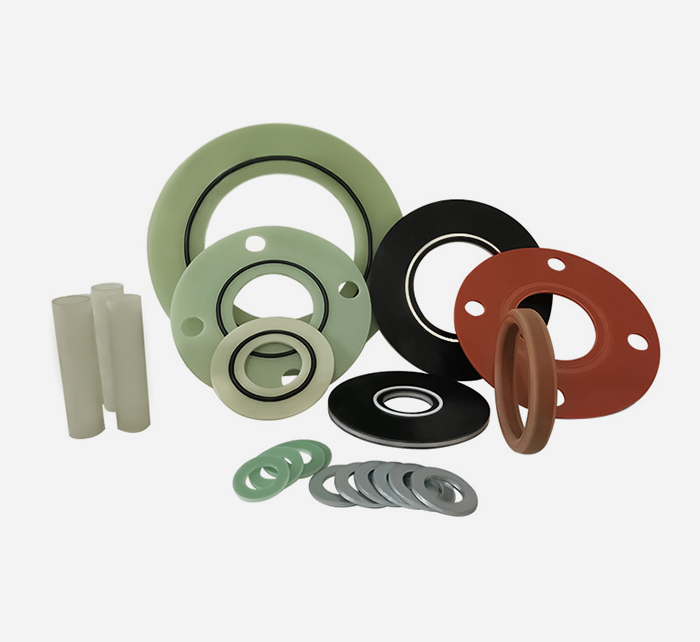
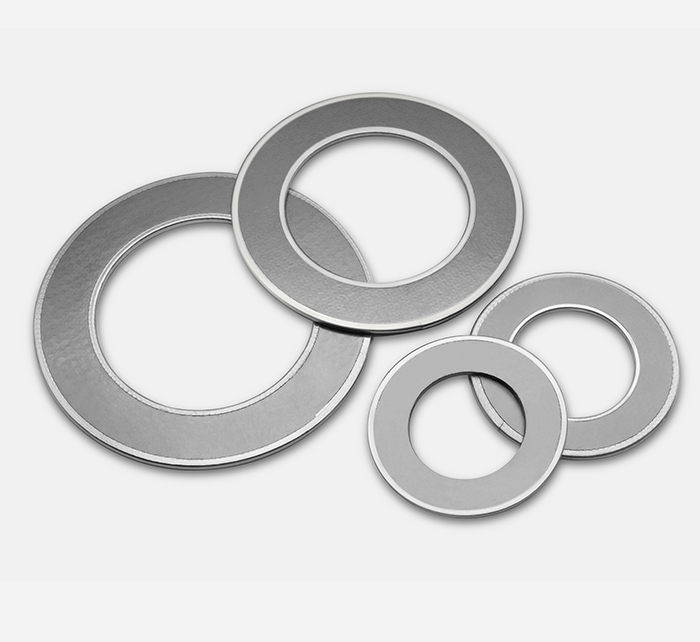
Two compressed fibre sheets can carry the same headline temperature and behave completely differently, because the binder system and the density decide how much of the bolt load survives an hour at temperature. A dense, low-binder graphite laminate holds its thickness; a soft nitrile-bonded sheet relaxes and the joint opens.
Practical rules that hold up in the field: match sheet thickness to flange condition rather than habit, since every extra millimetre of thickness costs bolt load; prefer material cut from the same production batch on a single flange pair, because density variation between batches shows up as uneven compression; and check the material's compression and recovery figures, not only its temperature line. The sealing behaviour of fibre-based grades is covered in more depth in this analysis of non-metallic gaskets in industrial service.
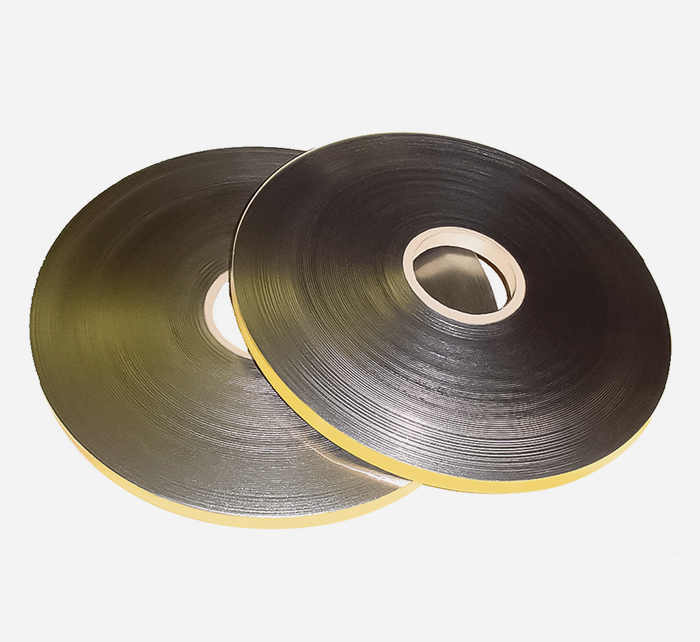
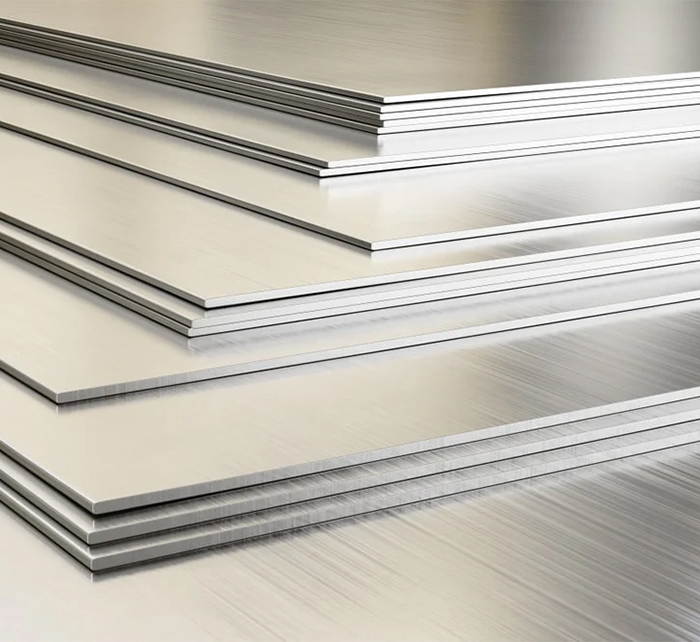 Gasket Raw Materials: Winding Wire, Sheet, Coil and TapeSource winding wire, sheet, coil, graphite tape and PTFE tape in stainless, nickel alloy and titanium grades to support consistent gasket production.View Product →
Most high temperature leaks we see are not a material error. They are a joint error. Two numbers decide the outcome.
Add thermal cycling and the picture sharpens: the flange, bolts and gasket expand at different rates. A joint that was leak-tight cold can lose a large share of its residual load after a few hundred cycles if the gasket cannot recover. That recovery figure, quoted in supplier datasheets, is more predictive of long-term performance than the maximum temperature alone.
When the specification is being written, these six points separate a workable purchase order from a future shutdown problem:
Four mechanisms account for most failures above 300 °C:
Understanding which mechanism dominates your process is the fastest route to the right grade — and to a joint that stays tight between turnarounds.
Q1. What is the best gasket material for high temperature steam service?
Graphite-based spiral wound or kammprofile gaskets are the usual choice for steam above 350 °C. Graphite resists oxidation in steam and holds its seating stress through cycles.
Q2. Can a spiral wound gasket handle 500 °C?
Only with the right filler and metal grade. Standard graphite-filled types are typically quoted to about 450 °C; above that, ceramic or mica fillers and higher-alloy windings are needed.
Q3. What is the maximum temperature for graphite gasket material?
Roughly 450 °C continuously in air, limited by oxidation. In steam, nitrogen or reducing atmospheres the usable range is considerably higher.
Q4. Why do high temperature gaskets leak after thermal cycling?
Usually creep relaxation combined with differential expansion. The gasket loses thickness and cannot recover, so residual bolt load drops below the sealing threshold.
Q5. Kammprofile or spiral wound for high temperature flanges?
Kammprofile seats at lower bolt stress and suits older or limited-load flanges. Spiral wound is more forgiving of minor flange movement and is widely stocked.
Q6. When should I use non-metallic instead of metal gaskets?
Below roughly 25 bar and 400 °C, sheet materials are cheaper and easier to fit. Above that, metal-bodied constructions carry the pressure duty far more reliably.

RILSON GASKET
Ningbo Rilson Sealing Material Co., Ltd is dedicated to ensuring the secure and dependable operation of fluid sealing systems, offering clients the appropriate sealing technology solutions.
Copyright © Ningbo Rilson Sealing Material Co., Ltd. All Rights Reserved.
