
 English
 русский
 中文简体
中文简体
RILSON GASKET
Ningbo Rilson Sealing Material Co., Ltd is dedicated to ensuring the secure and dependable operation of fluid sealing systems, offering clients the appropriate sealing technology solutions.
A damaged spiral wound gasket can be identified by five key signs: visible unwinding or delamination of the metal winding, compression beyond the outer ring, cracking or brittleness in the filler material, corrosion or pitting on the metal strip, and any evidence of leakage at the flange face. Catching these signs early — before reinstallation or during scheduled maintenance — prevents process fluid leaks, flange damage, and unplanned shutdowns in high-pressure and high-temperature systems.
Content
Spiral wound gaskets are engineered for demanding service conditions — high pressure, thermal cycling, and aggressive media — but that same combination of stresses creates specific failure modes that do not always look dramatic from the outside. Unlike a flat rubber gasket that visibly tears, a spiral wound gasket can be seriously compromised while appearing largely intact.
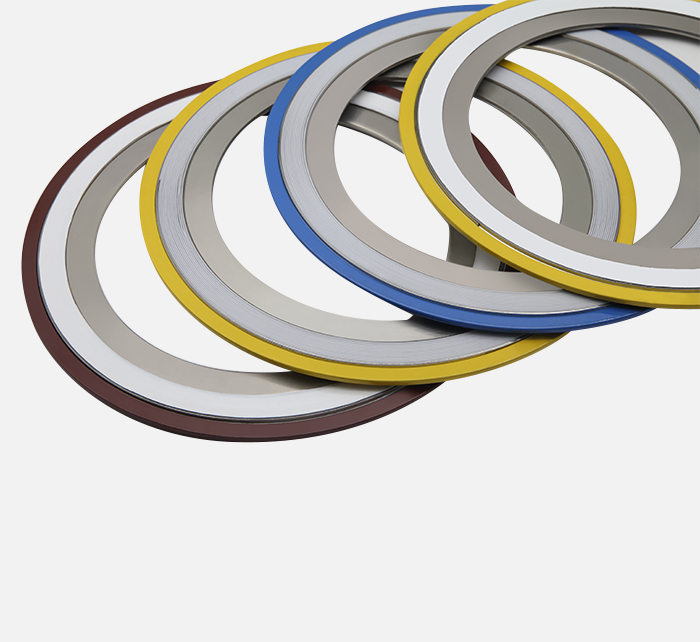
The construction itself explains the vulnerability. A spiral wound gasket is built from alternating layers of a profiled metal strip (typically 316L stainless steel) and a soft filler material (most commonly flexible graphite or PTFE). The inner ring prevents over-compression; the outer ring acts as a centering guide and compression stop. When any of these components is stressed beyond its design limit, the sealing integrity of the entire assembly is affected — often without a visible fracture.
Industry maintenance data indicates that over 60% of spiral wound gasket failures are attributable to installation error or re-use of a gasket that should have been replaced — not to material defect. Understanding what damage looks like makes the difference between a reliable joint and an in-service leak.
A thorough visual inspection under adequate lighting is the starting point for any gasket damage assessment. Carry out this inspection before installation, immediately after removal, and whenever a flange is opened for maintenance.
Look at the outer edge of the winding. Any visible gap between individual metal layers, or any section where the winding has begun to separate from the body of the gasket, indicates that the spiral structure has been compromised. Even 1–2 mm of unwinding at the outer circumference is sufficient grounds for rejection — the winding will continue to loosen under bolt load and thermal cycling.
A used gasket that has been over-compressed shows winding material displaced laterally beyond the outer ring, or an outer ring that is visibly deformed. If the compressed thickness is less than the manufacturer's minimum specified thickness — typically 2.7–3.2 mm for a standard 4.5 mm nominal gasket — the gasket has been permanently plastically deformed and must not be reused. A dial caliper is the correct tool for this measurement.
Inspect the filler visible at the inner and outer winding edges. Graphite filler that has oxidized at high temperature will appear grey-white rather than its normal black, and will crumble when pressed lightly with a fingernail. PTFE filler that has been exposed to temperatures above its rating (typically 260 °C continuous) may show yellowing, brittleness, or charring. Either condition indicates that sealing performance has been significantly reduced.
Even stainless steel windings are susceptible to corrosion in chloride-rich environments or under crevice corrosion conditions inside the winding layers. Red-brown rust staining on the winding edges, or visible pitting when the winding layers are gently spread apart, indicates that the metal has lost structural integrity. A corroded winding cannot maintain consistent spring-back force across the sealing face.
| Damage Type | Root Cause | Visual Indicator | Action |
|---|---|---|---|
| Winding separation | Handling damage, over-torque | Visible gap between winding layers | Reject immediately |
| Over-compression | Excessive bolt torque, wrong size | Thickness below minimum; crushed ring | Measure and reject if under spec |
| Filler degradation | Thermal exceedance, chemical attack | Crumbling, discoloration, brittleness | Reject; review service conditions |
| Metal corrosion | Wrong alloy selection, chloride exposure | Rust staining, pitting on strip edges | Reject; upgrade alloy per materials guide |
| Inner ring deformation | Excessive bolt load | Buckled or cracked inner ring | Reject; check bolt torque procedure |
| Surface contamination | Improper storage, dropped gasket | Embedded grit, oil, or paint on faces | Clean carefully or reject if penetrated |
Many damage patterns are the direct result of selecting the wrong gasket material for the service environment. A Spiral Wound Gasket Materials Guide approach — matching both the metal winding alloy and the filler type to the actual process conditions — dramatically reduces failure rates. The table below summarizes the most common material combinations and their service limits.
| Metal Winding | Filler Material | Max. Temp. (C) | Typical Application |
|---|---|---|---|
| 304 Stainless Steel | Flexible Graphite | 450 | Steam, water, general service |
| 316L Stainless Steel | Flexible Graphite | 450 | Chemical service, mild chloride |
| 316L Stainless Steel | PTFE | 260 | Food, pharma, strong acids |
| Alloy 625 (Inconel) | Flexible Graphite | 650 | High-temp, aggressive media |
| Hastelloy C-276 | Flexible Graphite | 600 | Highly corrosive environments |
When a gasket is removed showing filler degradation, the first diagnostic question is whether the actual service temperature exceeded the filler material's rating. If it did, the correct response is not simply to replace the same gasket — it is to upgrade the filler material or review the process conditions causing the temperature exceedance.
Field data from industrial maintenance programs consistently shows that spiral wound gasket failures cluster around a small number of root causes. Understanding which causes are most prevalent guides where to focus inspection effort.
A Spiral Wound Gasket Size Chart is not just a selection tool — it is an essential reference for identifying whether a removed gasket has been dimensionally altered by service conditions. Every spiral wound gasket has defined nominal dimensions: inner diameter (ID), outer diameter (OD), and nominal thickness. Measuring a removed gasket against these values reveals compression damage that visual inspection alone may miss.
Standard ASME B16.20 spiral wound gasket dimensions are the most widely referenced size chart for raised-face flanges. For ring-type joint (RTJ) flanges or non-standard services, always cross-reference with the applicable project specification or the manufacturer's published size chart.
Referring to a Spiral Wound Gasket Pressure Rating Guide during gasket selection prevents a significant category of in-service failures. When a gasket is installed in a service that exceeds its rated pressure class, the winding body is unable to maintain the required seating stress against the process pressure, and the joint begins to leak — or the winding collapses inward toward the bore.
ASME B16.5 and B16.47 define pressure-temperature ratings for flanged joints. The gasket must be rated to at least the flange class. For a Class 600 flange at 400 degrees C in steam service, the minimum required gasket seating stress is approximately 69 MPa (10,000 psi) — a value that must be achieved across the full sealing face width within the bolt load capacity of the flange.
A gasket removed from a leaking high-pressure joint that shows crushing concentrated near the bore — rather than uniform compression across the full sealing width — is diagnostic of a pressure class mismatch or inadequate bolt torque. The winding collapses at the innermost layers first as process pressure pushes back against the seating stress.
The sealing performance of a spiral wound gasket degrades progressively with each thermal and pressure cycle, even when no visible damage is present. The chart below shows how residual sealing capability decreases across repeated pressure cycles for a standard graphite-filled stainless steel gasket.
By the fifth pressure cycle, the gasket retains only 57% of its original sealing capability — insufficient for most Class 300 and above services. This is why all reputable gasket standards and most plant maintenance protocols classify spiral wound gaskets as single-use components. The cost of a replacement gasket is negligible compared to the cost of an unplanned shutdown caused by a re-used gasket that fails in service.
Damage does not always occur in service. A significant proportion of failures originate from improper storage. A gasket that arrives at the flange face already compromised will fail regardless of how carefully it is installed.
Ningbo Rilson Sealing Material Co., Ltd. was founded in 2007 and is located in Ningbo, Zhejiang Province, China. As a professional Spiral Wound Gaskets manufacturer and supplier, the company operates a manufacturing facility spanning 20,000 square meters, dedicated to ensuring the secure and dependable operation of fluid sealing systems and offering clients appropriate sealing technology solutions.
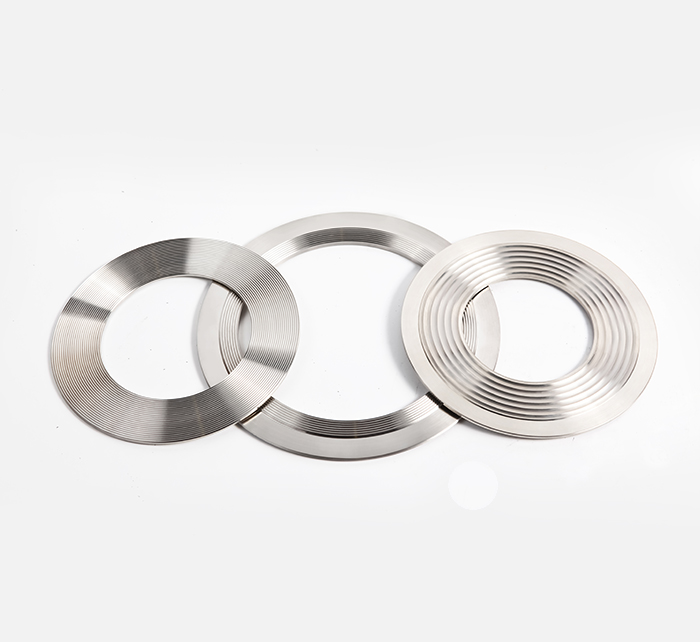
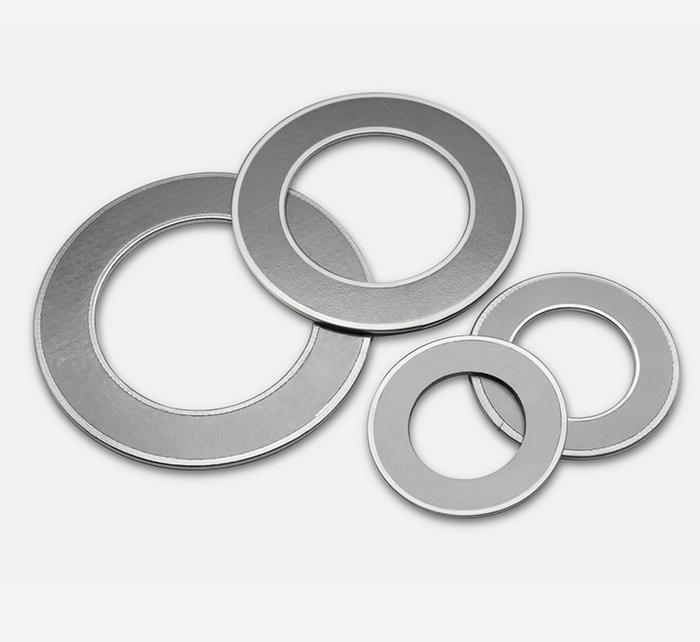
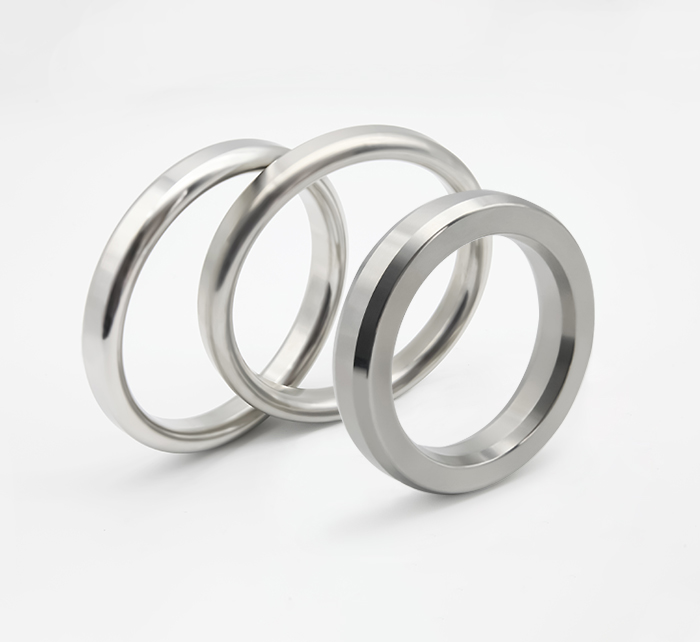
Rilson operates numerous production lines for sealing products, specializing in the design and manufacture of sealing gaskets and other sealing materials for the petroleum, chemical, power, shipbuilding, and machinery manufacturing sectors. Primary products include spiral wound gaskets, ring joint gaskets, kammprofile gaskets, corrugated metal gaskets, insulation kit gaskets, and non-asbestos gaskets, among others.
Through extensive industry experience, Rilson has earned the trust and recognition of customers worldwide. The company holds ISO 9001:2015 quality management system certification and the API 6A certificate, among other credentials. Upholding the core principles of integrity, precision, innovation, and mutual success, Rilson is committed to becoming the preferred brand in industrial gaskets and a top-tier player in the fluid sealing industry.

RILSON GASKET
Ningbo Rilson Sealing Material Co., Ltd is dedicated to ensuring the secure and dependable operation of fluid sealing systems, offering clients the appropriate sealing technology solutions.
Copyright © Ningbo Rilson Sealing Material Co., Ltd. All Rights Reserved.
