
 English
 русский
 中文简体
中文简体
RILSON GASKET
Ningbo Rilson Sealing Material Co., Ltd is dedicated to ensuring the secure and dependable operation of fluid sealing systems, offering clients the appropriate sealing technology solutions.
Incorrect installation is responsible for approximately 30% of ring joint gasket failures in high-pressure piping systems — and the majority of those failures stem from just a handful of repeatable, preventable mistakes. In oil and gas, petrochemical, and power generation applications, a failed ring joint gasket is not merely an inconvenience: it is a safety event, an unplanned shutdown, and a significant maintenance cost rolled into one.
This guide gives you a complete, step-by-step installation protocol — along with the most common failure causes, material selection guidance, and dimension verification procedures — so that every RTJ flange joint you assemble achieves its rated service life from the first pressurization.
Content
Unlike soft-face gaskets that seal by compressing a compliant material between two flat surfaces, ring joint gaskets seal through a metal-to-metal contact mechanism. The gasket — a precision-machined solid metal ring — is seated in a machined groove in the flange face. When the joint is bolted up, the ring deforms plastically at its seating surfaces, conforming to the groove profile and creating a pressure-energized seal that actually tightens under internal pressure.
This mechanism delivers outstanding performance under extreme conditions: pressures up to 20,000 psi and temperatures from cryogenic to 650°C. But it also means that the quality of installation — particularly groove condition, gasket hardness, and bolt load — directly determines whether the seal performs or fails. There is far less tolerance for error than with compressible gasket types.
| Gasket Type | Sealing Mechanism | Max Pressure | Installation Sensitivity |
|---|---|---|---|
| Ring Joint Gasket (RTJ) | Metal-to-metal plastic deformation | 20,000 psi | High |
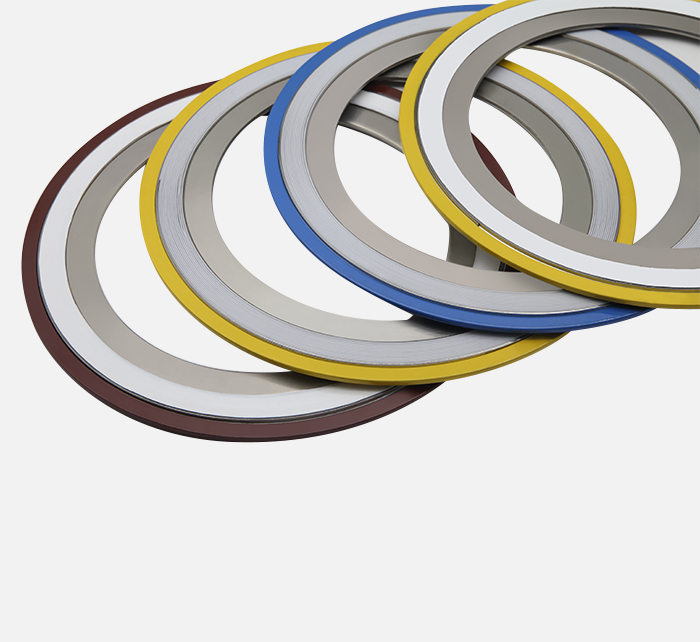
| Spiral Wound Gasket | Elastic compression of metal/filler layers | ~2,500 psi | Medium |
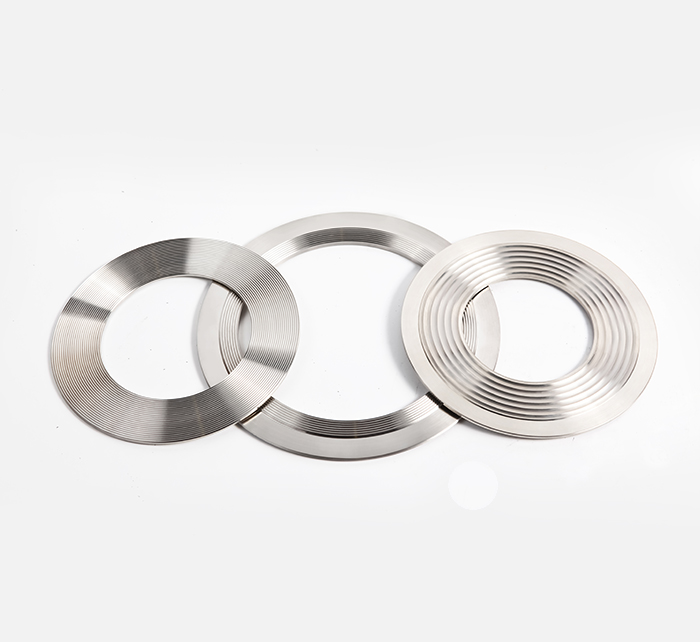
| Kammprofile Gasket | Serrated metal core + soft layer compression | ~3,000 psi | Medium |
| Non-Asbestos Flat Gasket | Surface compression of soft material | ~1,500 psi | Low–Medium |
Two ring profiles dominate field applications, and selecting the wrong one for a given groove is one of the most immediate sources of installation failure.
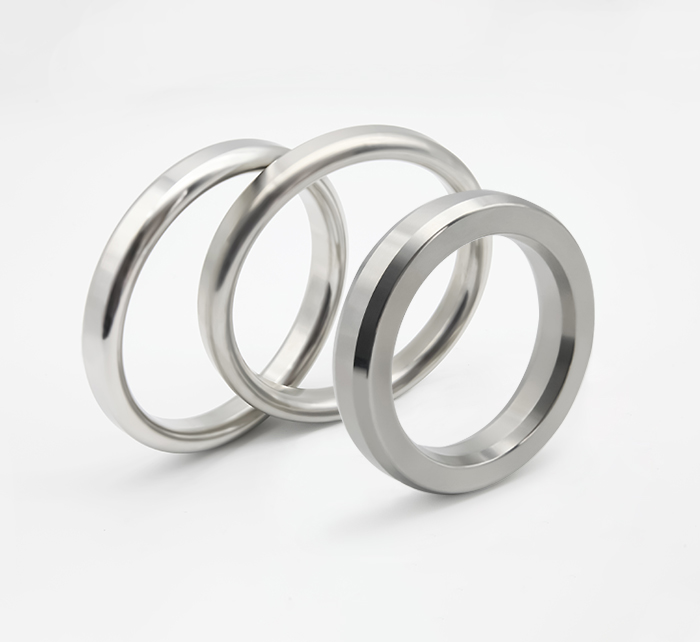
The oval ring has a circular cross-section that contacts the groove at two narrow arcs. Because contact area is small, seating stress concentration is high — which means it achieves an effective seal at relatively lower bolt loads. Oval rings are compatible with both new and worn grooves. They are the recommended choice when groove condition cannot be guaranteed to be perfect, making them standard in field maintenance applications.
The octagonal ring has flat contact faces that engage the groove across a larger seating area. This delivers a more uniform load distribution and higher sealing efficiency at elevated pressures — making octagonal rings preferred in Class 900 and above service. However, they require grooves machined to the correct octagonal profile and in good condition. An octagonal ring in a worn or oval groove will not seal correctly and represents one of the most common mismatch failures in RTJ assemblies.
Key rule: oval rings fit both oval and octagonal grooves. Octagonal rings fit only octagonal grooves. When in doubt, use oval.
Ring type joint gasket material selection is the most consequential decision made before installation begins. The fundamental rule: the gasket material must always be softer than the flange material. If the gasket is harder than the flange, the flange groove deforms instead of the gasket — resulting in groove damage, immediate seal failure, and costly flange replacement.
| Material | Hardness (BHN) | Typical Service | Compatible Flange Material |
|---|---|---|---|
| Soft Iron / Low Carbon Steel | 90–120 BHN | Low-pressure steam, water | Carbon steel flanges |
| 304 / 316 Stainless Steel | 140–160 BHN | Corrosive media, chemical service | Alloy / stainless flanges |
| Inconel 625 | 150–200 BHN | High-temperature, sour service | High-alloy / Inconel flanges |
| Monel 400 | 120–150 BHN | Seawater, hydrofluoric acid service | Monel / high-nickel flanges |
| F5 / F11 Alloy Steel | 130–160 BHN | High-pressure, high-temperature oil/gas | Alloy steel flanges |
Always request hardness certification from your gasket supplier and compare against the flange hardness stated in the flange material test report. A gasket hardness at least 30–40 BHN below the flange is the accepted guideline for reliable plastic deformation during seating.
Dimensional mismatch between the gasket and the groove is responsible for a significant share of RTJ joint failures. A ring that is too large will not seat fully in the groove; one that is too small will seat eccentrically or rock, producing uneven stress distribution and a leak path.
RTJ gasket dimensions are standardized under ASME B16.20 and API 6A. The critical dimensions to verify for every gasket before installation are:
Do not rely on visual inspection alone. Measure every gasket with calibrated instruments before installation, particularly when gaskets have been stored for extended periods or sourced from secondary supply channels.
Following a disciplined installation sequence eliminates the majority of preventable RTJ failures. Each step below addresses a specific failure mode identified in field incident investigations.
Before touching the gasket, inspect both mating flange grooves under adequate lighting. Look for: radial scratches that cross the seating surface (any scratch deeper than 0.1 mm running radially is a rejection criterion), corrosion pitting, old gasket material embedded in the groove, and any mechanical damage from previous assembly.
Clean grooves with a lint-free cloth and an appropriate solvent. Do not use wire brushes on the seating surfaces — wire brush marks create radial leak paths. If groove damage is found, measure depth and surface finish with a profilometer; grooves with Ra values above 1.6 µm on the seating surface should be assessed for re-machining before reassembly.
Examine the seating surfaces of the ring joint gasket under magnification. Reject any gasket showing: surface marks crossing the seating band, out-of-round condition visible to the eye, corrosion or discoloration on seating surfaces, or any sign of previous use. Ring joint gaskets are single-use components. Never reinstall a used RTJ ring, even if it appears undamaged — plastic deformation from the first assembly means it cannot create the required stress at reinstallation.
Apply a thin, even coat of appropriate thread and gasket lubricant to the bolt threads, nut bearing faces, and the gasket seating surfaces. Do not apply lubricant to the flange groove seating surface — lubricant in the groove can hydraulically prevent full gasket seating.
Use lubricants specified for the service temperature. Standard molybdenum disulfide (moly) compounds are suitable up to approximately 400°C. For higher temperature service or oxygen systems, use lubricants specified for those conditions — moly compounds are incompatible with oxygen service.
Lower the gasket into the lower flange groove carefully. The ring must sit centered in the groove without touching the groove bottom. Verify visually that the ring contacts the groove seating surfaces and is not bridging across the groove. Bring the upper flange into position — do not drag it across the gasket or allow it to drop onto the ring. Misalignment at this stage can scratch both the gasket and the groove.
Install all bolts hand-tight first to pull the flanges into parallel alignment. Then apply snug torque — typically 20–30% of the final target torque — in a star (cross) pattern. The star pattern ensures the gasket seats evenly without cocking to one side. Verify flange gap is uniform around the full circumference at snug torque before proceeding.
Final torque must be applied in at least three passes in the star pattern: 50% of target → 75% of target → 100% of target. After the third pass, do a final clockwise round-robin check at 100% target torque to verify no bolts have relaxed as adjacent bolts were tightened. For critical service joints, a fourth pass at 100% is recommended. Do not use impact wrenches for final torquing — use calibrated torque wrenches or hydraulic bolt tensioners.
The correct indication of a properly seated RTJ joint is metal-to-metal contact (flange face gap of zero or near-zero) after full bolt load is applied. If a significant gap remains after full target torque is reached, stop — the gasket may have cocked, the groove may be damaged, or the wrong ring size was installed.
Field failure analysis data from RTJ joint investigations consistently points to the same root causes. Understanding the frequency and consequence of each helps prioritize where installation discipline pays off most.
RTJ flanges require substantially higher bolt loads than raised face flanges with soft gaskets — because creating the plastic deformation needed for metal-to-metal sealing demands significantly more clamping force. Using torque values from a raised face joint on an RTJ assembly is one of the most dangerous errors possible, resulting in an undersized seal that fails at the first pressure test or early in service life.
Always use torque values derived from the specific flange standard (ASME B16.5, ASME B16.47, or API 6A), bolt material, and lubricant nut factor (K factor). As a general reference, RTJ bolt loads are typically 15–25% higher than equivalent raised face assemblies. When in doubt, use a bolt load calculation per ASME PCC-1 or consult the flange and gasket manufacturer's technical documentation.
Installation does not end when the last bolt is torqued. For any RTJ joint returning to service after maintenance or newly installed in a system, the following post-assembly checks are required before pressurization:
Ningbo Rilson Sealing Material Co., Ltd., founded in 2007 and located in Ningbo, Zhejiang Province, is a professional ring joint gaskets manufacturer, supplier, and factory with over 17 years of dedicated experience in industrial fluid sealing solutions. The manufacturing facility spans 20,000 square meters and operates numerous specialized production lines for sealing products, serving the petroleum, chemical, power, shipbuilding, and machinery manufacturing sectors globally.
Rilson's primary product range includes spiral wound gaskets, ring joint gaskets, kammprofile gaskets, corrugated metal gaskets, insulation kit gaskets, and non-asbestos gaskets. All products are manufactured under a rigorous quality management system, with the company holding ISO 9001:2015 certification and API 6A certification — among the most demanding quality standards in the fluid sealing industry.
Guided by the principles of integrity, precision, innovation, and mutual success, Rilson is committed to becoming the preferred brand in industrial gaskets — delivering not only quality products but also the technical support and after-sales service that allow customers to achieve reliable, long-lasting sealing performance in their most demanding applications.

RILSON GASKET
Ningbo Rilson Sealing Material Co., Ltd is dedicated to ensuring the secure and dependable operation of fluid sealing systems, offering clients the appropriate sealing technology solutions.
Copyright © Ningbo Rilson Sealing Material Co., Ltd. All Rights Reserved.
