
 English
 русский
 中文简体
中文简体
RILSON GASKET
Ningbo Rilson Sealing Material Co., Ltd is dedicated to ensuring the secure and dependable operation of fluid sealing systems, offering clients the appropriate sealing technology solutions.
Content
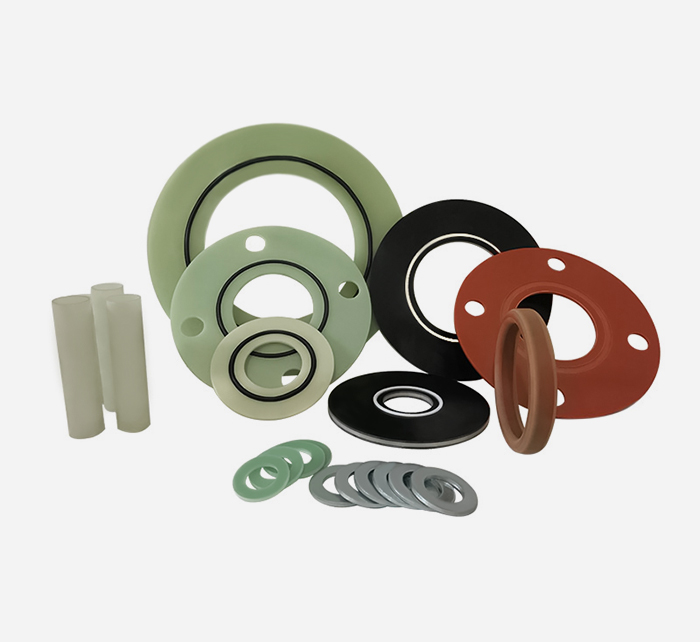
The most reliable way to stop galvanic corrosion at a bolted flange connection is not a single washer — it is a complete isolation system. A properly engineered insulation gasket kit combines three elements: insulating washers under the bolt head and nut, an insulating sleeve over the bolt shank, and an insulating gasket body between the two flange faces. Leave any one of these out, and the corrosion circuit keeps a bridge path through the joint.
Field engineers frequently replace only the flat washers with nylon ones, then still measure active corrosion at the flange. The bolt shank touching the bore of the flange hole, or a nut shorting against the gasket outer diameter, is enough to defeat the effort. Every metallic contact between dissimilar metals must be interrupted.
According to the Impact study by NACE International (now AMPP), the global cost of corrosion was estimated at roughly US$2.5 trillion per year at the time of publication. Galvanic corrosion at joints is a significant slice of that figure. Installing insulating washers, sleeves, and gasket bodies as a coordinated kit is one of the lowest-cost ways to protect existing piping without redesigning the flange itself.
Bottom line: Specify the complete set — washer, sleeve, and gasket body — from a single supplier so the materials, dimensions, and electrical ratings are tested together rather than guessed at in the field.
Galvanic corrosion occurs when two metals with different electrochemical potentials are in electrical contact in the presence of an electrolyte. Electrons flow from the more active metal (anode) to the more noble metal (cathode), and the anode dissolves at an accelerated rate. In a typical carbon steel flange with stainless steel bolting, the flange face is the anode — the bolts survive while the flange corrodes in a groove around the bolt circle.
Flanged joints are especially vulnerable because:
In marine piping, offshore platforms, water treatment lines, and chemical plants, the most frequent damage pattern is localized pitting around bolt heads, reddish-brown oxide staining on the flange, and loss of section under the washer face.
The insulation approach works by interrupting the metallic continuity at each point where the flanged assembly could complete an electrical loop:
The diagram below shows how an insulating washer kit sits inside a bolted flanged connection.
For a retrofit during maintenance, existing studs can be fitted with insulating sleeves and washers before the flanges are pulled up. The critical rule is that the sleeve must cover the entire length of the bolt shank inside the flange bore. A half-length sleeve leaves exposed metal that touches the bore wall and recreates the corrosion path.
If the service involves aggressive media, high temperatures, or cathodic protection, use complete insulation gasket kits with materials matched to the flange rating. Application-specific guidance on preventing corrosion and wear in critical components is covered in our overview of how insulation gasket kits prevent corrosion and wear in critical components.
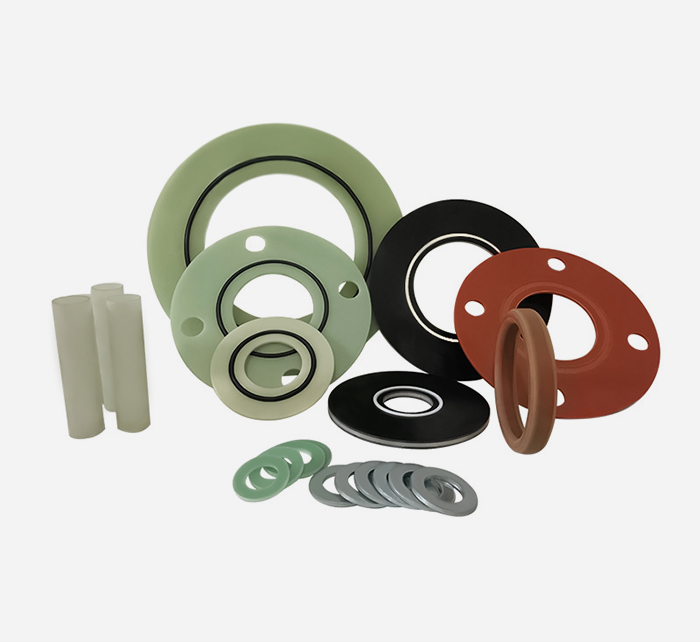 Custom Insulation Gaskets Kits Manufacturers, OEM/ODM Suppliers - Ningbo Rilson Ningbo Rilson Sealing Material Co., Ltd is a China Insulation Gaskets Kits manufacturers and Insulation Gaskets Kits OEM/ODM suppliers, O...View Product →
Most flange isolation applications are handled well by three material families: nylon, glass-reinforced epoxy laminates (G10/G11), and high-performance polymers such as PEEK and PTFE. The table below compares the properties that matter most when selecting washers for galvanic isolation.
| Material | Max Continuous Temp (°C) | Compressive Strength (approx.) | Water Absorption, 24h (%) | Key Strength |
|---|---|---|---|---|
| Nylon PA66 | ≈105 | ≈85 MPa | ≈1.3 | Low cost, machinable |
| G10 glass-epoxy | ≈140 | ≈380 MPa | ≈0.25 | High strength, dimensionally stable |
| G11 glass-epoxy | ≈180 | ≈420 MPa | ≈0.15 | Higher hot strength than G10 |
| PEEK | ≈250 | ≈120 MPa | ≈0.10 | Chemical resistance |
| PTFE | ≈260 | ≈25 MPa | ≈0.01 | Broad chemical resistance |
| Neoprene | ≈95 | Low | ≈1.0 | Flexible, low-pressure sealing |
For elevated-temperature lines, the service limit of the washer material is one of the first design checks. The chart below shows typical continuous temperature ceilings for these six materials.
Water absorption is often overlooked until a marine or submerged installation fails. Nylon can pick up more than 1% moisture in 24 hours, which degrades surface resistivity and weakens the isolation barrier over time. Glass-epoxy laminates and PEEK stay far drier, which is why marine specifications commonly require G10 or G11 rather than nylon.
For seawater immersion, specify a material with low moisture uptake and verify the surface insulation resistance after water exposure. G10, G11, and PEEK should be the first candidates. Nylon and neoprene alone are not reliable for long-term submerged structural bolting.
Where high clamp load must be maintained, compressive strength and creep resistance matter more than price. A soft washer may crush or relax under torque, dropping the joint preload below the design minimum. In such cases, laminate-based washers with documented mechanical properties are the safer choice. For diverse temperature and medium combinations, our non-metallic gasket options can be paired with laminate washers to keep the entire joint electrically isolated.
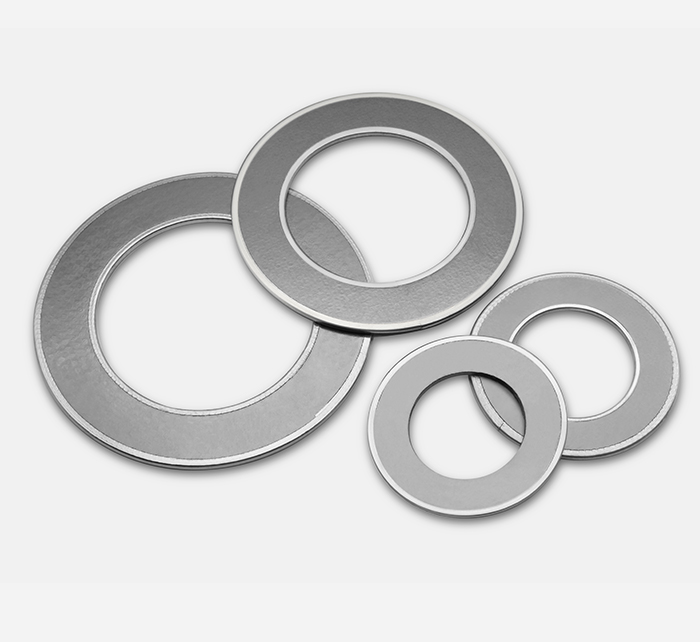 Custom Non Metallic Gaskets Manufacturers, OEM/ODM Suppliers - Ningbo Rilson SeaNingbo Rilson Sealing Material Co., Ltd is a China Non Metallic Gaskets manufacturers and Non Metallic Gaskets OEM/ODM suppliers, Our com...View Product →
The insulating sleeve must run the full length of the bolt shank inside the flange bore. Partial sleeves are the most common cause of field failure because the exposed portion of the shank touches the bore wall and completes the circuit. Measure the actual bolt grip length, not the nominal flange thickness, before ordering sleeves.
Polymer-based washer materials creep under sustained compression. A nylon washer may seem firm immediately after torquing, yet lose a meaningful share of preload after thermal cycling. Account for this in the joint design by using a harder laminate material or by re-torquing after the first thermal cycle. If the flange spec allows it, a controlled torque sequence with a final pass on the hot joint helps stabilize the assembly.
The washer outside diameter should cover the full bolt-head seat without overhanging the flange chamfer. Overhang concentrates stress and can crack laminate washers. Inside diameter must clear the bolt thread, not rub against it during tightening.
Piping systems with different pressure classes require different kit geometry and material thickness. Our technical guide to how insulation gasket kits meet the sealing and insulation needs of different piping systems explains the selection process in more detail.
Before ordering insulating washers or a full kit, run through this checklist to avoid the mistakes that usually surface only after installation:
Suppliers with in-house material knowledge can help match the insulation system to the flange standard. If you are sourcing materials separately, verify the mechanical and electrical properties of gasket raw materials with documented properties before committing to a large procurement batch.
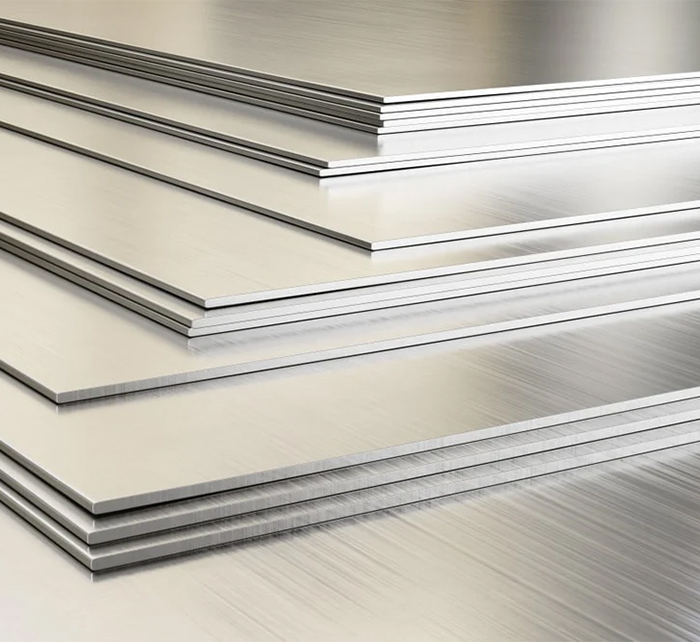 Custom Gasket Raw Materials Manufacturers, OEM/ODM Suppliers - Ningbo Rilson SeaNingbo Rilson Sealing Material Co., Ltd is a China Gasket Raw Materials manufacturers and Gasket Raw Materials OEM/ODM suppliers, Our com...View Product →
These are the questions we hear most often from maintenance engineers and procurement teams. For a deeper explanation of the components, see our introduction to what insulation gasket kits are and how they function in industrial applications.
They interrupt the electrical path between bolting and flanged components, preventing galvanic corrosion in dissimilar-metal connections.
Yes in dry indoor service, but nylon absorbs moisture and creeps under load, so it is not reliable for marine or high-temperature bolting.
G10 or G11 glass-epoxy laminates for most structural flanges; PEEK or PTFE when chemical resistance or higher temperature capability is required.
Yes if the full kit is used and the washer material has very low water absorption, such as G10, G11, or PEEK.
Typically at least 1.5 to 3 mm for standard bolting, with thicker washers for heavy structural flange joints that require higher axial load capacity.
A coordinated set containing insulating gasket body, insulating washers, and insulating sleeves designed to electrically isolate a bolted flange joint.

RILSON GASKET
Ningbo Rilson Sealing Material Co., Ltd is dedicated to ensuring the secure and dependable operation of fluid sealing systems, offering clients the appropriate sealing technology solutions.
Copyright © Ningbo Rilson Sealing Material Co., Ltd. All Rights Reserved.
