
 English
 русский
 中文简体

RILSON GASKET
Ningbo Rilson Sealing Material Co., Ltd is dedicated to ensuring the secure and dependable operation of fluid sealing systems, offering clients the appropriate sealing technology solutions.
Picture a DN150 nozzle on a glass-lined reactor. The bolts are small, the flange face is not perfectly flat, and the medium is dilute hydrochloric acid at 90 °C. A gasket cut from virgin PTFE will seal that joint at start-up and then slowly creep out of it under sustained load. A sheet of ePTFE material usually holds the same joint far longer, because the material was developed for exactly this mix of weak bolting and aggressive chemistry.
The conclusion first: ePTFE is the right gasket material when bolt load is limited, the medium attacks most elastomers, or the flange is glass-lined, plastic or otherwise fragile. It is the wrong material when you need high tensile strength, tight dimensional control, or blowout resistance at high pressure. The sections below cover the structure behind those rules, the numbers that matter at the flange, and the practical selection points.
Content
ePTFE starts as ordinary PTFE resin. The resin is blended with a lubricant, pre-formed, extruded into a tape and then stretched, or expanded, at a controlled temperature and strain rate. Stretching pulls the sintered polymer into a lattice of solid nodes joined by fine fibrils. That lattice is the whole point: membrane grades reach roughly 50–80% porosity by volume, while gasket sheet grades are densified to a lower porosity so the sheet can carry sealing stress without collapsing.
The chemistry does not change. The carbon–fluorine backbone that makes PTFE inert to nearly every industrial chemical is intact, and the continuous service temperature stays around 260 °C. What changes is architecture, and architecture is what turns a rigid, creep-prone plastic into a soft, springy sealing sheet.
Three practical consequences follow. ePTFE wets out a flange face at much lower seating stress than solid PTFE, which is why it works on low-load joints. The fibrils act like tiny springs and recover when bolt load relaxes, which is the realistic meaning of better creep resistance. And the same porosity that delivers conformability also makes the material permeable, so gasket sheet is densified while open membranes are kept for venting and filtration duties.
Buyers often ask whether ePTFE is simply softer PTFE. It is softer, but the differences that matter at the flange are density, compressibility, creep and tensile strength. The ranges below reflect what suppliers normally publish.
| Property | Sintered PTFE | ePTFE gasket sheet |
|---|---|---|
| Density | 2.14–2.20 g/cm³ | 0.6–1.0 g/cm³ |
| Porosity | Essentially none | 40–80% depending on grade |
| Tensile strength | 20–35 MPa | 8–25 MPa, direction dependent |
| Compressibility | Low | High |
| Continuous service temperature | About 260 °C | About 260 °C |
| Creep under bolt load | High (cold flow) | Reduced |
| Seating stress required | High | Low |
| Blowout resistance | Moderate | Lower without an insert |
Density is the single most useful number for judging a sheet. Lower density means more compressibility and lower seating stress, but also more permeability and more thickness loss under load. Values well outside the range above usually indicate a filled compound or a laminated product, so ask what else is in the sheet.
An ePTFE sheet costs several times more per kilogram than compressed fibre or plain PTFE. It earns that back in four situations.
FRP, PVDF, glass-lined equipment and small valve bonnets cannot take high bolt stress. ePTFE seats at low stress and spreads the load across a soft sheet, so the flange is not damaged by the act of tightening it. A 1.5 mm sheet on a raised face is usually enough; thicker sheet conforms more but creeps more.
Acids, caustics, solvents and chlorine-bearing streams that would swell an elastomer are handled by the same sheet. The exceptions are narrow and well documented: molten alkali metals and elemental fluorine at elevated temperature. For a wider view of how soft materials sit next to metal and fibre gaskets, this overview of non-metallic gasket applications in industry is a useful reference.
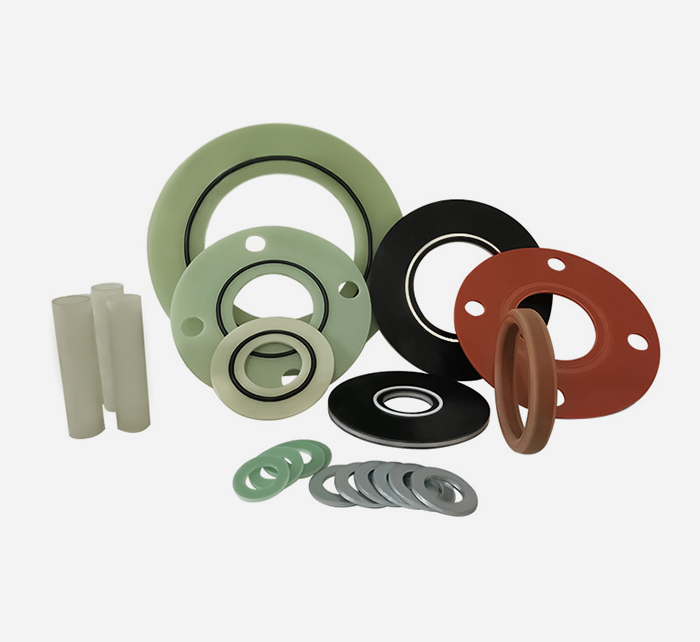
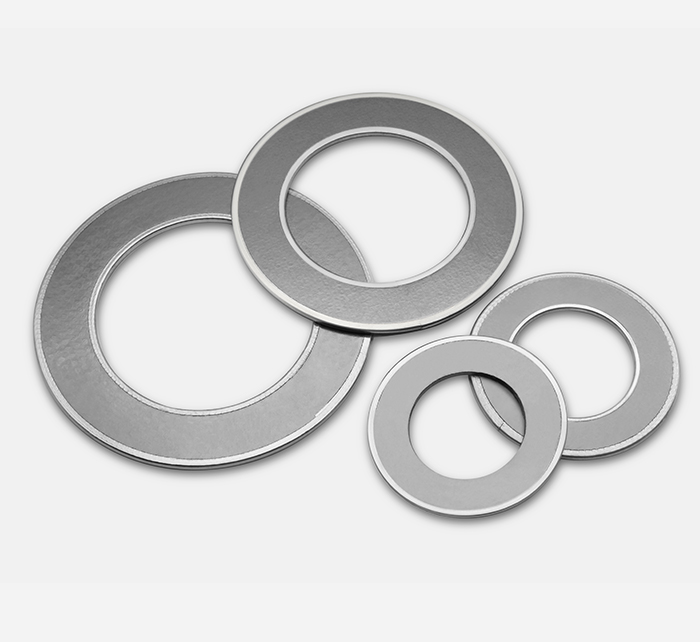 Non-Metallic Gaskets for Chemical and Food LinesCompare PTFE, graphite, rubber, cork and mica gasket types for corrosive media, food-contact lines and flange sealing where material compatibility drives selection.View Product →
Food, beverage and pharmaceutical lines use ePTFE because it is non-wetting, does not leach and can be cleaned in place. Grades with FDA and EU food-contact documentation are standard; specify the certificate explicitly rather than assuming it.
Tubesheet joints in chemical heat exchangers see repeated heat-up and cool-down, and the gasket must follow the flange without relaxing. ePTFE works well at moderate pressures; above roughly 40 bar combined with high temperature, a metal-containing design is usually the safer answer.
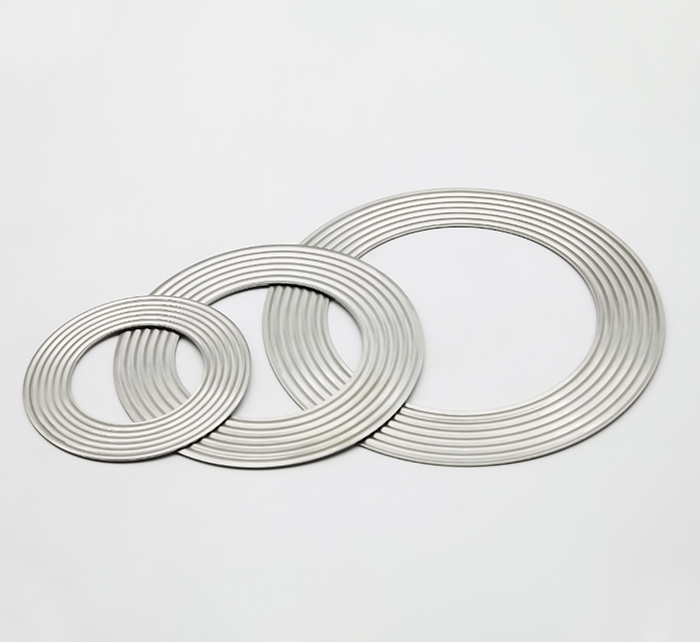
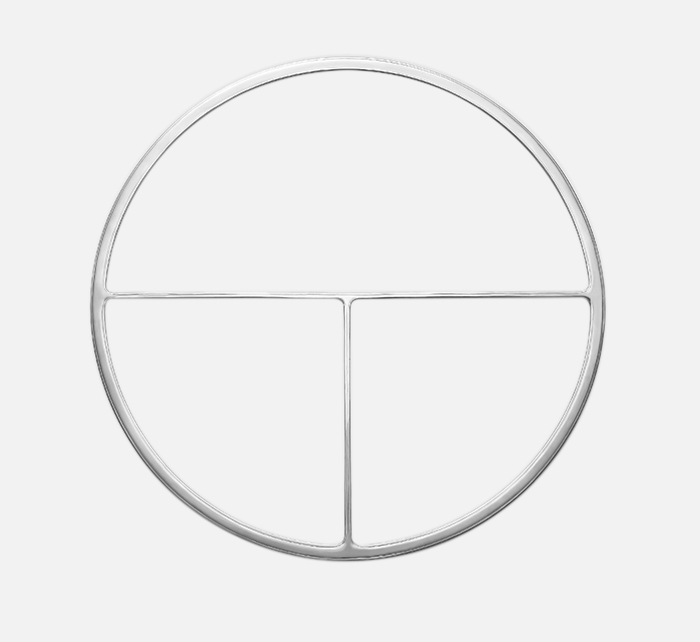 Heat Exchanger Gaskets for Thermal Cycling and High PressureReview metal-jacketed and kammprofile options for shell-and-tube and plate heat exchangers where recovery, compression and flange conformity matter.View Product →
Soft sheet has limits, and ignoring them produces failures that later get blamed on the material.
None of these is a reason to avoid the material. They are reasons to check the joint, not only the datasheet.
Most ePTFE failures are installation failures. These five points cover the majority of them.
The difference between a good and a mediocre ePTFE sheet is rarely visible on a sample. Ask these before ordering.
Material alone does not seal a joint; the cut, the tolerance and the handling do. A supplier with in-house gasket manufacturing can usually hold tighter thickness and dimensional control than a trader reselling sheet.
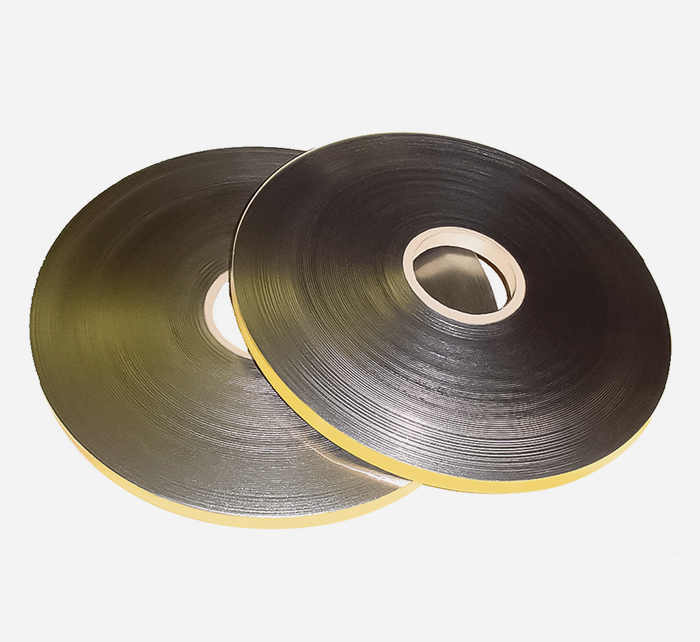
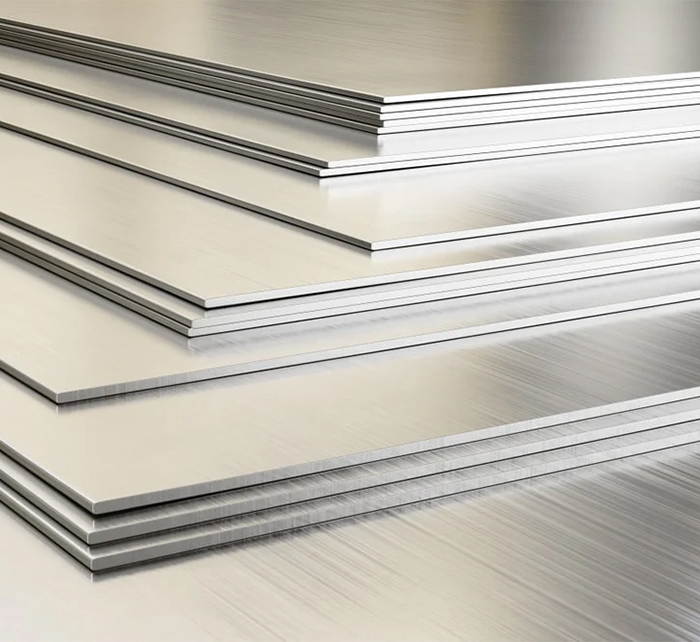 Gasket Raw Materials for Spiral Wound and Sheet ProductionReview winding wire, sheet, coil, graphite and PTFE tape for gasket manufacturing, with standard grades and thickness specifications for controlled production.View Product →

RILSON GASKET
Ningbo Rilson Sealing Material Co., Ltd is dedicated to ensuring the secure and dependable operation of fluid sealing systems, offering clients the appropriate sealing technology solutions.
Copyright © Ningbo Rilson Sealing Material Co., Ltd. All Rights Reserved.
