
 English
 русский
 中文简体

RILSON GASKET
Ningbo Rilson Sealing Material Co., Ltd is dedicated to ensuring the secure and dependable operation of fluid sealing systems, offering clients the appropriate sealing technology solutions.
A weeping flange on a hydrocracker charge line rarely announces itself. It shows up first as a faint hydrocarbon odour on the walkway, a dark stain on the insulation, or a thermal image reading two degrees hotter than the rest of the header. By the time it becomes a visible spray, the unit is planning an unplanned outage, and a joint that cost a few hundred dollars has taken a week of production with it.
The short answer first: in downstream oil and gas sealing, leaks are seldom caused by poor gasket material. They are caused by a gasket that looked correct on the specification sheet but was wrong for the actual joint — wrong dimensions, a filler that could not survive the temperature cycle, insufficient bolt load, or an installation sequence that left the load uneven around the flange.
The rest of this article covers which gasket styles suit which downstream services, what the relevant standards actually control, and the practical details that decide whether a joint survives a five-year run.
Content
Downstream covers everything after the wellhead: refinery process units, petrochemical and chemical plants, storage terminals, loading racks and distribution pipelines. The gasket styles overlap with those used upstream, but the duty profile does not.
Three differences drive most sealing decisions.
Scale matters too. MarketsandMarkets estimated the global oil and gas processing seals market at roughly USD 5.7 billion in 2018, projected to reach USD 6.4 billion by 2023, and processing plants rather than drilling sites account for the larger share of that demand.
Five gasket styles cover the overwhelming majority of downstream flanged joints. The differences that matter in practice are bolt-load demand, temperature ceiling, and whether the joint can tolerate a re-make.
| Gasket style | Typical downstream service | Practical window | Re-use after break |
|---|---|---|---|
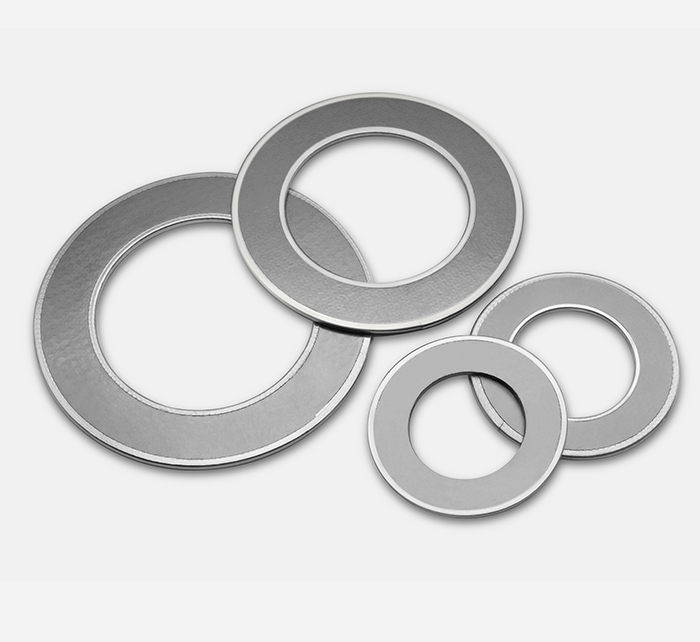
| Non-metallic sheet (fibre, graphite, PTFE) | Utility water, lube and seal oil, low-pressure hydrocarbon, tank farm piping | Class 150–300; fibre sheets to about 200 °C, graphite sheet to about 450 °C | No |
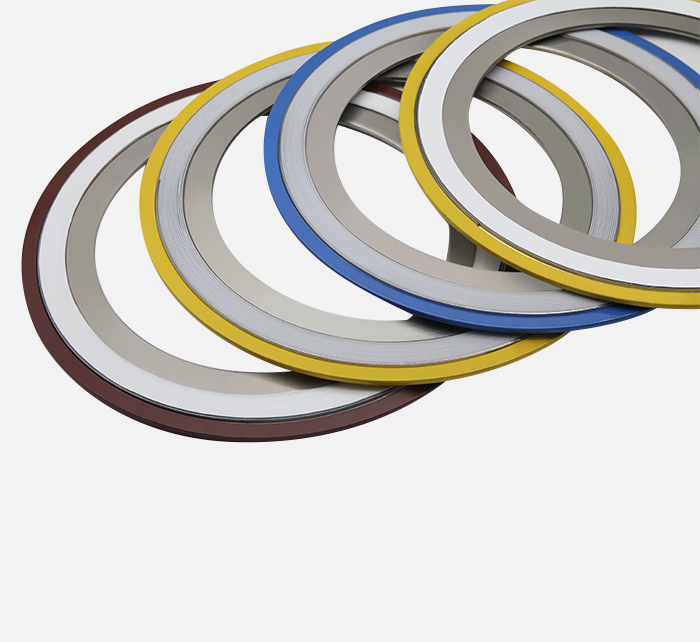
| Spiral wound (SS316 winding plus filler) | Process piping, pumps, columns, the majority of refinery flanges | Class 150–2500; cryogenic up to about 450 °C with graphite filler | No |
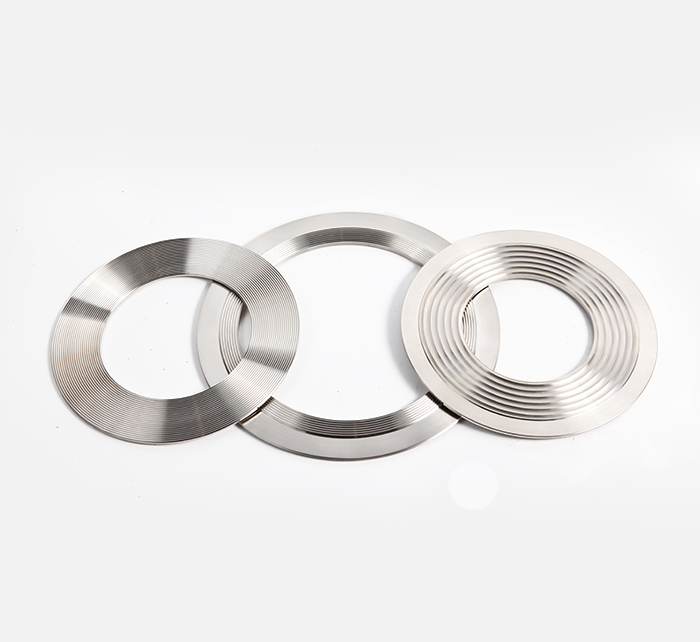
| Kammprofile (serrated core plus soft facing) | Heat exchanger shells and channels, high-temperature and cycled flanges | Class 300–2500; up to about 500 °C | Core can sometimes be re-faced |
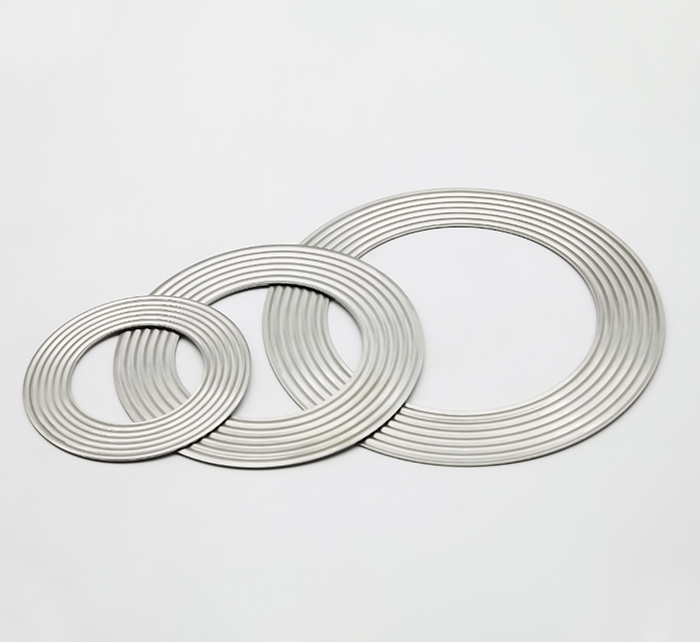
| Corrugated metal | Narrow flanges, low bolt load, exchanger covers | Moderate pressure, good under thermal cycling | Occasionally, after inspection |
| Ring joint (solid metal ring, grooved flange) | High-pressure hydrogen, high-integrity tie-ins, high-class piping | Class 900 and above; up to about 650 °C with a metal ring | Yes, if within tolerance and hardness limits |
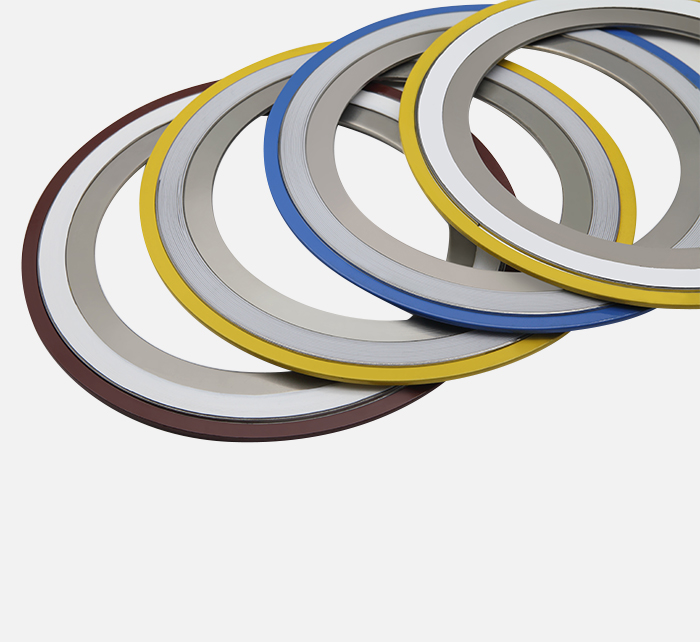 Spiral Wound Gaskets for Refinery and Chemical Flanged JointsCategory overview of spiral wound gaskets with metal winding, soft fillers, and styles for refinery, chemical, and power flanged joints.View Product →
For most refinery process piping, the spiral wound gasket remains the default choice because it balances two things at once: the soft filler does the sealing, while the V-shaped metal winding supplies the spring-back that keeps load on the joint as it cools. Where bolt load is limited or the flange is narrow, corrugated metal or kammprofile constructions are usually a better match than forcing a heavier gasket into the joint.
Selection normally starts with flange rating and design temperature, but four variables decide whether the joint really holds: available bolt load, facing condition, media and corrosion, and the number of thermal cycles expected between turnarounds.
Temperature is only half the picture. A gasket rated for 450 °C in steady service may still fail in a unit that swings between 200 °C and 400 °C every fortnight, because what matters is how much of the original bolt load the gasket returns when the joint contracts.
Surface finish is the variable most often missed in a turnaround. A spiral wound gasket specified for a 3.2 to 6.3 µm Ra serrated facing behaves very differently on a smooth, worn or scored surface, and flange surface finish and condition frequently explains why an identical gasket seals on one flange and weeps on the next.
Downstream procurement usually names standards rather than brands, so it helps to know what each one actually controls.
A supplier's paperwork is part of the sealing specification. A gasket that cannot be traced to a certified heat of stainless steel or a documented filler batch is a risk item in a sour or hydrogen service joint, no matter how good the drawing looks.
Ningbo Rilson Sealing Material Co., Ltd., for example, operates under ISO 9001:2015 and holds API 6A product certification, and has been recognised as a supplier to industrial groups including GE, Shell and ExxonMobil. Those approvals are a useful filter during vendor qualification because they compress a long checklist into a single question.
Two styles dominate when pressure class, temperature or cycling pushes softer gaskets out of their window.
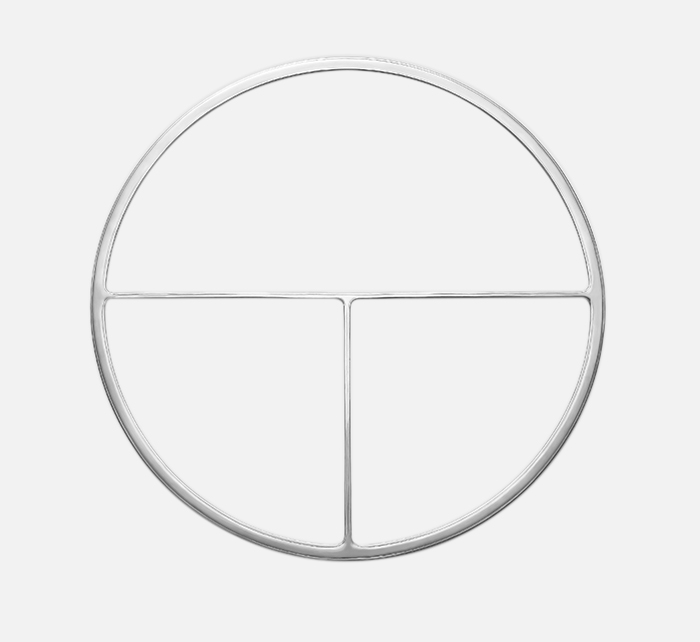
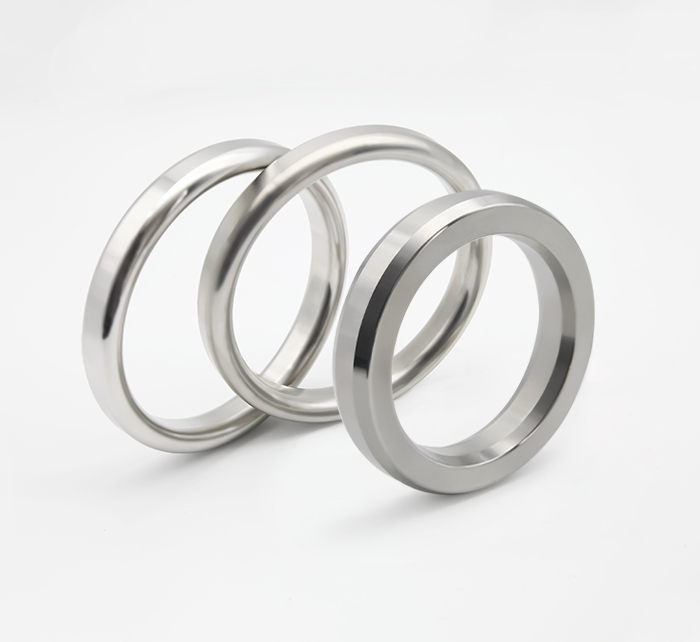
A ring joint seals on a line contact between a machined metal ring and the groove in the flange face. There is no soft filler to compensate for anything, which is precisely why it works in high-pressure hydrogen and high-integrity tie-ins — and also why it fails quickly when the groove is scratched, the ring is out of tolerance, or the bolts are not brought up evenly. Bolt load requirements are high, and the groove has to be inspected, not assumed.
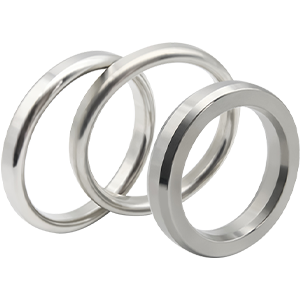 Ring Joint Gaskets for High-Pressure Oil, Gas, and Petrochemical ServiceMetallic RTJ gaskets for high-pressure and high-temperature sealing, with R, RX, BX, IX, lens, and rubber-coated styles.View Product →
A kammprofile gasket uses a serrated metal core with a thin soft facing on each side. It behaves like a hybrid: it needs less bolt load than a ring joint, recovers well through thermal cycling, and handles the flanged connections around exchanger shells and channel covers where a spiral wound gasket would be working near its limit.
Heat exchangers concentrate sealing problems into a small area. The gasket sits between a shell flange and a channel or cover plate, temperature gradients across the joint are steep, and the bolt load has to hold two faces at once. Exchanger gaskets are usually specified as a complete set per unit so that all joints in the bundle are replaced together and bolt loads stay balanced.
Insulation gasket kits solve a different problem. Where a pipeline is cathodically protected, a conductive flange joint becomes a corrosion site, and an isolation kit with insulating gasket, sleeves and washers breaks that electrical path. The sealing duty is unremarkable; the electrical integrity is not, and a single missing insulating washer defeats the whole installation.
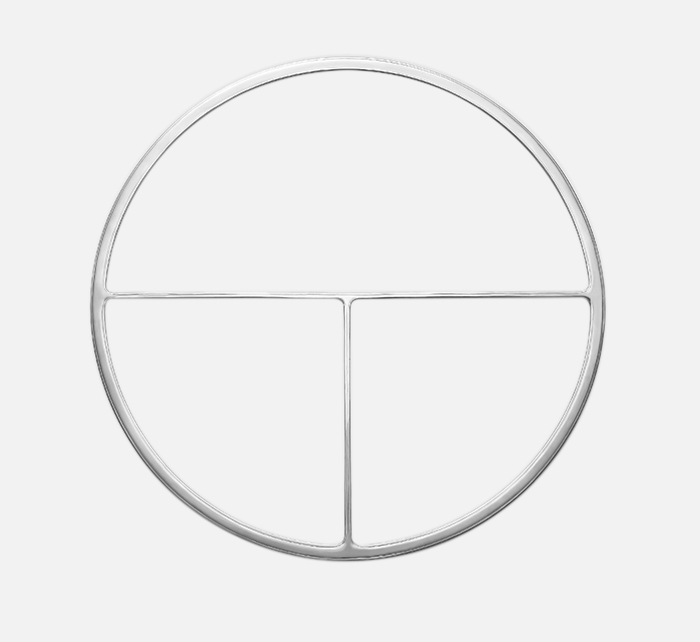 Custom Heat Exchanger Gaskets for Shell, Tube, and Plate UnitsCustom metal-jacketed and kammprofile heat exchanger gaskets for petrochemical, power, marine cooling, and industrial refrigeration equipment.View Product →
Industry bolted-joint guidance, including ASME PCC-1, converges on the same message: the gasket is rarely the weakest link — the assembly is. A practical sequence for a downstream turnaround looks like this.
Re-torquing after the unit reaches operating temperature is sometimes appropriate and sometimes not, depending on the gasket type and the procedure. Following the written method matters more than the habit.
Quotation delays in this industry almost always trace back to missing joint data. Sending the following in one message removes most of the back-and-forth.
For repeat orders, keeping the original specification on file is worth the effort — it prevents a "equivalent" substitution that quietly changes the filler grade.
Downstream sealing rewards preparation more than it rewards premium materials. Choosing the right gasket style for the service, verifying the flange and the bolt load, and following a written assembly procedure will prevent more leaks than any single upgrade to the specification sheet.
For refinery and petrochemical operators sourcing a dependable gasket partner, Ningbo Rilson Sealing Material Co., Ltd. designs and manufactures spiral wound, ring joint, kammprofile, corrugated metal, non-metallic, heat exchanger and insulation gasket ranges, alongside gasket raw materials, from its 20,000 m² production facility.

RILSON GASKET
Ningbo Rilson Sealing Material Co., Ltd is dedicated to ensuring the secure and dependable operation of fluid sealing systems, offering clients the appropriate sealing technology solutions.
Copyright © Ningbo Rilson Sealing Material Co., Ltd. All Rights Reserved.
