
 English
 русский
 中文简体
中文简体
RILSON GASKET
Ningbo Rilson Sealing Material Co., Ltd is dedicated to ensuring the secure and dependable operation of fluid sealing systems, offering clients the appropriate sealing technology solutions.
You pull the spec sheet for a Class 600, 6-inch weld-neck flange and the first question is simple: how much pressure can it actually hold? If you guessed 600 psi, you are off by more than a factor of two. Per ASME B16.5, a Class 600 carbon-steel flange is rated for roughly 1,480 psig at ambient temperature, and it only falls to about 600 psi near the top of its temperature envelope.
The ANSI 600 pressure rating is a pressure–temperature classification, not a fixed working pressure. That distinction drives every downstream decision — flange material, bolt specification, gasket type, and test pressure. Get it wrong and you either pay for metal you do not need or, worse, specify a joint that leaks in service. This article explains what the 600 class actually means, how temperature and material change the numbers, and how to choose the right gasket for a Class 600 flange.
Content
The rating comes from ASME B16.5, the standard for pipe flanges and flanged fittings from NPS 1/2 through NPS 24. Industry still says "ANSI B16.5," but the current standard is published by ASME and defines seven pressure classes: 150, 300, 400, 600, 900, 1500, and 2500. Class 600 sits in the high-pressure band, with only 900, 1500, and 2500 above it. For flanges larger than NPS 24, ASME B16.47 uses the same class logic, so the principles here apply across the plant.
Each class is a set of maximum allowable non-shock pressure values for a given flange material at a given temperature. The numbers are calculated from the allowable stress of the flange material, the flange geometry, and the bolting assumptions written into the standard. The class number itself is only a label. Treat it as a rating designation, never as a direct psi value.
Maximum allowable non-shock pressure by ASME B16.5 class at 100 °F for carbon steel, material Group 1.1 (e.g., A105). Data source: ASME B16.5 pressure–temperature tables.
Class 600 is roughly five times Class 150 and more than double Class 300. That wide gap explains why Class 600 is the starting point for demanding services rather than an extreme one. Typical Class 600 applications include oil and gas processing, steam systems, chemical plants, and power generation.
A maximum allowable non-shock pressure is always paired with a temperature. As the service temperature rises, the allowable stress of the flange material drops, so the rating drops with it. For a Class 600 A105 flange, the numbers are 1,480 psig at 100 °F, 1,290 psig at 600 °F, and 890 psig at 850 °F. The "600" in Class 600 only looks like a working pressure at roughly 850–900 °F — which is where the "it must be 600 psi" myth comes from.
The same Class 600 flange loses roughly 40% of its ambient rating by 850 °F. Data source: ASME B16.5 pressure–temperature tables, material Group 1.1.
| Service temperature (°F) | Maximum non-shock rating (psig) |
|---|---|
| 100 | 1,480 |
| 200 | 1,480 |
| 300 | 1,435 |
| 400 | 1,395 |
| 500 | 1,345 |
| 600 | 1,290 |
| 700 | 1,210 |
| 800 | 1,050 |
| 850 | 890 |
| 900 | 735 |
| 1000 | 410 |
Do not confuse the hydrostatic test pressure with the working rating. ASME B16.5 flanges are proof-tested at 1.5 times the 100 °F rating — about 2,220 psig for a Class 600 carbon-steel flange. That value is a one-time integrity check, never an operating limit.
ASME B16.5 does not assign a single rating to a class. It assigns ratings by material group. Group 1.1 covers A105 and similar carbon steels; Group 2.1 covers 304/316 austenitic stainless steels. At 100 °F, a 316 stainless Class 600 flange is rated about 1,440 psig, close to carbon steel's 1,480 psig. The differences become more meaningful at high temperature, where carbon steel derates quickly and the material's own temperature ceiling becomes the limiting factor.
The practical point for buyers: always confirm the material group when comparing Class 600 flanges from different suppliers, and make sure the gasket material can handle the flange's temperature limit. Matching a graphite-faced gasket to a stainless flange rated above 900 °F is common; matching a rubber-bound sheet to a 850 °F carbon-steel joint is not.
| Material group | Typical materials | Class 600 rating at 100 °F | What it means for buyers |
|---|---|---|---|
| 1.1 | A105, A350 LF2, WCB | 1,480 psig | Standard carbon-steel choice for oil, gas, steam, and chemical service; practical limit around 800–850 °F |
| 2.1 | 304/304L, 316/316L | 1,440 psig | Corrosion-resistant; rating close to carbon steel at ambient, higher usable temperature range |
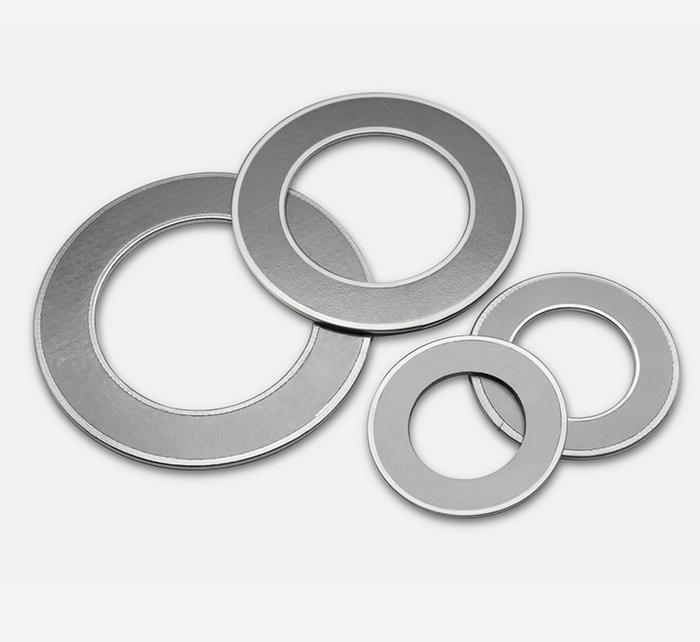
For Class 600 joints, the gasket is not an afterthought — the flanges are the frame that squeezes it. A typical raised-face Class 600 joint uses a spiral wound gasket with an inner ring, or a ring joint gasket when the flange has RTJ facings. The bolt load must be high enough to seat the gasket, and the flange stiffness must hold that load through temperature cycles.
The gasket sits between the sealing facings; bolt preload compresses it and blocks the leak path. The flange class fixes the facing dimensions, bolt circle, and gasket size.
The class number also fixes the geometry: a gasket made for a Class 150 flange will not fit a Class 600 flange of the same nominal size. Always order gaskets to the flange standard and facing type, not just the pipe size.
Class 600 is the dividing line in many plants: from here up, soft sheet gaskets become marginal. For raised-face flanges, the workhorse is a spiral wound gasket with an inner ring. The inner ring centers the gasket and prevents inward buckling of the winding under pressure. Gasket dimensions for spiral wound and ring joint types are specified in ASME B16.20, so matching the flange class is straightforward.
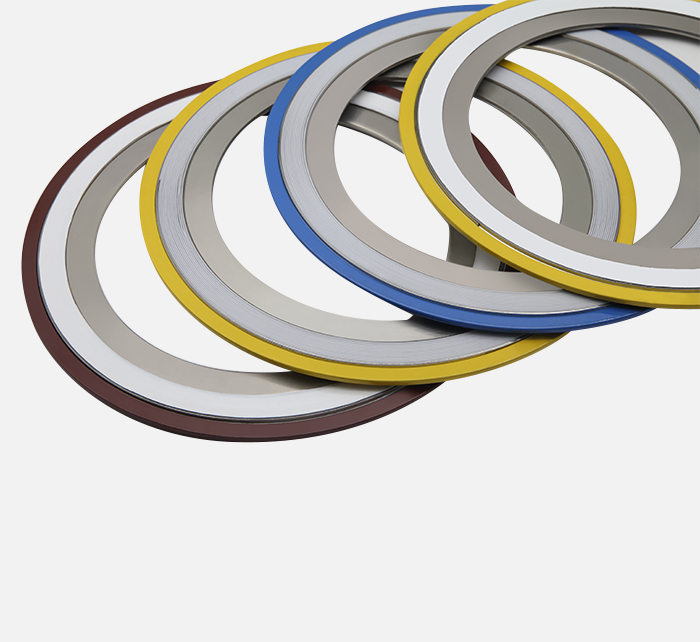
A spiral wound gasket combines a V-shaped metal winding with a soft filler, giving spring-like recovery during temperature swings. It is the standard choice for Class 600 process piping in refineries and chemical plants, and it performs well in steam and hydrocarbon service.
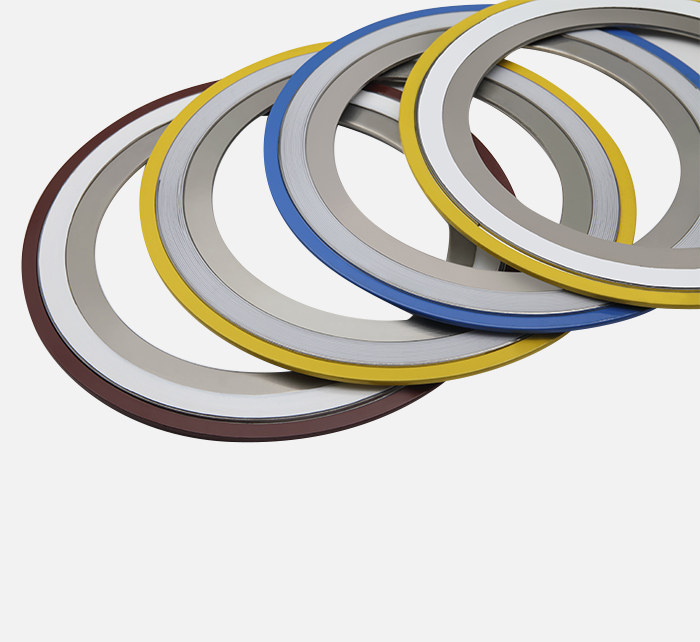 Spiral Wound Gaskets with Optional Inner and Outer RingsThese metal-and-filler gaskets offer spring-like resilience for Class 600 refinery and chemical piping. Their construction can be customized to suit available bolt load and chemical compatibility, making them a versatile sealing choice for steam and hydrocarbon service.View Product →
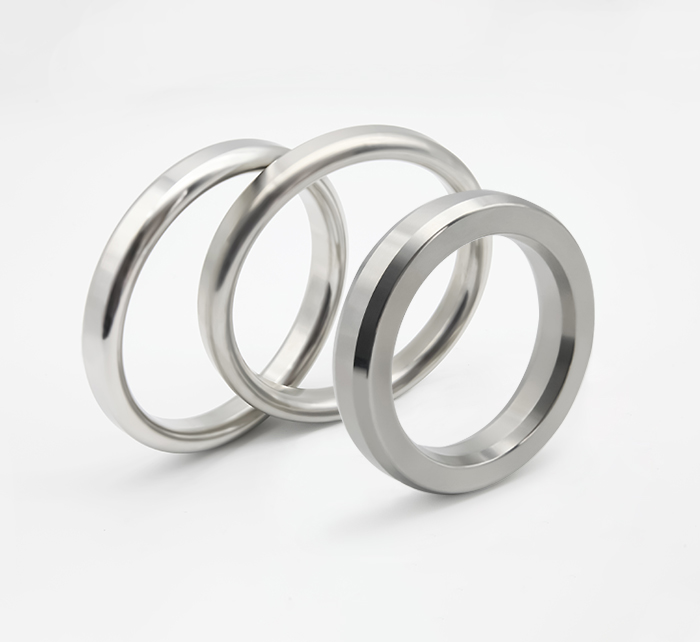
When the flange has RTJ facings, a ring joint gasket provides a metal-to-metal seal. Under bolt load, the gasket deforms into the groove and creates a leak-tight line contact. Ring joint gaskets are built for severe high-pressure service, but they must be replaced once they have been seated — reusing an RTJ gasket invites leakage.
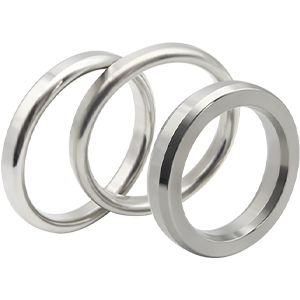 Ring Joint Gaskets for High-Pressure Flange SealingDesigned for severe petroleum and gas service, these gaskets deform into the flange groove for a metal-to-metal seal. They come in standard sizes per API and ASME and can include rubber coating for hydrotesting and corrosion protection.View Product →
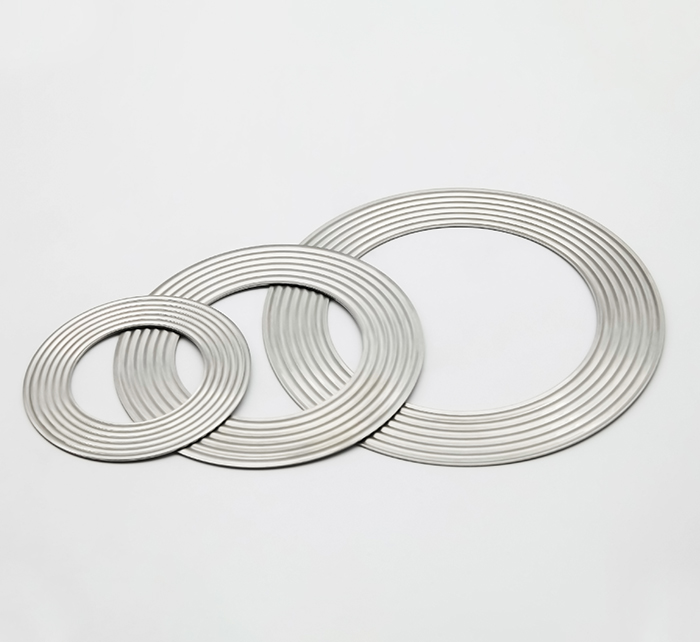
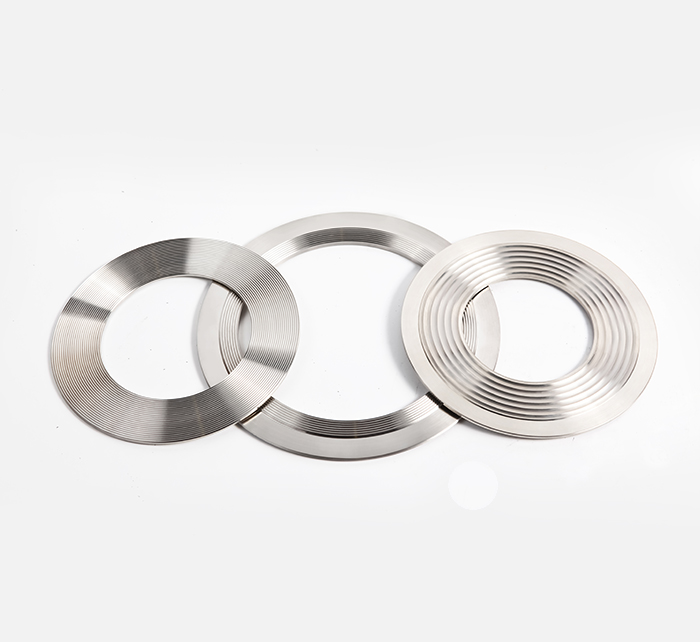
Kammprofile gaskets use a solid metal core with concentric serrations and a soft facing, often graphite or PTFE. They combine the conformability of a soft gasket with the blowout resistance of metal, which makes them a first choice for heat exchanger connections and cyclic service where a Class 600 joint must open and close more than once.
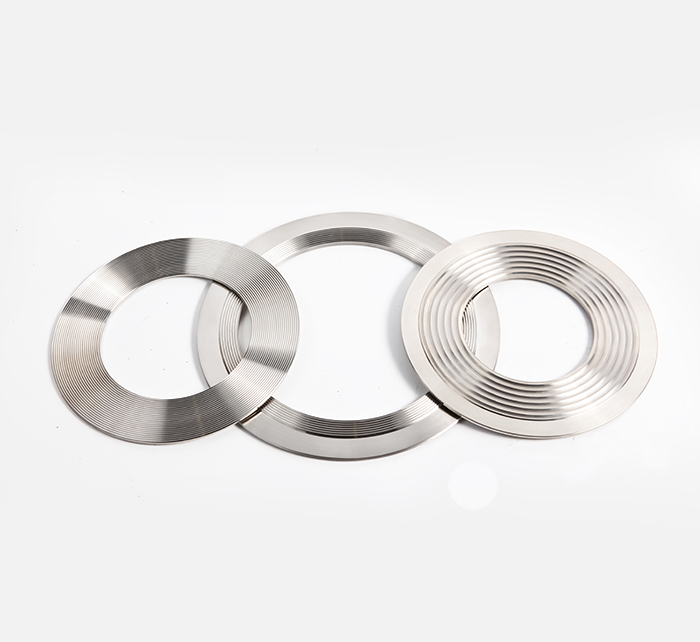 Kammprofile Gaskets with Serrated Metal Core and Soft FacingThese gaskets combine a solid serrated metal core with graphite or PTFE facing for high-pressure, high-temperature reliability. They resist blowout and distortion, making them ideal for heat exchanger connections and cyclic Class 600 joints.View Product →
Gasket failure is a leading cause of flange leaks, so it pays to inspect existing joints before re-assembly. Useful checks include learning how to identify a damaged spiral wound gasket, and understanding how ring joint gaskets maintain sealing performance under high pressure and high temperature.
Most Class 600 joint leaks in the field trace back to bolt load, not gasket quality. The flange class tells you the rating, but the bolt determines whether the gasket ever reaches its required seating stress. Follow ASME PCC-1 bolt-up procedures: controlled torque or tension, cross-pattern passes, and a final full-target pass. For large Class 600 joints, consider a tensioner instead of a torque wrench, because torque alone cannot always compensate for friction losses.
The same due diligence applies when upgrading an older line: verify the flange material, facing condition, and bolt condition first. A new gasket cannot fix a pitted facing or a stretched bolt.
A Class 600 carbon-steel flange is rated for about 1,480 psig at 100 °F. At 850 °F the rating drops to about 890 psig, and it keeps falling as temperature rises.
Yes, but the rating is far higher than 600 psi at ambient temperature. The rating only falls to around 600 psi near 850–900 °F, which is where the confusion usually starts.
At ambient temperature, Class 600 is approximately 102 bar for carbon steel (1,480 psig equals about 102.1 bar). It is often compared to the PN100 rating used in ISO and EN flange standards.
They are similar but not identical. PN100 specifies pressure in bar at 20 °C, while Class 600 is a full pressure–temperature class from ASME B16.5. Do not interchange them without checking the complete temperature curve.
For raised-face flanges, a spiral wound gasket with an inner ring is the standard choice. For RTJ facings, use a ring joint gasket. For heat exchanger service, a kammprofile gasket is common.
The ASME B16.5 rating curves for carbon steel extend to 1,000 °F. Above 800 °F, verify both the flange derating and the gasket's temperature limit before putting the joint into service.

RILSON GASKET
Ningbo Rilson Sealing Material Co., Ltd is dedicated to ensuring the secure and dependable operation of fluid sealing systems, offering clients the appropriate sealing technology solutions.
Copyright © Ningbo Rilson Sealing Material Co., Ltd. All Rights Reserved.
