
 English
 русский
 中文简体
中文简体
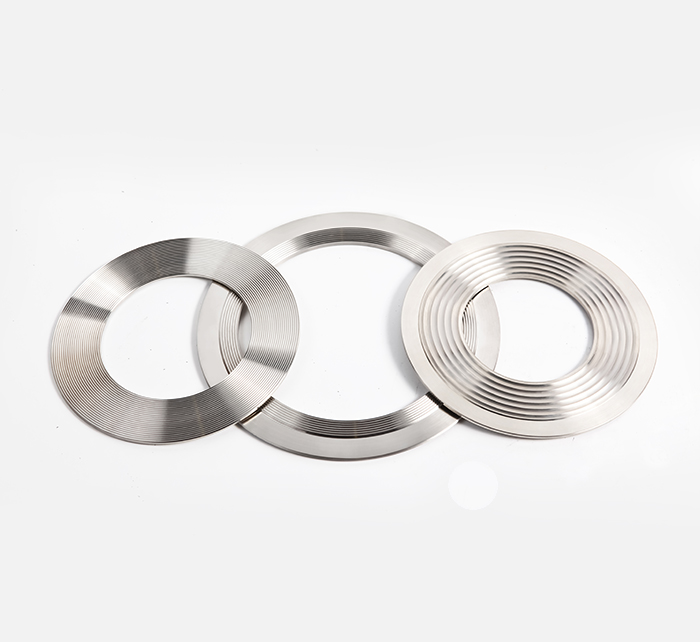
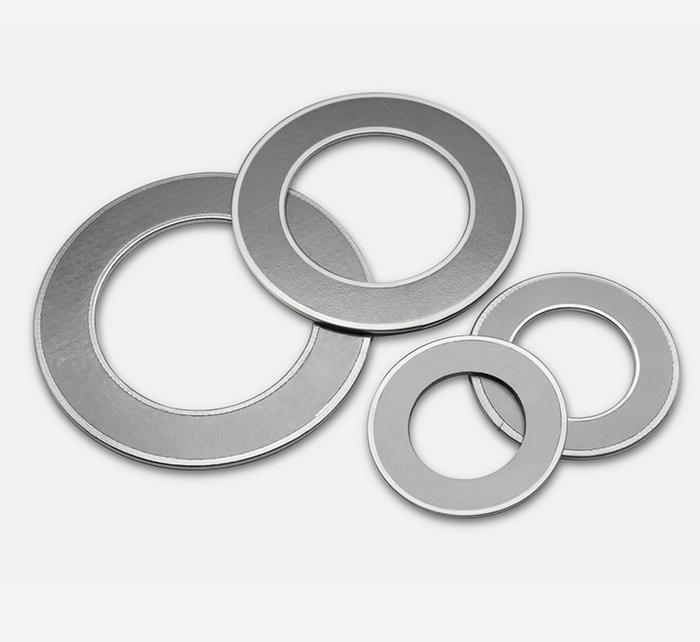
RILSON GASKET
Ningbo Rilson Sealing Material Co., Ltd is dedicated to ensuring the secure and dependable operation of fluid sealing systems, offering clients the appropriate sealing technology solutions.
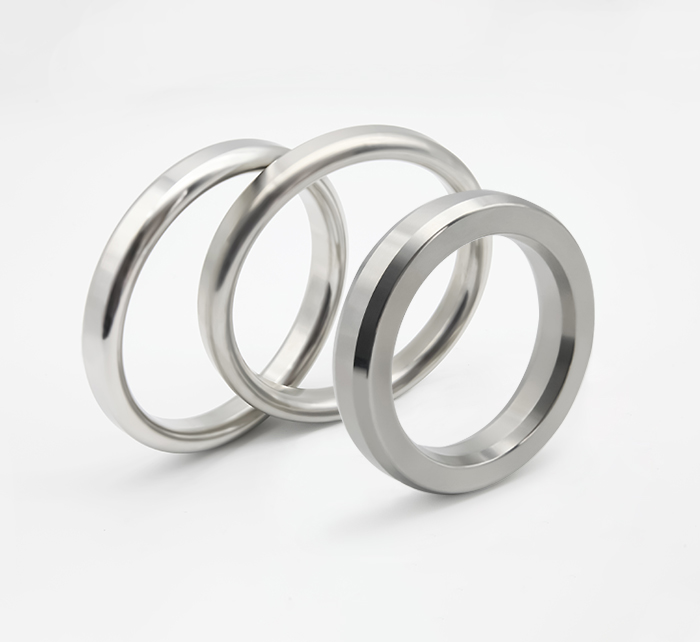
A ring joint gasket (RTJ gasket) is a solid metal sealing element designed for high-pressure, high-temperature flanged connections in critical process piping. Unlike soft or semi-metallic sheet gaskets, an RTJ gasket achieves its seal through a controlled metal-to-metal interference fit inside a precision-machined groove on the flange face, creating one of the most leak-resistant joint designs available in industrial engineering. RTJ gaskets are the standard sealing solution for wellhead equipment, subsea pipelines, high-pressure valves, and demanding oilfield applications where system integrity cannot be compromised.
The defining characteristic of a ring joint gasket is that it is always softer than the flange material into which it seats. When bolt load is applied, the gasket deforms plastically into the groove, filling microscopic surface imperfections and producing a gas-tight, fluid-tight metal-to-metal seal. This self-energizing mechanism allows RTJ gaskets to maintain reliable sealing even under extreme pressure differentials, thermal cycling, and vibration — conditions under which elastomeric or fiber gaskets would rapidly degrade.
As a leading ring joint gasket manufacturer with ISO9001:2015 and API 6A certification, Ningbo Rilson Sealing Material Co., Ltd. produces the full range of RTJ gasket styles — Style R, Style RX, Style BX, IX Seal Ring, and Lens Ring — to meet the specification requirements of API 6A, ASME B16.20, and customer-specific engineering standards worldwide.
Content
The sealing mechanism of a ring joint gasket is fundamentally different from that of a sheet or spiral wound gasket. In a conventional flanged joint, the gasket fills the gap between two parallel flange faces and seals by compressive stress distributed across the contact surface. An RTJ gasket, by contrast, sits inside a trapezoidal or specific-profile groove machined into each flange half, and seals by radial contact pressure against the groove walls rather than by axial face compression alone.
When the flange bolts are tightened, the two flanges draw together. The metal ring — slightly oversized relative to the groove — is forced into the groove and deforms plastically at the contact lines on its seating surfaces. This deformation conforms the gasket metal to the groove geometry with intimate contact, displacing any surface roughness and eliminating potential leak paths. Internal process pressure further energizes the seal: higher internal pressure forces the ring harder against the groove walls, increasing contact stress and actually improving the seal under pressure — a self-energizing effect particularly pronounced in the RX and BX pressure-energized designs.
This working principle explains why RTJ gaskets are specified wherever pressure integrity is paramount. The seal does not depend on maintaining a specific bolt load over time — once the metal-to-metal contact is established, it is inherently stable. This contrasts with soft gaskets, where ongoing seal integrity depends on preserving the initial compressive load against relaxation.
RTJ Gasket Sealing Mechanism: Metal-to-Groove Contact Pressure
Figure 1: Schematic of RTJ gasket sealing. The metal ring is forced into precision-machined grooves on both flange faces, generating radial contact pressure that creates a metal-to-metal seal independent of sustained bolt load.
The diagram above illustrates how the ring gasket bridges the two flange groove surfaces. The contact pressure arrows at each groove wall represent the zones of plastic deformation — the actual sealing interfaces. Because the sealing occurs at discrete line contacts rather than across a broad face, the required bolt load to achieve seating is far more concentrated and predictable than with face-contact gaskets. This precision makes RTJ joints preferred in safety-critical oilfield and refinery applications where audit and certification of seal integrity is mandatory.
The RTJ gasket family encompasses several distinct styles, each optimized for different pressure ratings, flange designs, and sealing requirements. Understanding the differences between Style R, Style RX, and Style BX is essential for correct specification, particularly in API-compliant oilfield and refinery installations. The IX Seal Ring and Lens Ring represent further specialized designs for unique process conditions.
Style R is the original and most widely used ring joint gasket design, available in both oval and octagonal cross-sectional profiles. It is dimensionally standardized under ASME B16.20 and API 6A, and fits standard RTJ grooves in pressure classes from 150 to 2500. The oval cross-section contacts the groove at two line contacts near the top and bottom of the ring, while the octagonal cross-section provides flat-surface contact, offering higher seating efficiency and superior leak resistance at equivalent bolt loads. For this reason, octagonal Style R gaskets are preferred over oval types in new installations wherever the groove geometry permits. Style R gaskets are not pressure-energized — their seal relies entirely on the initial bolt load applied during assembly.
Style RX is a pressure-energized ring joint gasket designed to replace Style R in standard RTJ grooves without requiring any modification to the flange. The RX profile is engineered so that internal system pressure acts on a hole drilled through the ring, generating an outward radial force that actively presses the gasket against the groove walls. This self-energizing effect means that seal integrity increases with rising internal pressure, making Style RX particularly suitable for high-pressure services and systems prone to pressure surges. RX gaskets are dimensionally interchangeable with their R counterparts in the same groove, but must not be used in the reverse orientation, as pressure energization only works in the correct assembly direction.
Style BX is designed exclusively for API 6BX flanges and cannot be substituted with Style R or RX — the groove geometry is fundamentally different. BX gaskets feature a flat-bottom trapezoidal cross-section with a pressure equalization hole. They are rated for the highest pressure classes under API 6A, including 5,000 psi, 10,000 psi, and 15,000 psi working pressure applications. The BX design ensures that residual internal pressure is dissipated when the flange is broken, an important safety feature in wellhead and high-pressure manifold disassembly. As an API ring joint gasket supplier, Rilson produces BX gaskets in full compliance with API 6A material and dimensional requirements.
The IX Seal Ring is a specialty design used in certain valve and equipment configurations where the standard RTJ groove profile is not available. Lens Rings feature a convex spherical seating surface that contacts a conical groove, providing effective sealing in high-pressure instrumentation, tubing heads, and compact process connections where space constraints preclude a standard RTJ arrangement. Both types rely on the same principle of controlled metal deformation at the seating interface.
| Feature | Style R | Style RX | Style BX |
|---|---|---|---|
| Cross-section | Oval or Octagonal | Modified Octagonal | Flat-bottom Trapezoidal |
| Pressure Energized | No | Yes | Yes |
| Groove Type | Standard RTJ | Standard RTJ | API 6BX only |
| Max Pressure Class | ASME 2500 (~6,250 psi) | ASME 2500 (~6,250 psi) | API 15,000 psi WP |
| Interchangeable With R? | — | Yes (same groove) | No |
| Pressure Relief Hole | No | Yes | Yes |
| Primary Standard | ASME B16.20 / API 6A | ASME B16.20 / API 6A | API 6A |
Maximum Working Pressure by RTJ Gasket Style (psi)
Figure 2: Maximum working pressure ratings by RTJ gasket style. Style BX gaskets for API 15,000 psi service handle more than twice the pressure of standard R/RX gaskets, making them the preferred choice for extreme-pressure wellhead and manifold applications.
The pressure capacity gap between Style BX and Style R/RX is substantial and consequential in specification decisions. An engineer working on a 10,000 psi wellhead manifold has no technically sound alternative to BX gaskets, while a petrochemical plant operating at 2,000 psi has a broader range of options. As an industrial ring joint gasket factory, Rilson stocks and manufactures all BX pressure ratings to API 6A dimensional tables, ensuring full compliance for wellhead and Christmas tree equipment certification.
Since RTJ gaskets must be softer than the mating flange material, material selection is constrained by the flange specification as well as the process fluid and operating conditions. The most widely used materials for ring joint gaskets are as follows, in approximate order of increasing hardness:
Critical rule: The hardness of any ring joint gasket must always be lower than the hardness of the flange groove. If a harder-than-specified material is used, the gasket will cut into the groove rather than conforming to it, potentially damaging the flange face and creating an unresolvable leak path without expensive groove repair or flange replacement.
RTJ Gasket Material Comparison: Performance Radar
Figure 3: Radar chart comparing three common RTJ gasket materials across five performance dimensions. Inconel 625 excels in corrosion and sour service resistance but trades off significantly in cost-efficiency and availability. Soft iron provides the best economics for non-corrosive, moderate-temperature service.
The radar visualization confirms what experienced engineers already know: no single material dominates all dimensions, and the right choice is always application-specific. For standard carbon steel piping in a refinery, soft iron or low-alloy steel RTJ gaskets are the most practical and economical solution. For a deep-water subsea manifold handling wet sour gas, Inconel 625 is the technically appropriate material despite its higher cost. Custom ring joint gasket manufacturers like Rilson maintain the full range of material grades in-house to support rapid specification and delivery across service conditions.
Ring joint gaskets are the preferred sealing solution wherever process conditions exceed the capability of conventional sheet or semi-metallic gaskets. Their ability to maintain integrity under extreme pressure, high temperature, thermal cycling, and chemical aggression makes them the standard specification in the following sectors:
RTJ gaskets are specified as the standard sealing element for wellhead equipment, Christmas trees, blowout preventers (BOPs), and high-pressure choke manifolds in oil and gas production. API 6A — the governing standard for wellhead equipment — mandates ring joint connections for pressure-containing flanges in 3,000 psi WP service and above. Both onshore oilfields and deepwater subsea production systems rely exclusively on certified forged ring joint gaskets from qualified API 6A suppliers.
Refinery process units operating at elevated temperatures and pressures — including hydrotreaters, hydrocracking units, catalytic reformers, and crude distillation columns — routinely specify RTJ connections for high-pressure piping and heat exchanger nozzles. The combination of hydrogen-rich environments, elevated temperatures (often 700°F and above), and high pressure creates conditions that exceed the reliable performance range of spiral wound or sheet gaskets in many critical joints.
High-pressure reactors, autoclaves, and high-pressure separators in chemical and petrochemical plants use RTJ flanges as standard connections. The chemical industry's demand for zero-leak performance — driven by environmental regulation, safety requirements, and the cost of process fluid loss — makes the superior sealing integrity of ring joint gaskets a technically and economically justified choice for these critical applications.
High-pressure steam systems in coal-fired, gas-fired, and nuclear power plants employ RTJ connections at main steam and reheat steam piping joints, where operating pressures can exceed 3,500 psi and temperatures can surpass 1,000°F. The fatigue resistance of metal-to-metal RTJ seals under the severe cyclic thermal loading of power plant startup and shutdown cycles makes them more reliable than spiral wound alternatives in these demanding service conditions.
RTJ Gasket Market Share by End-Use Industry (Estimated %)
Figure 4: Estimated RTJ gasket market distribution by end-use industry. Oil and gas exploration and production is the dominant application sector, driven by API 6A mandatory RTJ requirements for wellhead equipment. Together, oil and gas and refining account for an estimated 70% of total ring joint gasket demand globally.
The dominance of the oil and gas sector in RTJ gasket consumption directly reflects the API 6A regulatory framework, which makes ring joint connections mandatory above certain pressure thresholds. This regulatory driver creates consistent, specification-driven demand that is relatively insensitive to price competition — making API ring joint gasket supplier qualification and certification one of the most important differentiators in the market. Rilson's API 6A certificate enables it to serve this segment with full traceability and compliance documentation.
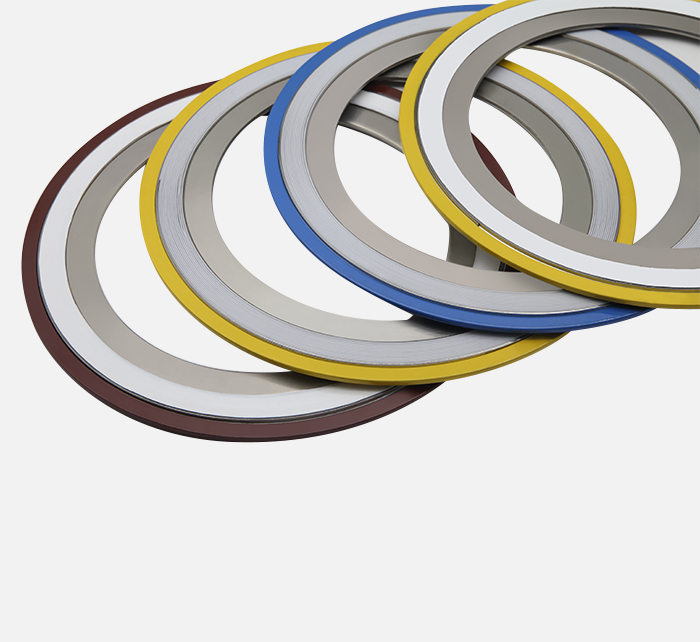
Engineers frequently face the choice between ring joint gaskets and spiral wound gaskets for high-pressure and high-temperature services. Both are classified as semi-metallic or metallic sealing elements, but they differ fundamentally in construction, sealing mechanism, installation requirements, and suitable applications.
| Criterion | Ring Joint Gasket (RTJ) | Spiral Wound Gasket |
|---|---|---|
| Sealing Mechanism | Metal-to-metal contact in groove | Compression of wound metallic and filler layers on flange face |
| Flange Requirement | Machined RTJ groove required | Raised face or flat face |
| Max Pressure | Up to 15,000 psi (BX) | Typically up to 2,500 psi |
| Temperature Range | Up to 1,200°F+ | Up to ~1,000°F |
| Reusability | Not reusable (always replace) | Not reusable (always replace) |
| Installation Complexity | Higher — requires precise groove and alignment | Moderate — centering ring aids alignment |
| Bolt Load Tolerance | Self-energizing (RX/BX) — more tolerant | More sensitive to bolt load relaxation |
| Typical Application | Wellheads, subsea, critical process joints | General high-pressure process piping |
In summary, spiral wound gaskets are the more versatile and economical choice for the broad range of industrial process piping at pressures below 2,500 psi and temperatures below 1,000°F, where RTJ groove machining would be unnecessarily costly. Ring joint gaskets are the correct specification where pressure, temperature, or safety requirements exceed the capability of spiral wound designs — or where API standards mandate them. The two product types are complementary, not competing, in a well-specified plant.
Seal Reliability vs System Pressure: RTJ vs Spiral Wound
Figure 5: Estimated seal reliability (%) vs system pressure for RTJ and spiral wound gaskets. RTJ gaskets maintain near-constant high reliability across the full pressure range, while spiral wound performance declines sharply above 4,000 psi — reinforcing the case for RTJ in high-pressure applications.
The line chart quantifies the reliability divergence between the two gasket types as pressure increases. While both perform similarly in the 0–2,000 psi range, the gap becomes significant above 4,000 psi and critical above 6,000 psi. This performance divergence is not a defect in spiral wound gasket design — it simply reflects the physical limits of face-contact sealing as flange separation forces increase. Selecting RTJ for high-pressure service is not overengineering; it is matching the sealing technology to the actual physics of the application.
Correct dimensional specification is critical for RTJ gaskets because even minor deviations from the groove geometry will prevent proper seating. Ring joint gasket dimensions are standardized under ASME B16.20 (for ASME pipe flanges) and API 6A / API 17D (for wellhead and subsea equipment). The ring number designation (e.g., R-24, RX-35, BX-155) directly specifies the groove size and bore to which the gasket will be assembled.
Key dimensional parameters for a ring joint gasket specification include:
Rilson, as a certified ring joint gasket manufacturer, supplies full dimensional and material certification with every order, including hardness test reports, material certificates (EN 10204 3.1 or 3.2), and dimensional inspection records traceable to the applicable standard. Wholesale RTJ gasket orders are accepted with custom dimensions for non-standard groove applications, supported by full engineering review and drawing approval before production.
Established in 2007 in Ningbo, Zhejiang Province, Ningbo Rilson Sealing Material Co., Ltd. operates a 20,000 square-meter manufacturing facility dedicated to the design, engineering, and production of high-performance sealing materials. As a professional high pressure gasket supplier and RTJ gasket manufacturer in China, Rilson holds ISO9001:2015 certification and the API 6A certificate — enabling full compliance supply to the petroleum, chemical, power generation, shipbuilding, and machinery manufacturing sectors.
Rilson's ring joint gasket product line covers Style R (oval and octagonal), Style RX, Style BX, IX Seal Rings, and Lens Rings — manufactured in the full range of materials from soft iron through Inconel 625 and duplex stainless grades. All products are manufactured to ASME B16.20 and API 6A dimensional requirements with full material traceability. The company serves clients across North America, Europe, the Middle East, Southeast Asia, and Africa, providing both standard catalog items and custom ring joint gaskets for non-standard applications.
Guided by the core values of integrity, precision, innovation, and mutual success, Rilson is committed to becoming a globally recognized preferred brand in industrial sealing — delivering technical value and reliable supply to engineers and procurement teams worldwide.
Q1. What is a ring joint gasket?
A ring joint gasket is a solid metal sealing element that fits into a precision-machined groove on a flanged connection. It achieves a seal through controlled plastic deformation at metal-to-metal contact points inside the groove, making it suitable for high-pressure and high-temperature service where sheet or spiral wound gaskets are inadequate.
Q2. What is an RTJ gasket used for?
RTJ gaskets are used in wellhead equipment, blowout preventers, high-pressure valves, refinery process units, and subsea pipelines — anywhere API or ASME standards require metal-to-metal sealing for systems operating above 2,000–3,000 psi or in critical safety applications. They are the standard sealing element under API 6A.
Q3. What is the difference between R and RX gaskets?
Style R gaskets are not pressure-energized — their seal depends entirely on the initial bolt load. Style RX gaskets have a pressure equalization hole that allows internal system pressure to push the ring outward against the groove walls, enhancing seal integrity as pressure rises. RX gaskets fit standard RTJ grooves designed for Style R and are an upgrade option without requiring flange modification.
Q4. What is a BX gasket?
A BX gasket is a pressure-energized ring joint gasket designed exclusively for API 6BX flanges, which have a distinct groove geometry from standard RTJ flanges. BX gaskets are rated for API 5,000, 10,000, and 15,000 psi working pressure classes and include a pressure equalization hole to safely vent residual pressure during disassembly. BX and R/RX gaskets are not interchangeable.
Q5. Oval vs octagonal ring gasket — which is better?
Octagonal ring gaskets provide flat-face-to-groove contact across a wider seating surface, achieving higher and more uniform seating stress than oval gaskets at equivalent bolt loads. For new installations with standard RTJ grooves, octagonal Style R gaskets are generally preferred. Oval gaskets remain useful in older groove designs that do not have the precision to accept the octagonal profile reliably.
Q6. Which RTJ gasket is best for API flanges?
For API 6B flanges (standard RTJ groove), Style R octagonal or Style RX gaskets are the appropriate specification. For API 6BX flanges used in 5,000–15,000 psi service, Style BX is the only correct choice — other styles cannot be substituted. Material selection should follow API 6A requirements for the service fluid and sour service classification.
Q7. Can RTJ gaskets be reused after disassembly?
No. RTJ gaskets should always be replaced after removal from service. During initial assembly, the ring deforms plastically at the contact points to fill groove surface imperfections. After removal, the deformed seating surfaces cannot re-establish the same quality of metal-to-metal contact in a new assembly. Reusing an RTJ gasket significantly increases the risk of leakage on reassembly.
Q8. How do I select the right RTJ gasket material?
RTJ gasket material must be softer than the flange groove material — this is a non-negotiable design rule. Beyond hardness, select based on process fluid chemistry (corrosive, sour, oxidizing), temperature range, and applicable standards. Soft iron suits non-corrosive carbon steel systems; 316 SS covers most chemical services; Inconel 625 or duplex grades are appropriate for sour gas and aggressive offshore environments.
Standards referenced: ASME B16.20 — Ring-Type Joints, Spiral-Wound Gaskets, and Jacketed Gaskets for Pipes, Flanges, and Fittings; API 6A — Specification for Wellhead and Christmas Tree Equipment; API 17D — Specification for Subsea Wellhead and Christmas Tree Equipment; NACE MR0175 / ISO 15156 — Petroleum and Natural Gas Industries — Materials for Use in H₂S-Containing Environments.

RILSON GASKET
Ningbo Rilson Sealing Material Co., Ltd is dedicated to ensuring the secure and dependable operation of fluid sealing systems, offering clients the appropriate sealing technology solutions.
Copyright © Ningbo Rilson Sealing Material Co., Ltd. All Rights Reserved.
