
 English
 русский
 中文简体
中文简体
RILSON GASKET
Ningbo Rilson Sealing Material Co., Ltd is dedicated to ensuring the secure and dependable operation of fluid sealing systems, offering clients the appropriate sealing technology solutions.
The direct answer for buyers in 2026: Ring Joint Gaskets (RTJ gaskets) remain the most reliable sealing solution for high-pressure, high-temperature flanged connections in oil and gas, petrochemical, and subsea applications. No alternative soft gasket or spiral wound design matches their capability at pressures above 5,000 psi or temperatures above 650°C. If you are specifying or sourcing API Ring Joint Gaskets — whether oval, octagonal, or BX profile — this article covers the material selection, profile differences, dimensional standards, installation requirements, and supplier evaluation criteria you need to make the right decision.
Content
Unlike soft gaskets that compress to fill surface irregularities, Ring Joint Gaskets operate on a fundamentally different principle: controlled plastic deformation. When flange bolts are tightened, the bolt load forces the gasket — which is manufactured from a softer metal than the flange — to deform plastically into the micro-surface imperfections of the harder flange groove. The result is a metal-to-metal seal that becomes tighter as internal pressure increases.
This self-energizing characteristic is the core reason High Pressure RTJ Gaskets are specified wherever conventional soft seals fail. The mechanism provides three critical properties:
The hardness differential between gasket and flange is critical. The gasket must always be softer than the flange groove to ensure the gasket deforms, not the flange. Standard practice requires a minimum hardness differential of 30 HB (Brinell Hardness) between gasket and flange material.
Three profile types cover virtually all Ring Joint Gasket applications. Each has a distinct cross-sectional geometry that affects sealing contact area, bolt load requirement, and interchangeability with flange grooves.
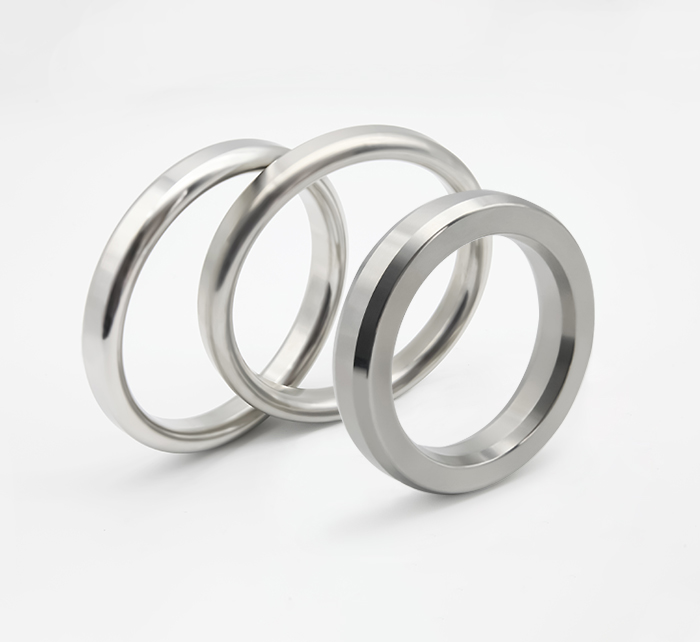
The oval profile gasket has a circular cross-section that contacts the flange groove at two line-contact points on the sloped groove face. It is the original RTJ design and remains in service in older equipment. However, because it makes line contact rather than area contact, the oval profile requires a higher bolt load per unit sealing area than the octagonal profile. Oval gaskets are interchangeable with octagonal gaskets in the same groove number only in one direction: an oval gasket can seat in an octagonal groove, but an octagonal gasket cannot correctly seat in an oval groove.
The Octagonal Metal Gasket has a flat-sided octagonal cross-section. Its flat sealing faces make broader area contact with the flange groove than the oval profile, producing a more efficient seal at equivalent bolt load. The octagonal profile is the standard specification for new equipment and replacement gaskets in the majority of oil and gas, chemical, and power generation applications. It seats only in octagonal-profiled grooves and cannot be used in oval grooves.
The BX profile is designed exclusively for API 6BX flanges used in subsea and wellhead equipment rated to the highest pressure classes. BX gaskets have a trapezoidal cross-section and are pressure-energized: as internal pressure increases, the gasket is forced outward against the groove face, increasing contact stress and sealing effectiveness. BX gaskets are not interchangeable with R-type oval or octagonal profiles. They are the standard Oilfield Sealing Gasket for Class 5,000 and Class 10,000 wellhead assemblies.
| Profile | Cross Section | Contact Type | Max Pressure Class | Primary Standard |
|---|---|---|---|---|
| Oval (R) | Circular | Line contact | ASME Class 2500 | ASME B16.20 |
| Octagonal (R) | 8-sided flat | Area contact | ASME Class 2500 | ASME B16.20 / API 6A |
| BX | Trapezoidal | Pressure-energized | 20,000 psi | API 6A / API 17D |
Material selection for Ring Joint Gaskets is governed by two requirements: the gasket must be softer than the flange groove, and it must be chemically compatible with the process fluid and operating environment. ASME B16.20 and API 6A specify material grades and their applicable hardness ranges.
| Material | Max Hardness (HBW) | Temp Range | Typical Application |
|---|---|---|---|
| Soft Iron / Low Carbon Steel | 90 HBW | -29°C to +538°C | Steam, water, general service |
| 4-6% Chrome (F5) | 130 HBW | -29°C to +593°C | H₂S service, refinery |
| 304 / 316 Stainless Steel | 160 HBW | -196°C to +593°C | Corrosive service, cryogenic |
| 316L Stainless Steel | 160 HBW | -196°C to +593°C | Chloride-bearing fluids, subsea |
| Inconel 625 / 718 | 200 HBW | -196°C to +650°C | High-temp, sour gas, HPHT wells |
| Duplex / Super Duplex | 230 HBW | -50°C to +315°C | Offshore, seawater, sour service |
The Stainless Steel Ring Gasket grades — particularly 316 and 316L — are the most widely specified in general offshore and process plant service because they combine corrosion resistance, adequate softness relative to alloy steel flanges, and cryogenic capability. For sour gas (H₂S-containing) environments, NACE MR0175 / ISO 15156 imposes additional hardness restrictions: RTJ gaskets in sour service must not exceed 22 HRC (237 HBW) to prevent sulfide stress cracking.
Maximum Allowable Hardness by RTJ Gasket Material (HBW per ASME B16.20)
Maximum allowable hardness values per ASME B16.20. Gasket material must always be softer than the mating flange groove by a minimum of 30 HBW.
Understanding which standard governs your application is the first step before specifying any API Ring Joint Gasket. The three primary standards define groove dimensions, gasket tolerances, material requirements, and testing protocols.
When ordering, always specify both the dimensional standard (ASME B16.20 or API 6A) and the groove number or ring number (e.g., R-24, BX-153). These two parameters uniquely define the gasket geometry. Specifying only a pipe size or pressure class without the ring number is insufficient and leads to incorrect part delivery.
Each RTJ groove number corresponds to a specific pipe bore size and pressure class combination. The table below lists the most commonly encountered groove numbers in oil and gas construction and maintenance, covering ASME B16.20 R-type gaskets and API 6A BX gaskets.
| Ring No. | Nominal Pipe Size (in) | ASME Class | OD of Gasket (mm, approx) | Profile |
|---|---|---|---|---|
| R-11 | 1/2" | 900 / 1500 / 2500 | 34.1 | Oval / Octagonal |
| R-24 | 2" | 900 / 1500 / 2500 | 69.9 | Oval / Octagonal |
| R-35 | 3" | 900 / 1500 / 2500 | 95.3 | Oval / Octagonal |
| R-44 | 4" | 900 / 1500 / 2500 | 117.5 | Oval / Octagonal |
| R-57 | 6" | 900 / 1500 / 2500 | 155.6 | Oval / Octagonal |
| BX-153 | 2-1/16" | API 5,000 / 10,000 | 82.6 | BX |
| BX-169 | 7-1/16" | API 5,000 / 10,000 / 15,000 | 231.8 | BX |
A correctly specified High Pressure RTJ Gasket can still fail if installation procedure is not followed. The metal-to-metal sealing mechanism is unforgiving of groove damage, incorrect bolt tightening, or gasket reuse. The following requirements apply to all RTJ flange assemblies.
Before installing any RTJ gasket, inspect the flange groove with a profilometer or contact gauge. The groove surface finish must meet 63 Ra microinch (1.6 μm) or better per ASME B16.20. Radial scratches, pitting, weld spatter, or corrosion on the groove sealing face will prevent the gasket from deforming uniformly and will result in a leak path. Any groove with surface damage beyond specification must be re-machined before a new gasket is installed.
Inspect each gasket for surface scratches, nicks, or dimensional non-conformance before installation. Never reuse an RTJ gasket — once a metal ring gasket has been compressed in service, it has been permanently deformed and cannot create a reliable seal a second time. Handle gaskets with clean gloves to avoid contaminating the sealing surfaces with hand oils or sweat, which can accelerate corrosion in service.
Indicative Stud Bolt Torque vs ASME Pressure Class for 2" NPS RTJ Flanges (B7 Studs, Lubricated)
Indicative torque values for 2" NPS RTJ flanges with B7 stud bolts using molybdenum disulfide anti-seize. Actual required torque depends on bolt diameter, number of bolts, gasket material, and flange surface condition. Always use project-specific torque calculations.
The quality of Ring Joint Gaskets is entirely dependent on manufacturing precision. Dimensional non-conformance of even 0.1 mm in the gasket height or seating angle can result in either insufficient sealing contact or over-compression. When evaluating suppliers or placing purchase orders, confirm the following:
Ningbo Rilson Sealing Material Co., Ltd. was founded in 2007 and is located in Ningbo, Zhejiang Province. A professional manufacturer and supplier of Ring Joint Gaskets, the company's manufacturing facility spans 20,000 square meters and is dedicated to ensuring the secure and dependable operation of fluid sealing systems, offering clients appropriate sealing technology solutions across diverse industries.
Rilson operates numerous production lines for sealing products, specializing in the design and manufacture of sealing gaskets and other sealing materials for the petroleum, chemical, power, shipbuilding, and machinery manufacturing sectors. Rilson Ring Type Joint (RTJ) standard-size gaskets are manufactured following API 6A, API 17D, and ASME B16.20 specifications.
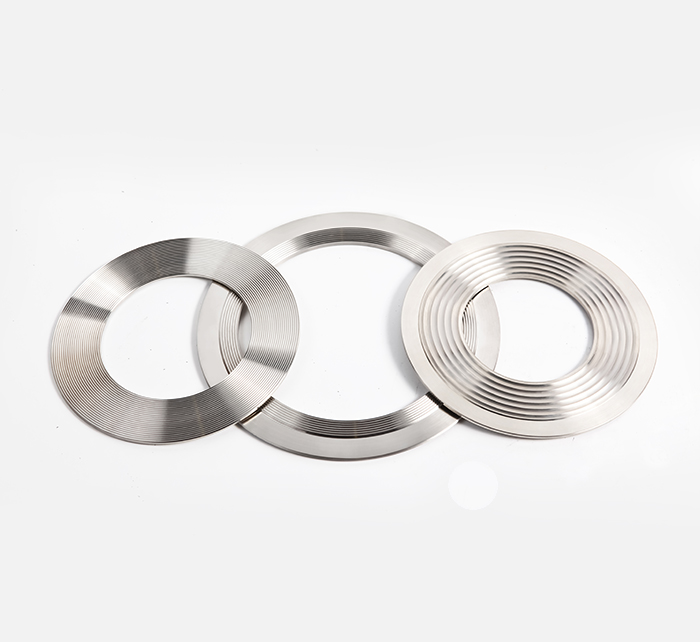
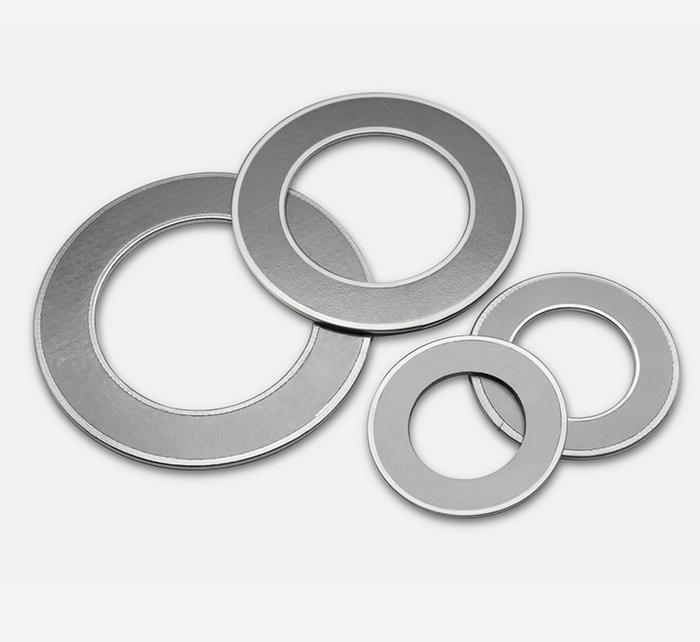
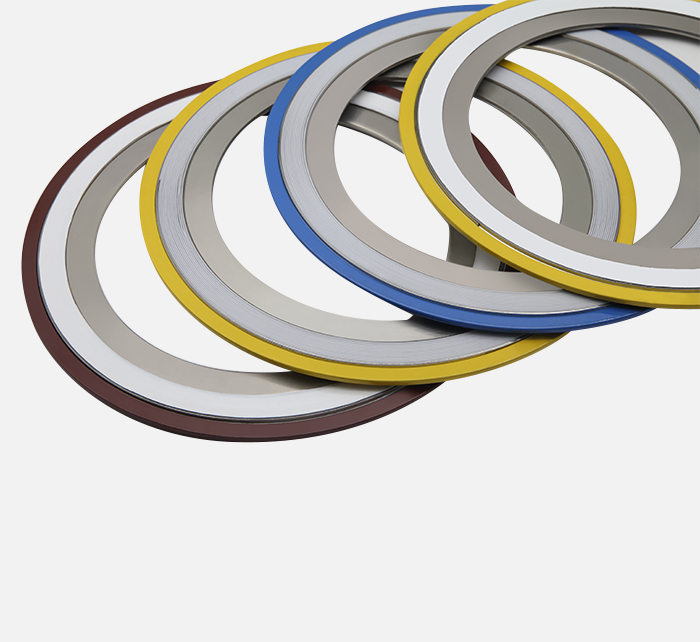
Primary products include spiral wound gaskets, ring joint gaskets, kammprofile gaskets, corrugated metal gaskets, insulation kit gaskets, and non-asbestos gaskets. Ring Type Joint Gaskets from Rilson are developed specifically for use in the petroleum industry as well as drilling and oil and gas production equipment, providing reliable sealing performance in high-pressure and high-temperature service conditions.

RILSON GASKET
Ningbo Rilson Sealing Material Co., Ltd is dedicated to ensuring the secure and dependable operation of fluid sealing systems, offering clients the appropriate sealing technology solutions.
Copyright © Ningbo Rilson Sealing Material Co., Ltd. All Rights Reserved.
