
 English
 русский
 中文简体
中文简体
RILSON GASKET
Ningbo Rilson Sealing Material Co., Ltd is dedicated to ensuring the secure and dependable operation of fluid sealing systems, offering clients the appropriate sealing technology solutions.
A reliable seal with corrugated metal sealing gaskets depends on four factors executed correctly in sequence: verified flange surface finish, proper gasket selection matched to the service conditions, controlled bolt torque applied in a star pattern, and a confirmed retorque after initial thermal cycling. Skipping or shortcutting any of these steps is the primary cause of leakage in flanged joints that use corrugated metal gaskets — not the gasket material itself. When the installation procedure is followed correctly, corrugated metal gaskets routinely achieve seal integrity at pressures exceeding 2,500 PSI and temperatures from cryogenic service (-200°C) to high-temperature process environments (800°C+), depending on the metal core and coating specification.
This guide covers every installation variable that determines seal reliability: flange preparation requirements, gasket material and coating selection, torque calculation, bolt tightening sequence, and post-installation verification — with specific data values for each critical parameter.
Content
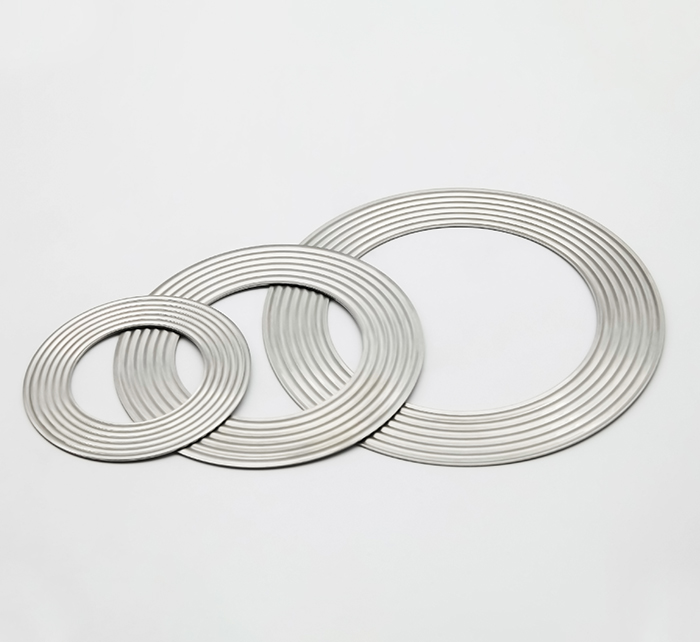
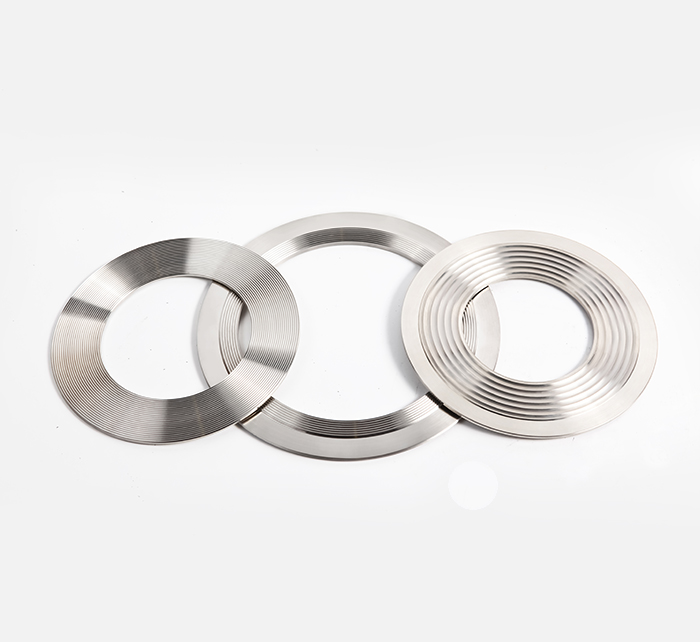
Corrugated metal gaskets — also referred to as corrugated metal sealing gaskets in industrial specifications — consist of a thin metal sheet (typically 0.2–0.5 mm thick) formed with a series of concentric or parallel corrugations pressed into the surface. These corrugations act as multiple independent sealing lines: when bolt load is applied, each corrugation ridge deforms slightly and embeds into the flange face, creating a series of high-stress sealing contacts rather than a single contact line. This multi-contact geometry is what gives corrugated metal gaskets their superior sealing performance compared to flat metal gaskets at equivalent bolt loads.
The corrugated profile also makes these gaskets more sensitive to installation errors than soft gaskets. A soft spiral wound or compressed fiber gasket will conform to minor flange irregularities through bulk compression. A corrugated metal gasket requires the flange surface to be within specification before installation — the gasket cannot compensate for significant surface defects or misalignment. This is why understanding the installation requirements in detail is not optional for corrugated metal gasket applications.
Custom corrugated gaskets for non-standard flange geometries follow identical installation principles but require additional verification of the gasket's dimensional conformance to the flange before any assembly begins.
More corrugated metal gasket failures originate from inadequate flange preparation than from any other single cause. The flange face must meet surface finish, flatness, and cleanliness requirements before the gasket is placed — these cannot be corrected after assembly.
Corrugated metal gaskets require a controlled surface finish on the mating flange face. The optimum range for most corrugated metal gasket applications is Ra 3.2–6.3 micrometers (125–250 microinches) — a slightly rougher finish than required for soft gaskets. This controlled roughness provides microscopic mechanical anchoring points for the gasket coating (typically graphite, PTFE, or soft metal plating) to adhere to during seating. A finish that is too smooth (below Ra 1.6 μm) reduces the coating's ability to fill micro-surface irregularities; a finish that is too rough (above Ra 12.5 μm) creates leak paths along the corrugation contact lines.
Measure surface finish with a contact profilometer at a minimum of four points on the sealing face (12, 3, 6, and 9 o'clock positions). Record all values — if any single measurement falls outside the acceptable range, the flange face requires re-machining or replacement before proceeding.
The mating flange faces must be flat and parallel within tight tolerances. Maximum allowable flatness deviation for corrugated metal gasket service is typically 0.1 mm across the full sealing width — tighter than the 0.25 mm commonly permitted for spiral wound gaskets. Check flatness using a precision straight-edge and feeler gauges or a dial indicator swept across the sealing face. Parallelism between the two mating flanges should be within 0.05 mm measured at opposite bolt positions before bolt-up.
Remove all traces of the previous gasket material, corrosion products, scale, and process media from both flange faces. Use a wire brush, flange facing tool, or mechanical scraper — never an angle grinder, which creates surface irregularities. After mechanical cleaning, wipe both faces with a lint-free cloth dampened with an appropriate solvent (acetone for steel flanges, isopropyl alcohol for aluminum). Allow to dry completely before gasket placement. Any residual contamination between the gasket and flange face will create a leak path that no bolt load can overcome.
The base metal of a corrugated metal gasket and its surface coating must both be compatible with the process fluid, temperature, and pressure. Using the wrong combination leads to corrosion-driven leak paths developing after initial successful installation — often several months into service.
| Base Metal | Temperature Range | Max Pressure (typical) | Typical Coating | Recommended Service |
|---|---|---|---|---|
| Low carbon steel | -30°C to +450°C | 2,500 PSI | Graphite, zinc | Steam, water, general industrial |
| 304 Stainless Steel | -100°C to +650°C | 3,500 PSI | Graphite, PTFE, silver | Chemical processing, food, pharma |
| 316L Stainless Steel | -100°C to +700°C | 4,000 PSI | Graphite, PTFE, nickel | Chloride environments, offshore, marine |
| Inconel 625 | -200°C to +900°C | 6,000 PSI | Graphite, silver | High-temperature hydrocarbon, hydrogen service |
| Titanium Grade 2 | -100°C to +300°C | 3,000 PSI | PTFE, graphite | Highly corrosive acids, seawater |
| Copper | -200°C to +250°C | 2,000 PSI | Bare or silver-plated | Cryogenic, low-temperature gas service |
For custom corrugated gaskets specified for non-standard service conditions, always obtain a material compatibility confirmation from the gasket manufacturer before procurement — particularly for halogenated fluids, strong acids, or hydrogen service above 300°C where material interactions are non-intuitive.
Follow this sequence without deviation. Each step depends on the previous one being completed correctly.
Correct bolt torque is the most numerically precise requirement in corrugated metal gasket installation. The target torque must generate sufficient bolt load to seat the gasket corrugations fully and maintain adequate seating stress under operating pressure — but must not exceed the flange's structural capacity or the gasket's crush limit.
The chart illustrates a critical practical point: lubricated bolts require 30–35% less torque than dry bolts to generate the same bolt load. Applying the dry-bolt torque value to lubricated bolts overloads the gasket and flanges. Always use the torque value calculated for the specific lubricant being used, and never substitute lubricant types without recalculating.
The general torque formula for corrugated metal gasket flange joints is:
T = K × F × d
Where T = target torque (Nm), K = nut factor (0.12–0.15 for moly-lubricated; 0.18–0.22 for dry), F = required bolt load (N) calculated from gasket seating stress requirements, and d = nominal bolt diameter (m). For standard flange classes, the required bolt load F is derived from ASME PCC-1 or EN 1591 calculations using the gasket's minimum seating stress (m factor) and operating pressure data.
Understanding the most frequent installation errors and their direct consequences allows inspection teams to identify and correct problems before the joint is pressurized.
| Installation Error | Immediate Consequence | Long-Term Result | Corrective Action |
|---|---|---|---|
| Under-torqued bolts | Insufficient gasket seating stress | Immediate or early-service leak | Depressurize, retorque to target value |
| Over-torqued bolts | Corrugation overcompression / crushing | Flange damage, gasket leakage | Replace gasket and recalculate torque |
| Flange surface too smooth (<Ra 1.6) | Poor coating adhesion to flange | Fretting and coating delamination | Re-machine to specified finish range |
| Circular tightening sequence | Uneven seating stress distribution | Localized leak at low-stress zone | Back off all bolts, restart with star pattern |
| No retorque after thermal cycle | Stress relaxation reduces bolt load | Progressive leak development | Schedule retorque at first maintenance window |
| Reusing a previously installed gasket | Corrugations permanently deformed | Immediate leak on initial pressurization | Replace with new gasket — always use new |
Completing the installation procedure correctly does not eliminate the need for post-installation verification. A systematic post-installation check catches errors before the joint is exposed to full operating conditions where a failure is costly and potentially hazardous.
No. Corrugated metal gaskets must never be reused once they have been seated under bolt load. During the initial tightening, the corrugation ridges undergo controlled plastic deformation as they embed into the flange faces and the coating material redistributes into micro-surface irregularities. This deformation is permanent — when the joint is disassembled, the corrugations are in a compressed state that cannot be restored to their original profile. Reinstalling a used gasket produces insufficient seating contact, and the initial pressurization will almost certainly result in leakage. Always install a new gasket when opening any flanged joint, regardless of how briefly the joint was in service.
A corrugated metal gasket is a stamped metal sheet with formed corrugations — thin, lightweight, and requiring precise flange surface condition for reliable sealing. A spiral wound gasket consists of a metal strip and soft filler material wound together in a spiral, providing a softer, more conforming seating behavior. Corrugated metal gaskets are preferred when flange surface condition can be controlled and maintained, weight and thickness are critical (heat exchanger applications), or very high temperatures preclude soft filler materials. Spiral wound gaskets are preferred when flange surfaces may have minor irregularities, when ease of installation without precise torque control is important, or for lower-pressure utility service where their more forgiving seating behavior reduces installation risk.
Provide the gasket manufacturer with a dimensioned drawing or CAD file showing: inner diameter, outer diameter, bolt hole circle diameter, number and diameter of bolt holes, and sealing thickness. Additionally specify the service conditions — fluid type, operating temperature, operating pressure, and any cyclic temperature or pressure variations. Include the flange material for compatibility verification. For custom corrugated gaskets in critical service (high pressure, toxic fluid, hydrogen service), also specify the required pressure class and the applicable design code (ASME, EN, or other) so the manufacturer can confirm the design meets the required safety margin.
Graphite coating is the standard and most appropriate choice for steam service at 350°C. Graphite provides excellent lubricity during seating (reducing the torque required to achieve full corrugation contact), maintains its properties through repeated thermal cycles, and is chemically compatible with steam across the full relevant temperature range. PTFE coating is not recommended above 260°C as it begins to degrade and emit harmful decomposition products above this temperature. For stainless steel base metal corrugated gaskets in steam service, a graphite-coated 316L stainless gasket represents the standard specification at 350°C and provides excellent long-term reliability.
Store corrugated metal sealing gaskets in their original packaging in a dry, temperature-controlled environment away from direct sunlight, oils, and chemical vapors. Gaskets should be stored horizontally or vertically supported on their full face — never stored resting on their edge, which can permanently distort the thin metal and compromise the corrugation profile. Graphite-coated gaskets are particularly sensitive to contamination: even fingerprint oils on the gasket face can locally reduce the coating's adhesion to the flange surface. Handle gaskets with clean cotton gloves at all times after removing from packaging. There is no defined shelf life for properly stored uncoated metal gaskets, but graphite and PTFE coated gaskets should be used within 3–5 years of manufacture to ensure coating integrity.
First, depressurize the system to a safe working level before taking any corrective action — never attempt to tighten bolts on a pressurized joint in corrugated metal gasket service, as the gasket may be at or near its crush limit and additional torque under pressure can cause sudden catastrophic failure. Once depressurized, perform a torque verification pass in the star pattern to confirm all bolts are at the specified target value. If any bolt is found below target, bring it to target torque and repressurize for leak verification. If all bolts were at target and leakage persists, the joint must be fully disassembled — inspect the flange surfaces for damage, replace the gasket with a new unit, and verify that the flange surface finish and flatness are within specification before reassembly.

RILSON GASKET
Ningbo Rilson Sealing Material Co., Ltd is dedicated to ensuring the secure and dependable operation of fluid sealing systems, offering clients the appropriate sealing technology solutions.
Copyright © Ningbo Rilson Sealing Material Co., Ltd. All Rights Reserved.
