
 English
 русский
 中文简体
中文简体
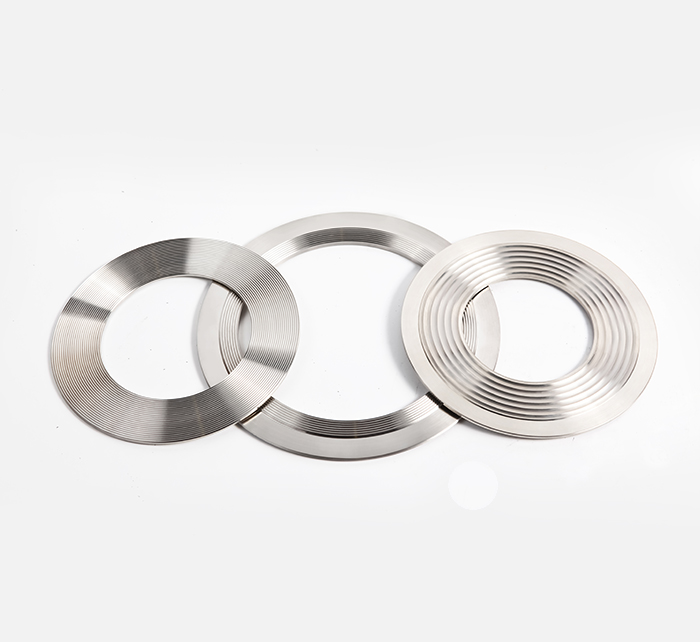
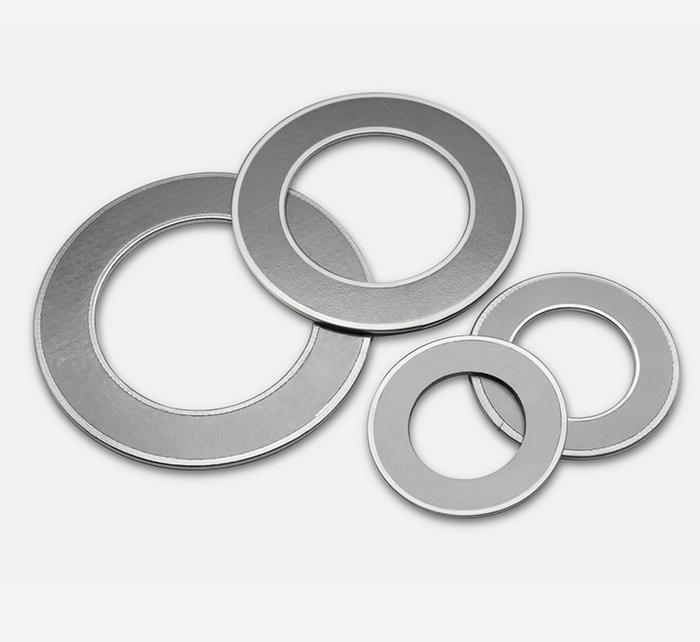
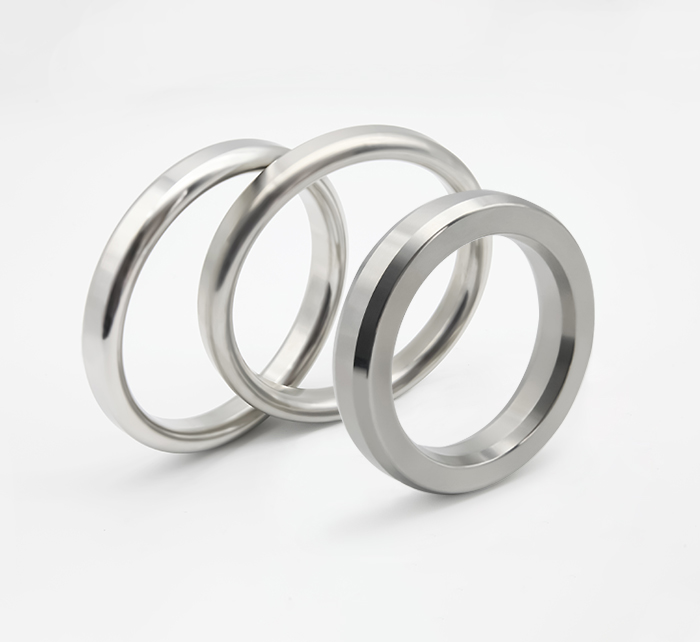
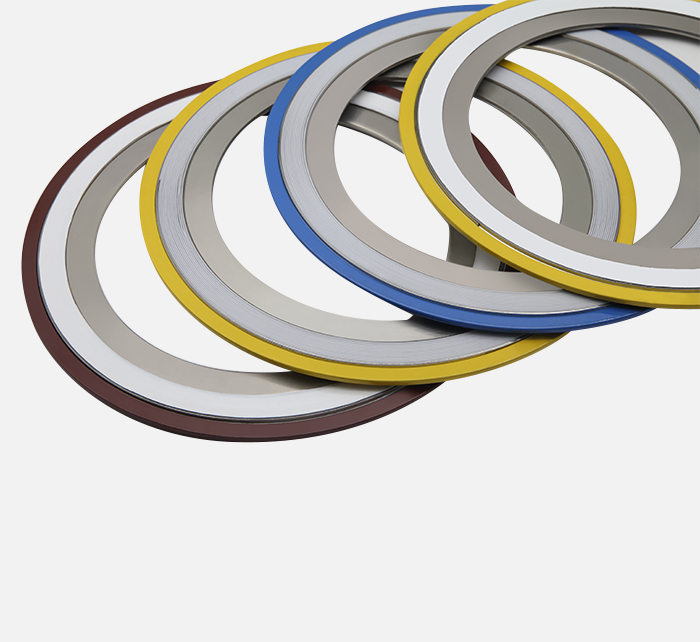
RILSON GASKET
Ningbo Rilson Sealing Material Co., Ltd is dedicated to ensuring the secure and dependable operation of fluid sealing systems, offering clients the appropriate sealing technology solutions.
Choosing the right RTJ gasket comes down to four core factors: the ring style (R, RX, BX, or IX), the material grade relative to your flange hardness, the pressure-temperature class of your system, and compliance with the applicable standard (API 6A, API 17D, or ASME B16.20). Match these four parameters correctly and you will achieve a leak-free, long-service-life seal even under the extreme conditions found in oil and gas wellheads, subsea equipment, and high-pressure pipelines.
A ring type joint gasket works by a fundamentally different mechanism than a flat-face or spiral wound gasket. Rather than relying on a large compressive area, the RTJ concept concentrates bolt load onto a narrow, precisely machined contact line. The softer metal of the gasket cold-flows into the microscopic surface irregularities of the harder flange groove, generating a pressure-energized seal that tightens with system pressure rather than loosening. This guide explains every selection variable you need to evaluate before ordering a ring joint gasket for your application.
| Application | Recommended Style | Typical Material | Standard |
|---|---|---|---|
| Surface wellhead / pipeline flanges | Style R | Soft Iron / Low Carbon Steel | ASME B16.20 / API 6A |
| High-pressure wellhead (5,000–20,000 psi) | Style RX | AISI 4130 / 316L SS | API 6A |
| Subsea / ultra-high-pressure (15,000–20,000 psi) | Style BX | Inconel 625 / 316L SS | API 6A / API 17D |
| Special isolation / lens-seal applications | IX Seal Ring / Lens Ring | Per flange specification | DIN / ASME / Custom |
Content
The five principal ring type joint gasket geometries are not interchangeable. Each has a distinct cross-section engineered for a specific pressure envelope, flange groove design, and installation context. Selecting the wrong style — even one that fits physically — will result in inadequate sealing stress, premature failure, or inability to fully makeup the joint.
The Style R is the most widely used RTJ ring gasket and is available in both oval and octagonal cross-sections. The octagonal profile is preferred in new designs because it delivers approximately 23% greater contact stress than the oval at equivalent bolt load, according to published analysis in the ASME Pressure Vessel and Piping Conference proceedings. Style R gaskets suit pressure classes from ASME 150# through 2500# and are commonly specified for refinery pipework, surface wellhead flanges, and valve bonnets.
The Style RX is an pressure-energized evolution of the Style R octagonal design. A hollow bore and angled seating surfaces allow internal system pressure to act on the gasket's inner wall, increasing radial sealing contact as line pressure rises. Style RX gaskets are interchangeable with Style R grooves of the same ring number, making them a drop-in upgrade for existing flanges. They are standard in API 6A pressure classes 2,000 psi through 20,000 psi wellhead equipment.
Designed exclusively for API 6A and API 17D subsea and surface equipment operating at 5,000 psi to 20,000 psi, the Style BX features a fully pressure-energized rectangular cross-section with a pressure balance hole that prevents pressure lock during disassembly. BX gaskets require dedicated BX grooves and cannot be interchanged with R or RX flanges. The tighter machining tolerances specified for BX grooves (typically Ra ≤ 1.6 µm) demand precision surface finish on both flange and gasket contact faces.
The IX Seal Ring is a self-energizing design used primarily in subsea tree and manifold connections under API 17D. The Lens Ring (or lens-shaped gasket) employs a convex spherical seating surface that self-centers during makeup, making it particularly suited to applications where angular misalignment between flanges is possible, such as in heavy valve assemblies and certain high-temperature steam systems.
This radar chart contrasts the Style R ring joint gasket — the workhorse of general-purpose pipeline and wellhead sealing — with the Style BX, which is optimized for subsea and ultra-high-pressure service. Style R scores highest on interchangeability and cost efficiency, making it the default choice when pressure class permits. Style BX sacrifices interchangeability but delivers superior pressure-energized sealing and subsea suitability, critical where re-entry for gasket replacement is costly or impossible. Understanding these trade-offs is the starting point for any rational RTJ gasket selection process.
The cardinal rule of metal ring gasket material selection is that the gasket must always be softer than the flange. ASME B16.20 and API 6A both specify minimum hardness differentials between gasket and flange material. If the gasket is harder than the groove, it will score the flange face rather than conforming to it, destroying an expensive forged steel flange and leaving no usable seal.
The Brinell Hardness Number (BHN) of the gasket should be at least 30 HB lower than the flange groove hardness. For example, a carbon steel (ASTM A105) flange with a groove hardness of approximately 120 HB pairs correctly with a soft iron gasket at approximately 90 HB or below.
This bar chart shows the typical Brinell hardness values for the most common RTJ gasket materials. Soft iron sits at the bottom of the scale and is appropriate for carbon steel and low-alloy steel flanges in moderate-temperature, non-corrosive service. As process conditions become more aggressive — elevated temperatures, H2S environments, chloride exposure — harder and more corrosion-resistant alloys like 316L SS or Inconel 625 become necessary. Critically, the flange groove material must always have a higher hardness value than the gasket; pairing an Inconel gasket with a carbon steel flange, for instance, would almost certainly damage the irreplaceable flange groove.
| Material | Max Temp (°C) | Hardness (HB) | Typical Service |
|---|---|---|---|
| Soft Iron | 480 | ≤ 90 | Non-corrosive, low H2S, steam |
| Low Carbon Steel | 540 | ≤ 120 | General oil & gas, refinery |
| 316L Stainless Steel | 815 | ≤ 160 | Corrosive media, chlorides |
| AISI 4130 Alloy Steel | 600 | ≤ 200 | API 6A wellhead, high pressure |
| Inconel 625 | 980 | ≤ 260 | Subsea, sour service, HPHT |
Every ring joint gasket carries a pressure class designation derived from the flange system it is designed to serve. Under ASME B16.20, ring numbers (R-prefix) are assigned according to pipe size and pressure class — for example, R-23 for a 2-inch Class 900 flange, or R-54 for a 4-inch Class 2500 flange. Under API 6A, the pressure rating is expressed in psi working pressure (2,000 / 3,000 / 5,000 / 10,000 / 15,000 / 20,000 psi).
Never substitute a lower-rated ring for a higher-rated flange groove. The geometry is slightly different between pressure classes; even if the gasket appears to seat, it will not achieve the design sealing stress. Always cross-reference the ring number stamped on the flange or specified in the engineering data sheet before ordering from a ring joint gasket supplier.
This column chart illustrates the substantial escalation in required bolt seating stress as ASME pressure class increases. A Class 300 installation may require approximately 80 MPa of seating stress on the gasket contact area, while a Class 2500 joint demands nearly five times as much — around 380 MPa. This escalation directly drives material and dimensional requirements for both the RTJ gasket and the flange bolting. Inadequate bolt load is one of the primary causes of RTJ joint leakage; understanding the required seating stress is essential for both gasket selection and bolt torquing procedures.
Hydrogen sulfide (H2S) in produced fluids presents a unique metallurgical hazard known as Sulfide Stress Cracking (SSC). When high-strength steel is stressed in the presence of H2S, atomic hydrogen penetrates the metal lattice and causes catastrophic brittle fracture at stress levels well below the material's yield strength. For RTJ gaskets in sour service environments, NACE MR0175 / ISO 15156 specifies strict hardness limits — generally maximum 22 HRC (237 HB) for carbon and low-alloy steels used in H2S-containing environments.
When ordering a custom RTJ gasket for sour service, ensure the material test report (MTR) explicitly confirms NACE MR0175 compliance, hardness test results, and chemical composition. A reputable RTJ gasket manufacturer will supply full material traceability documentation as standard practice for sour service orders.
Dimensional accuracy is non-negotiable for metal ring gaskets. A gasket that is even slightly oversized will not seat correctly in the groove, creating stress concentrations that can crack the gasket or score the groove. An undersized gasket will not achieve adequate contact stress. ASME B16.20 specifies dimensional tolerances for each ring number — typically ±0.1 mm on major diameter and ±0.05 mm on height for standard sizes.
Before specifying bulk RTJ gaskets for a large project, request first-article inspection (FAI) reports from the supplier, confirming dimensional conformance. Ningbo Rilson Sealing Material Co., Ltd., as an ISO 9001:2015 and API 6A certified ring joint gasket supplier, provides dimensional inspection reports with every batch, traceable to calibrated measurement equipment.
This line chart demonstrates how gasket height deviation from nominal specification dramatically affects the achieved contact seating stress. A gasket that is 0.2mm underheight (larger than specified) achieves only about 45% of the intended seating stress, likely resulting in immediate or early-service leakage even with correctly applied bolt torque. Conversely, a gasket 0.2mm overheight risks over-stressing the seating surface and damaging the flange groove. This sensitivity underscores why sourcing from an accredited RTJ gasket manufacturer with documented dimensional controls is far more than a paperwork exercise — it directly determines whether the joint will seal.
A precision-manufactured ring joint gasket will not perform correctly if the flange groove surface finish is inadequate. API 6A specifies a groove seating surface finish of Ra 0.8 µm (63 µin) or better for standard service, and Ra 0.4 µm or better for high-pressure or subsea applications. ASME B16.5 requires Ra ≤ 1.6 µm (125 µin) for RTJ grooves.
Before installing any gasket — whether new or from bulk RTJ gasket stock — visually and tactilely inspect the groove for:
Standard ring numbers cover the vast majority of ASME and API flange installations, but certain applications require non-standard geometries. Examples include oversized reactor flanges, proprietary wellhead designs, legacy equipment with non-standard groove dimensions, and subsea production systems with manufacturer-specific connection profiles. In these cases, working directly with an OEM RTJ gasket manufacturer is the only path to a compliant seal.
Ningbo Rilson Sealing Material Co., Ltd., operating from a 20,000 m² manufacturing facility in Ningbo, Zhejiang Province, China, has extensive experience delivering custom RTJ gasket solutions to clients in the petroleum, chemical, power generation, shipbuilding, and machinery sectors. The company's engineering team works from customer-supplied drawings or groove measurements to produce first-article samples before bulk production, ensuring dimensional conformance before any large-quantity commitment.
This chart reflects the approximate distribution of ring type joint gasket demand across end industries based on global fluid sealing market analysis data. Oil and gas operations account for nearly half of all RTJ gasket consumption, driven by the prevalence of API 6A and API 17D flanged connections in wellhead, manifold, and pipeline systems. Petrochemical and refining applications represent the second-largest segment, where ASME B16.20 octagonal gaskets in stainless steel or alloy grades are common. Understanding your industry segment helps when approaching a China RTJ gasket manufacturer for specification guidance — a supplier with documented experience in your sector will be familiar with the applicable standards, material requirements, and documentation expectations.
Even a correctly specified and precisely manufactured RTJ ring gasket will fail if installed improperly. The most common installation errors, and their consequences, are well-documented in API Technical Report 5C3 and industry failure analysis databases.
Q1: What is a Ring Joint Gasket (RTJ Gasket)?
A Ring Joint Gasket (RTJ) is a precision-machined solid metal seal designed for high-pressure flanged connections. It seats in a machined groove in the flange face, and bolt load forces the softer gasket metal to cold-flow against the harder groove walls, creating a leak-tight metal-to-metal seal. RTJ gaskets are the standard sealing method for API 6A wellhead equipment, subsea systems, and ASME Class 900 through 2500 pipeline flanges.
Q2: How does an RTJ gasket create a seal?
The sealing mechanism is contact-stress-based. As flange bolts are tightened, the gasket is compressed into the groove. Because the gasket material is softer than the groove, its surface deforms to fill micro-imperfections in the groove face, creating a continuous metal-to-metal contact band. For RX and BX styles, system pressure further energizes the seal by acting on the gasket's inner surfaces, increasing contact stress as process pressure rises.
Q3: How do you install an RTJ gasket correctly?
Clean the flange groove thoroughly, inspect for scratches or pitting, then carefully lower the ring into the groove — do not drag it across the groove face. Align the flanges so the ring is centered, then install and hand-tighten bolts. Apply bolt lubricant per specification, then torque bolts in a cross-pattern in three passes: approximately 30%, 70%, and 100% of target torque. Verify final alignment and check for uniform flange gap around the full circumference.
Q4: Can RTJ gaskets be reused?
No. RTJ gaskets are single-use items. Once a ring has been compressed in a groove, the metal has permanently deformed to the specific surface topography of that groove. Reinstalling it — even in the same flange — will not achieve the required seating stress because the deformed surfaces no longer conform correctly. Always fit a new gasket whenever a flanged joint is broken, regardless of how briefly the joint was open or how clean the old gasket appears.
Q5: What torque should be applied to RTJ flange bolts?
Target bolt torque depends on bolt diameter, material grade, lubricant nut factor, and the required seating stress for the specific ring number and pressure class. There is no universal figure. For API 6A equipment, the manufacturer's makeup procedure or the engineering data sheet specifies both target torque and bolt load. For ASME flanges, ASME PCC-1 Appendix O provides calculation guidance. Always use a calibrated torque wrench and account for the specific bolt lubricant's nut factor in the calculation.
Q6: Why is my RTJ gasket leaking?
RTJ leakage most commonly results from: incorrect ring number or style for the flange groove; insufficient bolt torque or uneven torquing sequence; groove damage (scratches, pitting, or deformation from a previous gasket); gasket material too hard relative to the flange groove; or reuse of a previously compressed gasket. Inspect the groove carefully after removing the leaking ring — the location and pattern of the gasket impression often reveals whether the leak was due to inadequate seating stress, groove damage, or misalignment.
Q7: What causes RTJ gasket failure?
The primary causes of ring joint gasket failure are incorrect material selection (gasket harder than flange groove), dimensional non-conformance, improper installation (wrong torque, wrong sequence, contaminated groove), and reuse. Secondary causes include stress corrosion cracking in sour service when non-NACE-compliant materials are used, thermal cycling that progressively relaxes bolt load in high-temperature service, and mechanical damage to the groove from repeated assembly. Selecting a certified ring joint gasket supplier with full material and dimensional traceability significantly reduces failure risk.
Q8: What standards govern RTJ gasket manufacturing?
The principal manufacturing standards for ring type joint gaskets are ASME B16.20 (for ASME pressure class flanges), API 6A (for wellhead and Christmas tree equipment), and API 17D (for subsea equipment). These standards define ring dimensions, tolerances, material requirements, hardness limits, and inspection requirements. Ningbo Rilson Sealing Material Co., Ltd. manufactures RTJ gaskets in compliance with all three standards and holds ISO 9001:2015 and API 6A certifications.

RILSON GASKET
Ningbo Rilson Sealing Material Co., Ltd is dedicated to ensuring the secure and dependable operation of fluid sealing systems, offering clients the appropriate sealing technology solutions.
Copyright © Ningbo Rilson Sealing Material Co., Ltd. All Rights Reserved.
