
 English
 русский
 中文简体
中文简体
RILSON GASKET
Ningbo Rilson Sealing Material Co., Ltd is dedicated to ensuring the secure and dependable operation of fluid sealing systems, offering clients the appropriate sealing technology solutions.
A 3.2 mm spiral wound gasket and a 4.5 mm spiral wound gasket can carry the same size code, the same winding material and the same supplier name, and still behave like two completely different parts. Maintenance teams run into this constantly: a joint that sealed for eight years begins weeping after a shutdown replacement, and the only thing that changed was the thickness of the gasket taken out of stores.
The short answer, before the detail: gasket thickness is a system parameter, not a free choice. It decides how far the seal can compress, how much bolt load the joint keeps over time, and whether the assembly physically closes to its designed stop. On standard flanges the number is normally locked by a dimensional standard. On custom joints it is one of the first values that should be verified rather than assumed.
What follows covers the four things thickness actually controls, the standard values used across the common gasket families, and the checks that stop a "like for like" replacement from turning into a leak.
Content
Thickness feeds into four separate behaviors in a bolted joint. Most field failures trace back to a designer or buyer considering only the first of them.
A thicker gasket simply has more material available to flow into flange surface imperfections: machining marks, light scratches, minor warpage. That is why a 3 mm non-metallic sheet gasket forgives a rougher flange face than a 1.5 mm sheet of the same material. The advantage tapers off quickly. Once the surface valleys are filled, extra thickness adds nothing to sealing and starts to introduce drawbacks.
Every bolted joint loses preload. Thicker, softer gaskets generally relax faster, because a larger volume of material sits under compression and has more room to creep. A joint can pass a cold hydro test and still leak after the first thermal cycle. Thin gaskets hold load better but need higher seating stress to conform in the first place, which pushes the required bolt load upward. As set out in ASME PCC-1, that is why assembly torque tables are always published for a specific gasket type and thickness, never for gaskets in general.
Thickness also determines whether the parts go together at all. Ring joint grooves, heat exchanger plate grooves and confined gasket pockets are machined to a fixed depth matched to one gasket height. Add a millimetre to the gasket and the joint can no longer reach its metal-to-metal stop, so the gasket never receives the compression the design assumed.
The drawing below shows a bolted flange stack in isometric section. The dimension t is the compressed gasket height between the two flange faces, and it is the number that changes everything above.
Isometric section of a bolted flange joint. The gasket height t is set by the flange standard or the equipment design, not by preference.
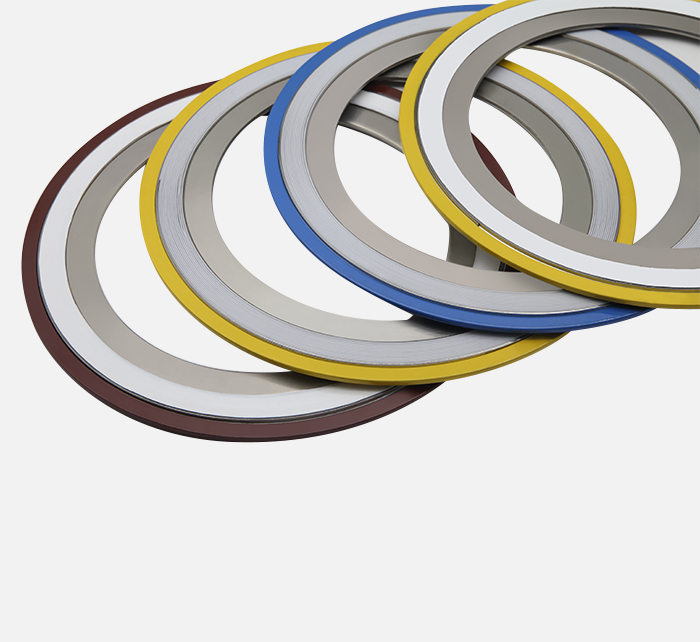
For standardized gasket families, thickness is inherited rather than selected. Spiral wound gaskets are the clearest example: ASME B16.20 defines two thicknesses, 3.2 mm (1/8 in) for general service and 4.5 mm (3/16 in) for heavier duty and larger diameters. Both are correct. They are simply not interchangeable in a joint designed around the other.
| Gasket type | Typical thickness | Where the value comes from |
|---|---|---|
| Spiral wound | 3.2 mm (1/8 in); 4.5 mm (3/16 in) | ASME B16.20, EN 12560 |
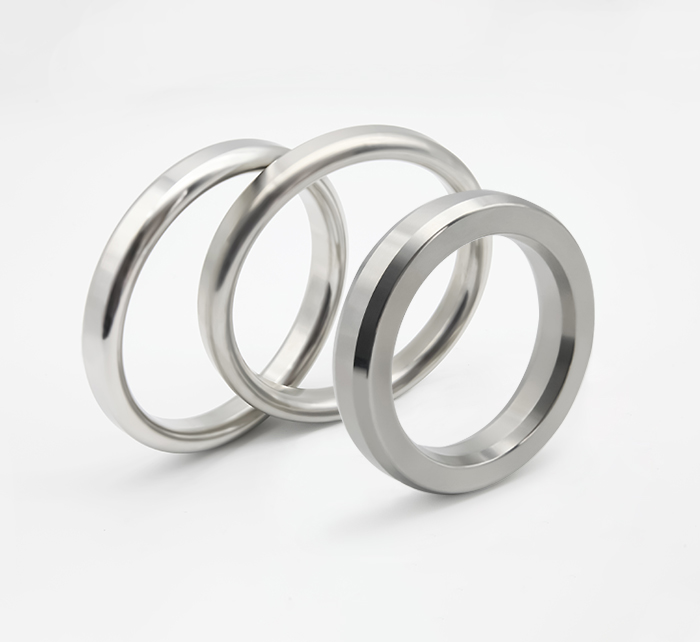
| Ring joint (RTJ) | Ring height defined per ring number (R, RX, BX) | API 6A, ASME B16.20 |
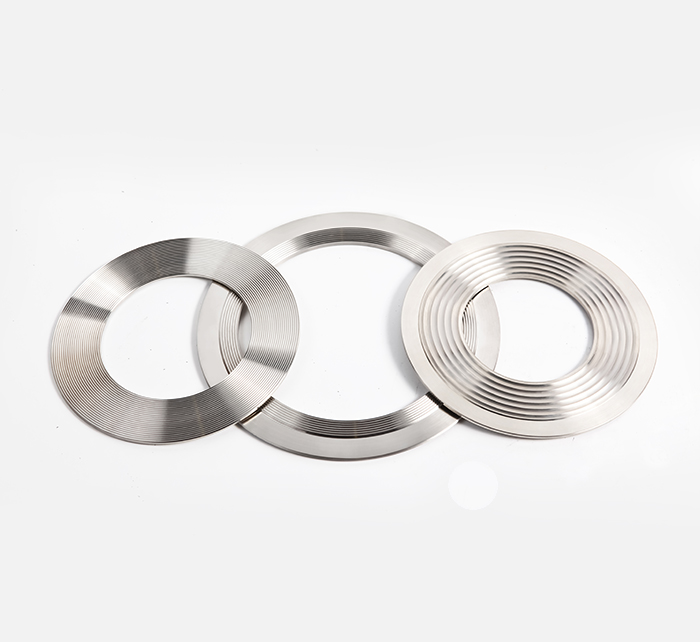
| Kammprofile | 2 mm to 4 mm core plus facings around 0.5 mm | Manufacturer or project specification |
| Corrugated metal | Set by core and facing combination | Manufacturer or project specification |
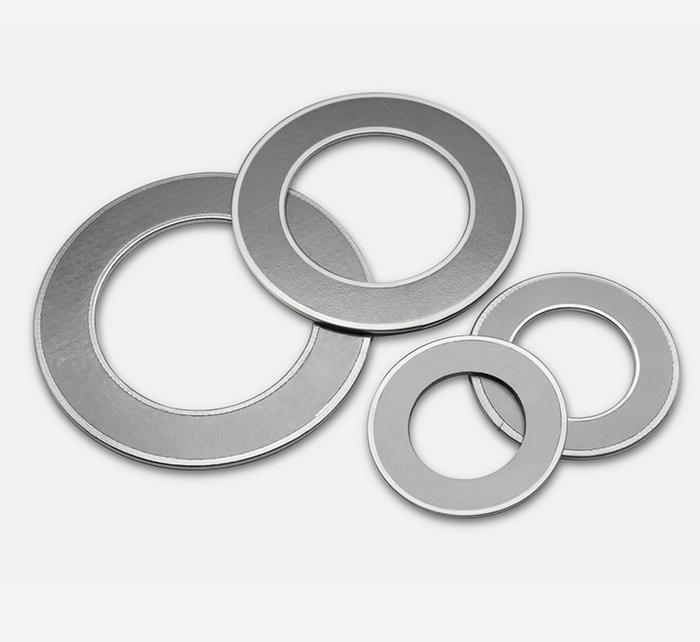
| Non-metallic sheet | 0.5 mm to 6 mm; 1.5 mm to 3 mm most common | EN 1514-1, ASTM F104 call-out |
| PTFE envelope | 3 mm typical | Manufacturer or project specification |
Plotting the same numbers makes the practical gap obvious: the difference between a light sheet gasket and a heavy spiral wound gasket is roughly three times the material volume, which is why the two cannot share a torque table.
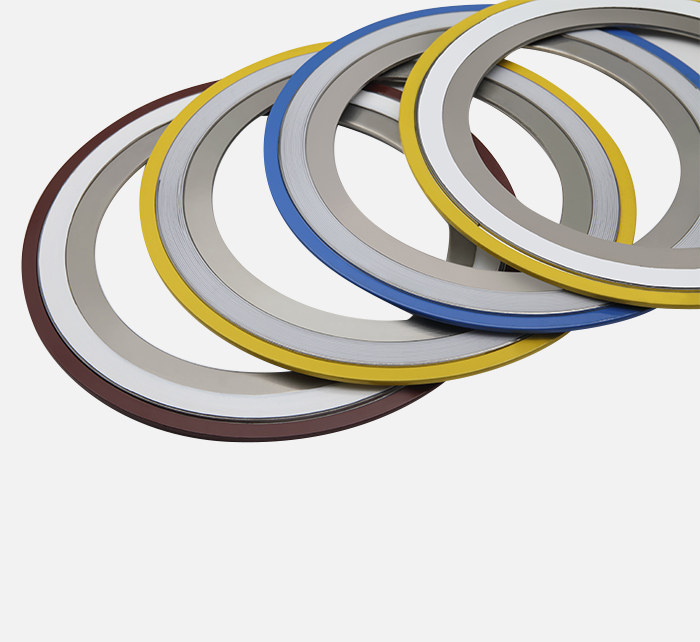 Spiral Wound GasketsSpiral Wound Gaskes t with PTFE fillerView Product →
Our own spiral wound production covers both standard thicknesses with graphite, PTFE or ceramic fillers, so a joint that needs the heavier variant can be supplied without changing anything else on the drawing.
Because conformability and load retention pull in opposite directions, "thicker is safer" is an expensive rule of thumb. The useful question is which failure mode the joint is more exposed to. Thickness also only helps within limits: flange surface finish and condition affect the sealing result just as much as the gasket dimension does.
Schematic trend, not measured data. It shows the direction of each effect, not absolute values.
The engineering shortcut. A thin, hard metal core carrying soft facings on both sides keeps the stack thin while restoring conformability exactly where it matters. The core resists creep; the facings do the sealing.
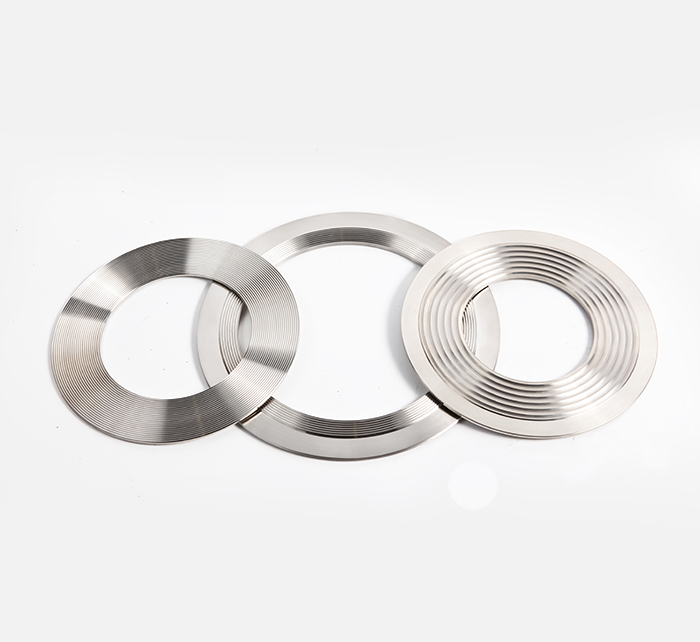 Kammprofile gasketsKammprofile Gasket with Loose Outer RingView Product →
That construction is the kammprofile gasket, and it is usually the shortest route out of the thin-versus-thick argument on high-temperature flanges with limited bolt load.
Three situations account for most of the thickness questions that reach a gasket manufacturer.
Above roughly Class 900, or on large-diameter flanges, the heavier 4.5 mm spiral wound gasket is normally specified because the extra depth spreads the higher bolt load across the winding instead of concentrating it at the inner ring. Where bolt load is limited but temperature is high, a thinner metallic construction such as a 2 mm kammprofile core is preferred, because the metal core does not relax the way a soft-filled gasket does.
Heat exchanger gaskets behave differently again, because their thickness is set by the groove in the plate or channel cover rather than by a flange standard. A gasket half a millimetre too thick holds the cover off its seat and the joint will not close; half a millimetre too thin and the sealing element cannot fill the groove, so the leak path is open from the first pressurisation. On these joints thickness should be measured against the equipment documentation every time, not inferred from the previous gasket.
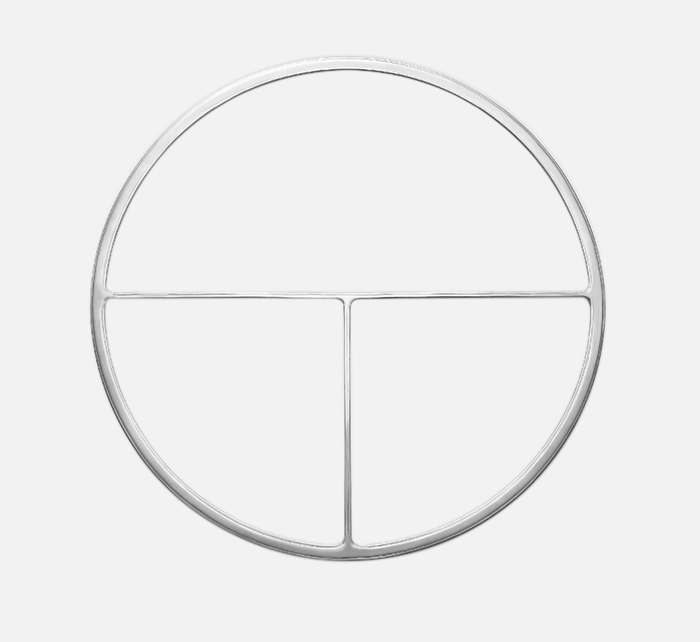 Heat Exchanger GasketsDouble Jacketed Gasket with barsView Product →
Here thickness becomes a genuine design choice. For water, air and mild chemical service on Class 150 flanges, a 1.5 mm or 2 mm compressed non-asbestos sheet is normally sufficient, and moving to 3 mm mainly buys tolerance to poor surface condition and repeated opening. Non-metallic materials are usually specified through an ASTM F104 line call-out that identifies the material class; thickness is called out separately and should always be checked against the delivered sheet, since a 3 mm roll and a 1.5 mm roll look identical from a distance.
Six checks catch almost every thickness-related problem before a joint is closed:
Where a joint is non-standard, it pays to involve a custom gasket supplier while the flange is still on the drawing board rather than during the shutdown window, because thickness is far cheaper to change on paper than in a bolted assembly under pressure.
Ningbo Rilson Sealing Material Co., Ltd. has manufactured sealing products since 2007 from a 20,000 square metre facility, and holds ISO 9001:2015 and API 6A certification. Thickness verification is part of our standard pre-delivery inspection on every order.
Q1. What is the standard thickness of a spiral wound gasket?
Two thicknesses are defined in ASME B16.20: 3.2 mm (1/8 in) for general service and 4.5 mm (3/16 in) for heavier duty and larger diameters. The value is part of the gasket dimension, so it is not a purchasing choice.
Q2. Is there a gasket thickness chart I can rely on?
A chart is useful for orientation, but it should never replace the controlling standard. Spiral wound and ring joint values come from ASME B16.20 and API 6A, while sheet and kammprofile thicknesses come from EN 1514-1 or the project specification.
Q3. Does a thicker gasket seal better?
Not automatically. A thicker gasket conforms more easily to rough or slightly warped flanges, but it also relaxes faster under load, so bolt load drops sooner. Thicker helps only when surface condition, not pressure, is the limiting factor.
Q4. Can I replace a 3.2 mm gasket with a 4.5 mm gasket?
Only if the flange design and the governing standard allow it. On a standard ASME flange the joint is dimensioned for one thickness, and going thicker can prevent the joint from closing and leave too little thread engagement on the studs.
Q5. How do I measure gasket thickness correctly?
Use a micrometer on sheet and kammprofile gaskets, and a vernier caliper on assembled spiral wound gaskets. Take four readings around the circumference, keep clear of the edge, and check that the gasket is not bulged or locally crushed.
Q6. Does gasket thickness change the torque I should use?
Yes, indirectly. Thickness changes how much the gasket must compress to reach its seating stress, which changes the bolt stress required. Follow the assembly torque tables in ASME PCC-1 or the values published for that specific gasket type and thickness.

RILSON GASKET
Ningbo Rilson Sealing Material Co., Ltd is dedicated to ensuring the secure and dependable operation of fluid sealing systems, offering clients the appropriate sealing technology solutions.
Copyright © Ningbo Rilson Sealing Material Co., Ltd. All Rights Reserved.
