
 English
 русский
 中文简体
中文简体
RILSON GASKET
Ningbo Rilson Sealing Material Co., Ltd is dedicated to ensuring the secure and dependable operation of fluid sealing systems, offering clients the appropriate sealing technology solutions.
A maintenance engineer signs off on a 6-inch Class 300 carbon steel flange for 400 F service, then watches the joint weep during the first heat-up. The flange is fine. The gasket that arrived in the same box was qualified for ambient conditions only, and nobody laid the two numbers side by side.
The short answer: a design pressure rating is the maximum pressure a component may contain at a specified temperature. Strip away the temperature and the number means nothing, because ratings fall as heat rises, sometimes by more than 70 percent.
Content
Two ideas are packed into that phrase, and separating them prevents most arguments on a project.
Design pressure is an input you choose. ASME B31.3 requires the design pressure of a piping system to cover the most severe coincident pressure and temperature expected in normal operation. In process plant practice, engineers commonly set it at the greater of 110 percent of maximum operating pressure or operating pressure plus 25 psi, then round up to a workable figure. The governing code, the client specification, or the relief valve set pressure always outranks that habit.
Design pressure rating is an output you look up. It is the pressure a purchased component may contain at the temperature it will actually see. Flanges take theirs from ASME B16.5 or B16.47, valves from ASME B16.34, and gaskets from the manufacturer's qualification against the flange class. The rating belongs to the hardware, not to your process.
The two numbers must line up across the entire operating envelope, not only at the design point printed on the datasheet.
These get mixed up constantly, and a purchase order that quotes the wrong one usually delivers the wrong product.
| Term | What it represents | Typical relationship | Where it comes from |
|---|---|---|---|
| Operating pressure | Normal steady-state pressure in the line | Baseline value | Process design |
| Design pressure | Pressure used for wall thickness and component selection | Above operating pressure, with margin | ASME B31.3, project specification |
| MAWP | Maximum allowable working pressure of a component at a stated temperature | Set by the component standard, not by the process | ASME B16.5, B16.34, Section VIII |
| Hydrostatic test pressure | Short-term proof test before the line enters service | Above design pressure, temporary only | ASME B31.3 Chapter VI |
The trap is the test pressure. A joint that holds 1.5 times the design pressure for ten minutes at ambient conditions has proven nothing about its behaviour at 750 F after fifty thermal cycles.
Saying "Class 300" does not state a pressure. It names a dimensional and pressure category from ASME B16.5 for sizes through NPS 24. The allowable pressure behind that category depends on two further variables: the material group number of the flange material, and the service temperature.
For the most widely used group, Group 1.1 carbon steel, the ratings at 100 F look like this:
Values are taken from the ASME B16.5 pressure-temperature rating tables for Group 1.1 carbon steel. Change the material group and every one of them shifts.
The same Class 150 Group 1.1 flange that allows 285 psi at 100 F allows only 80 psi at 800 F. That is a 72 percent reduction, and it happens without any change to the flange dimensions, the bolt size, or the part number.
The reason is metallurgical. Yield strength falls as temperature rises, and above roughly 600 F creep and bolt relaxation begin to consume the bolt load that holds the joint together. A rating table is really a table of material strength derated by temperature, with a margin applied on top.
Five habits separate a rating check that holds up from one that fails an audit.
A rated flange joint is a system, and the gasket is the only part designed to deform. Bolting supplies the load, the flange faces distribute it, and the gasket converts it into sealing stress.
Exploded isometric view of a bolted flange joint. The design pressure rating applies to the complete assembly: both flanges, the bolting, and the gasket between them. If the gasket cannot develop seating stress at the design temperature, the class rating of the flange becomes theoretical.
A Class 900 flange does not hand Class 900 performance to whatever is bolted between its faces. The physical properties of gasket materials, such as hardness and tensile strength, shape the design as much as the pressure class does. Three constructions cover most rated joints.
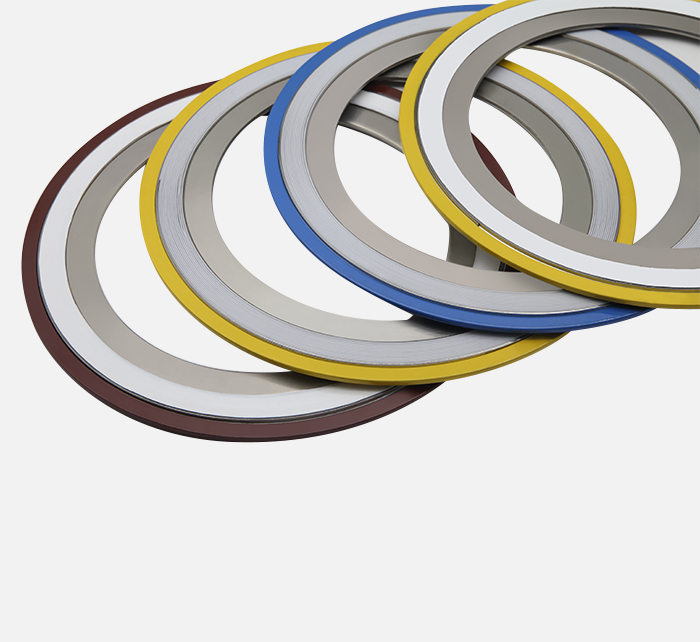
A spirally wound metal strip with a soft filler, usually supplied with an inner and an outer ring. They span roughly Class 150 through Class 2500 over a broad temperature band and tolerate the small flange rotations that occur during thermal cycling. The filler sets the ceiling: flexible graphite for high temperature, PTFE for aggressive chemicals, mica or ceramic above 850 F.
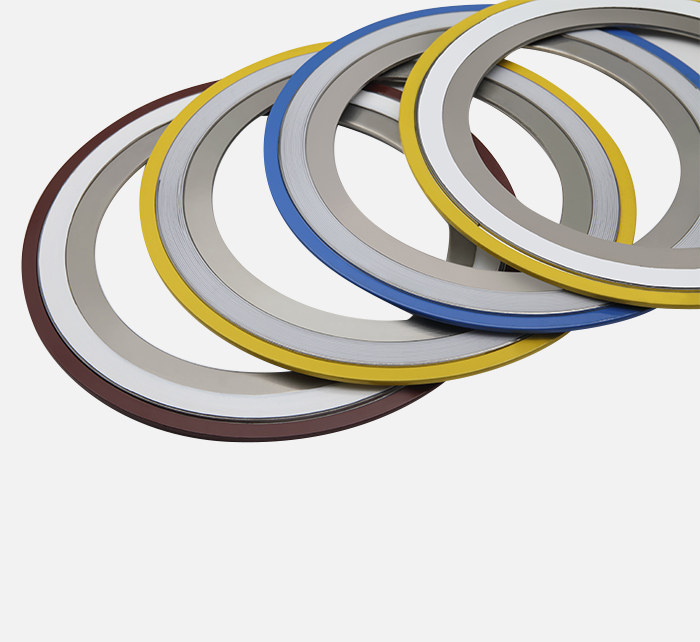 Spiral Wound GasketsSpiral Wound Gaskes t with PTFE fillerView Product →
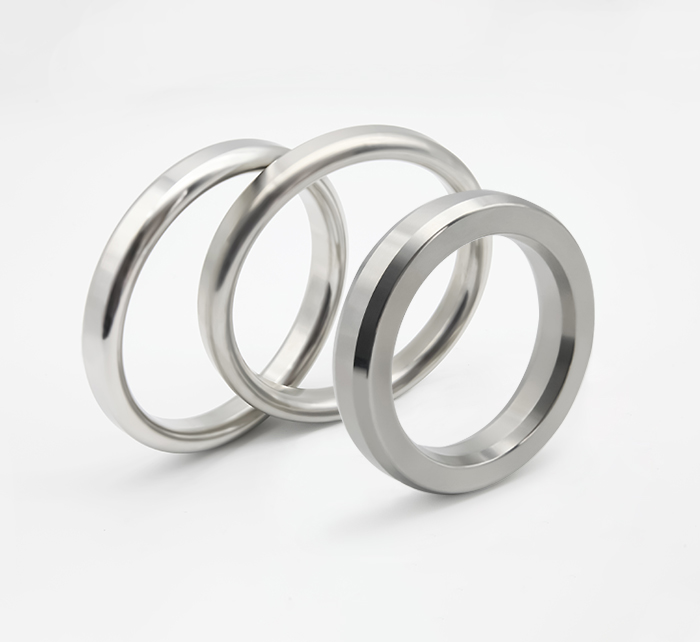
Above Class 900, or in hydrogen-rich and highly cyclic service, the metal-to-metal wedging of a ring joint gasket is often the only practical answer. Sealing is achieved by the gasket seating into the groove, so groove dimensions, surface finish and gasket hardness matter as much as the pressure class itself.
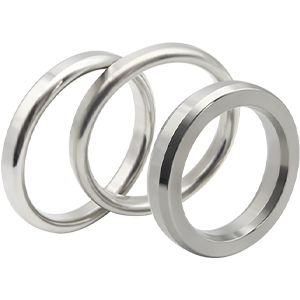 Ring Joint GasketsRing Type Joint Gaskets are developed for use in the petroleum industry as well as drilling and oil gas production equipment. These gaskets are suitable for the high p...View Product →
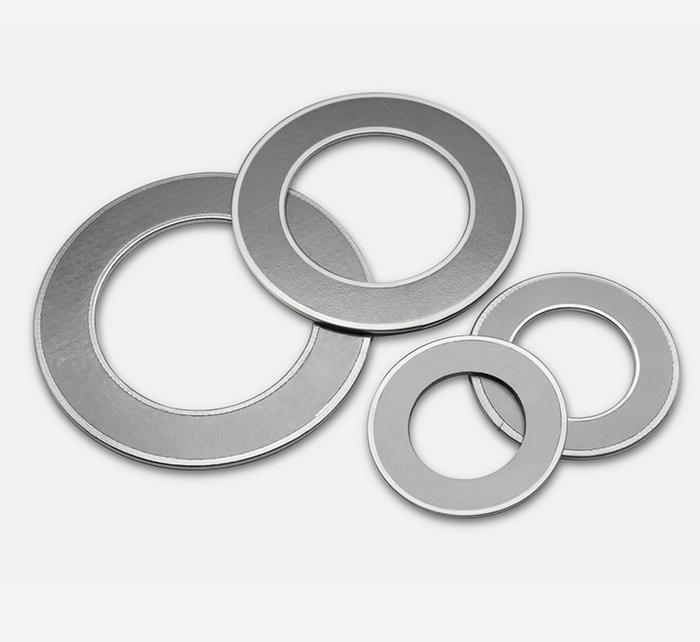
A serrated metal core with a soft facing layer. They carry high seating stress like an all-metal gasket but seal with lower bolt load, and they are frequently refurbished rather than replaced. They suit heat exchangers and any joint where bolt access is limited.
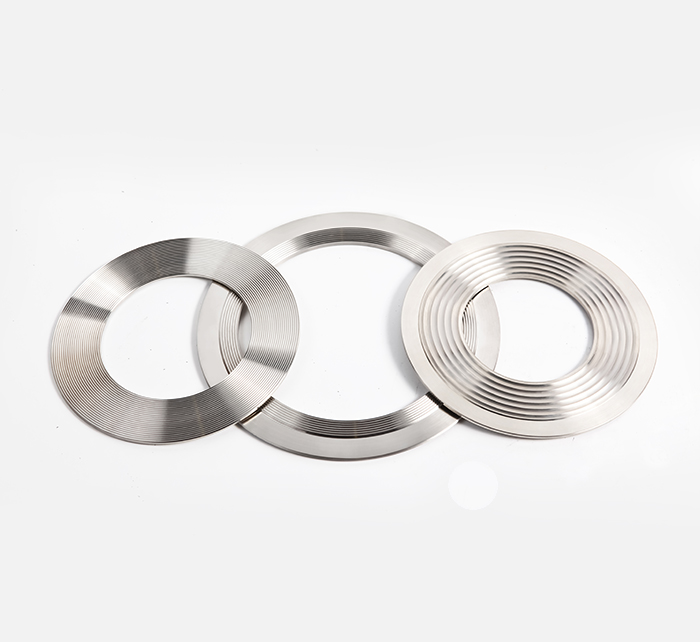
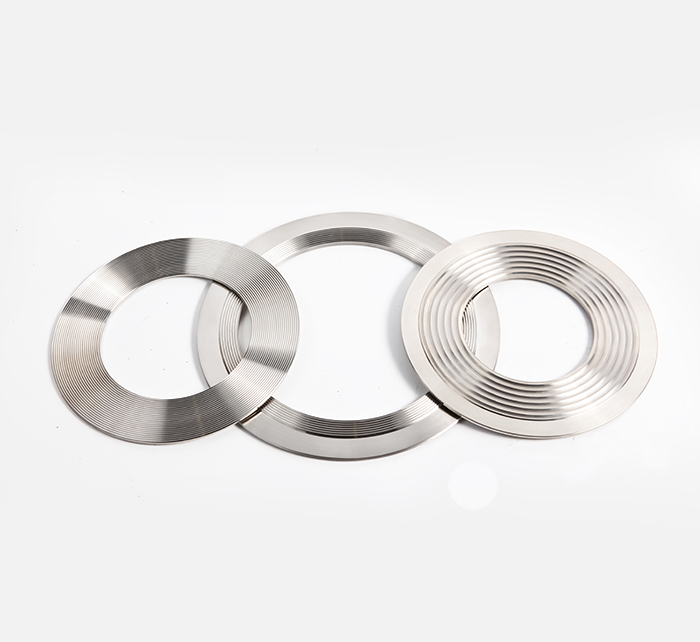 Kammprofile gasketsKammprofile Gasket with Loose Outer RingView Product →
Design pressure is the value you select for a system based on operating conditions. A design pressure rating is the allowable pressure of a purchased component at a given temperature. The rating must equal or exceed the design pressure at every service temperature.
Class 150 Group 1.1 carbon steel is rated 285 psi at 100 F but only 200 psi at 400 F. A 300 psi condition therefore needs at least Class 300, or a different material group checked against the same ASME B16.5 table.
No. The class rating describes pressure containment capability of the components. Leakage depends on gasket seating stress, bolt load, flange facing finish and installation quality, none of which the class number controls.
ASME B31.3 requires the design pressure to cover the most severe coincident pressure and temperature expected in normal operation. Common process practice sets it at the greater of 110 percent of maximum operating pressure or operating pressure plus 25 psi.
Because the tables are indexed by material group number. Carbon steel, low-alloy steel and stainless grades have different allowable stresses at temperature, so identical Class 150 flanges can carry different pressures.
The gasket does not change the flange rating, but it decides whether the joint can actually hold it. Filler and facing materials set a temperature ceiling, and once that ceiling is passed the joint loses seating stress regardless of flange class.
Getting a design pressure rating right is mostly a discipline of pairing every pressure figure with its temperature and checking the whole assembly, not just the flange. Ningbo Rilson Sealing Material manufactures spiral wound, ring joint, kammprofile, corrugated metal, non-metallic and heat exchanger gaskets, and works from the flange class, the material group and the coincident service temperature rather than a single headline number. Send those three details with your inquiry and the sealing construction can be confirmed against the rating the joint actually has to meet.

RILSON GASKET
Ningbo Rilson Sealing Material Co., Ltd is dedicated to ensuring the secure and dependable operation of fluid sealing systems, offering clients the appropriate sealing technology solutions.
Copyright © Ningbo Rilson Sealing Material Co., Ltd. All Rights Reserved.
